General Dentistry

What Is Gum Disease? Symptoms, Stages, Causes and Treatment

gingivitis and gum disease - Gum Recession Around Dental Crowns

What is gum disease? If you’re reading this, chances are you are a human being who likes to eat food. Food is delicious and we cannot go long without eating it. Unfortunately, the more time we spend eating, the greater our risk of developing gingivitis and periodontal disease. These diseases that affect our mouths and have been linked to various other problems in the body, such as heart disease, diabetes, and stroke. If you’re thinking this sounds serious or perhaps even gross, you’d be right on both counts! Fortunately, there are simple things we can do to prevent these diseases from developing further. With that in mind, here is what you need to know about gum bleeding and diseases so you can keep your smile strong for life!

Who is this article for?

This article is for patients experiencing bleeding, swollen or receding gums, persistent bad breath, loose teeth or discomfort while chewing.

What is Gum Disease?

Gum disease is an inflammation of the gum tissue caused most commonly by bacterial infections. The gum tissue is naturally soft and pink, and is held to the teeth by connective tissue. Inflammation may be followed by bleeding. When inflammation causes this tissue to become weak, it can easily be damaged, allowing bacteria to get inside and cause even more damage. Left untreated, it can lead to tooth loss.

periodontal disease or periodontitis - Gum Recession Around Dental Crowns
Dentist Asking yourself, “What is pyorrhoea?” Periodontitis, or pyorrhea, is a prevalent gum disease that required treatment of gums.

Gum disease is twofold; Gingivitis is the inflammation of the gums, and periodontitis is the destruction of the supporting tissues that hold the teeth in place. The two diseases can be treated independently, but the prognosis is worse if both are left untreated. If symptoms are left untreated, the infection can spread to the rest of the body. If left untreated, it can lead to teeth falling out or being pulled because they are too loose. It can also cause serious infections in the heart, lungs, and other organs.

Gingivitis and Periodontitis: What Is the Difference?

Gum disease, also known as periodontal disease, is an inflammatory condition affecting the gums and supporting structures around the teeth. It is strongly associated with the accumulation of dental plaque along and below the gumline.

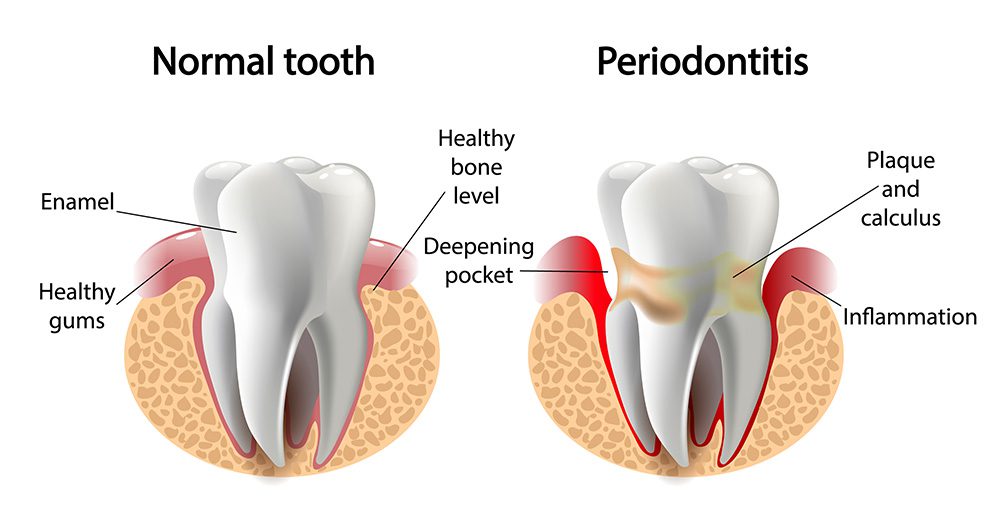
Gingivitis is the earliest and mildest stage. It may cause red, swollen or bleeding gums, but it does not involve permanent loss of the supporting bone. Gingivitis can often be reversed with professional cleaning and effective daily plaque control.

Periodontitis is a more advanced form of gum disease. The gums may separate from the teeth and form periodontal pockets where plaque and bacteria accumulate. Over time, inflammation can damage the connective tissue and bone that support the teeth.

Periodontitis can lead to gum recession, tooth movement, changes in the bite and eventual tooth loss if it is not controlled. Unlike gingivitis, the bone and attachment already lost through periodontitis do not normally return through brushing alone.

What Are the Symptoms of Gum Disease?

Bleeding gums should not automatically be blamed on brushing too hard. Repeated bleeding often indicates inflammation and should be assessed. Periodontitis is not diagnosed by routinely removing a sample of gum tissue. Dentists usually diagnose it through clinical examination, periodontal measurements and dental X-rays where required.

  1. Gums that bleed during brushing or flossing
  2. Red, swollen or tender gums
  3. Persistent bad breath
  4. Gum recession
  5. Teeth appearing longer
  6. Pus between a tooth and gum
  7. Food repeatedly getting trapped
  8. Loose or shifting teeth
  9. New spaces developing between teeth
  10. Pain or discomfort while chewing
  11. A change in the way the teeth meet
  12. Partial dentures no longer fitting correctly

How Is Gum Disease Diagnosed?

The dentist or periodontist may use a periodontal probe to measure the space between the gum and tooth. Healthy gum spaces are generally shallow, whereas deeper pockets may indicate loss of attachment. The severity of periodontitis may be described using a staging and grading system that considers tissue destruction, complexity and the likely rate of progression. The examination may also assess:

  1. Gum bleeding
  2. Plaque and tartar levels
  3. Gum recession
  4. Tooth mobility
  5. Pus or inflammation
  6. Bite changes
  7. Bone levels on dental X-rays

How Is Gum Disease Treated?

Treatment depends on whether the patient has gingivitis or periodontitis and on the severity and location of the disease. Gingivitis may improve with professional cleaning and better brushing and interdental cleaning. Periodontitis may require scaling and root planing, which is a deep-cleaning procedure performed below the gum line to remove deposits and contaminated material from root surfaces. Treatment does not end after deep cleaning or surgery. Periodontal-maintenance visits are important because periodontitis can become active again. Advanced gum disease may require:

  • Periodontal surgery
  • Regenerative procedures
  • Gum grafting
  • Management of tooth mobility
  • Bite adjustment in selected cases
  • Removal of teeth with a hopeless prognosis
  • Replacement of missing teeth after disease control

How do you know if you have Gum Disease?

If you visit your dentist and they notice signs of gum disease, they can easily and painlessly perform a simple test to check if you have it. This involves gently lifting the edges of your gum and looking for sores or redness in the tissue. They may also take a small sample of the gum tissue to examine it in a lab. However, if you experience any of the below listed symptoms, it’s a good idea to see a dentist.

It’s important to keep in mind that not all of these symptoms are exclusive to gum disease; they could also be a symptom of something else!

Gum Bleeding while brushing or flossing – This can be caused by the soft tissue being irritated or cut by your toothbrush. Remember to use a soft-bristled toothbrush to prevent this!

Swelling or redness of the gum tissue – This is a sign that bacterial infection has reached the gum tissue.

Changes in the colour of your gums – This can be a sign that tissues below the gum line are becoming inflamed.

Changes in the texture of your gums – This can be a sign that the tissues below the gum line are becoming infected.

Pus or bad breath – This can be a sign that gum disease is present. This is caused by bacteria releasing a foul-smelling gas called “putrescine”.

Risk factors for gum disease

Lack of sleep – This can impair the immune system and lead to an increase in inflammation.

Poor diet – This can cause an increase in the levels of bacteria in the mouth.

Poor oral hygiene – This can lead to an increase in bacteria in the mouth.

Periodontal disease in a parent or sibling – This can increase the chances of you developing the disease.

Smoker – The increased risk in smokers is due to the higher levels of plaque and bacteria in their mouths.

Diabetic – This can also impair the immune system and lead to an increase in inflammation.

Alcoholic – The higher levels of sugar in alcoholic drinks can cause an increase in bacteria in the mouth.

Conclusion

Gingivitis is a common problem, but it can be treated easily and effectively if detected early enough. If you want to avoid it, you should brush your teeth twice a day and floss at least once a day. It is also important to see your dentist regularly for a check-up. You should also change your toothbrush every 2-3 months.

Frequently Asked Questions

Can gum disease be reversed?

Gingivitis can often be reversed with professional cleaning and effective home care. Periodontitis cannot usually be completely reversed because lost bone and attachment do not naturally grow back, but treatment can control its progression.

Are bleeding gums normal?

No. Persistent gum bleeding is commonly associated with inflammation. It should be evaluated if it occurs repeatedly during brushing or flossing.

Does gum disease always cause pain?

No. Gum disease may progress without significant pain. Bleeding, recession, bad breath or loose teeth may appear before discomfort develops.

Can gum disease cause tooth loss?

Yes. Advanced periodontitis damages the tissues and bone supporting the teeth. Without treatment, teeth may become loose and eventually require removal.

Is scaling and root planing painful?

Local anaesthesia may be used to keep the area comfortable during deep cleaning. Temporary sensitivity or soreness may occur afterwards.

Can gums grow back after recession?

Receded gums do not usually grow back naturally. Gum-grafting or other periodontal procedures may be considered in selected cases after the cause of recession has been assessed.

Can gum disease return after treatment?

Yes. Periodontitis requires long-term maintenance. Inadequate plaque control, smoking, uncontrolled diabetes and missed periodontal visits can increase the risk of recurrence.

Is gum disease contagious?

Periodontitis is not contagious like a cold. Oral bacteria may be exchanged through saliva, but bacterial exposure alone does not mean another person will develop gum disease.

Suggested Article –

Medical Disclaimer

This article is for patient education only. Dental treatment should be planned after clinical examination, medical history review, and X-rays or scans where required. Treatment suitability, cost, timeline, healing, and results vary from patient to patient.

Anjali kanojia
Anjali Kanojia contributes to Royal Dental Clinics’ dental awareness content by helping present oral health topics in a simple and patient-friendly manner. Her focus is on clarity, readability, and practical guidance.

    Leave a reply