
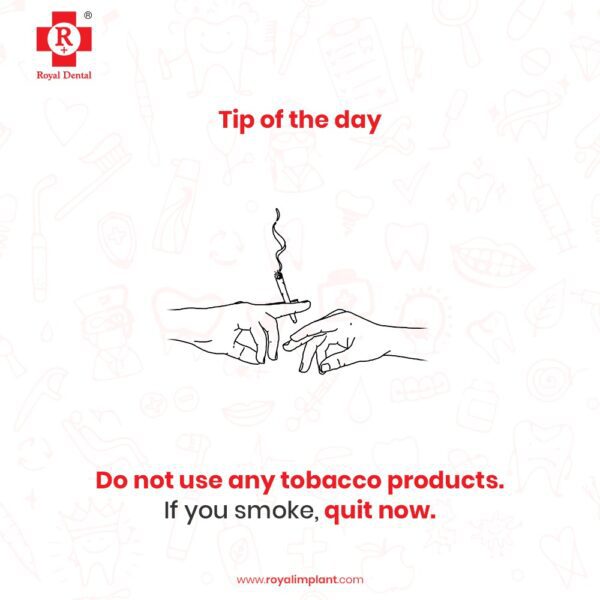
Smoking and Oral Health: India has over 100 million adult smokers; the 2nd highest number of smokers in the world after China. The prevalence is higher in individuals older than 34 years of age compared with older age groups, and in males compared with females. Thus the current smoking is more common among low-income adults, when compared to medium or high-income earners and increases with decreasing years of education.
Smoking can impact your oral health. People who smoke are at a higher risk of developing mouth cancer, gum problems, losing teeth, decay on the roots of teeth, and complications after tooth removal and gum and oral surgery.
Smoking do to Oral Health, Let’s know more!
It is a major risk factor for gum diseases affecting the extent and severity of disease. It affects the treatment outcomes as well as long term success of implant placement. Therefore, It is important to understand the impact on the progression and management of the gum disease and oral health issues in patients who smoke.
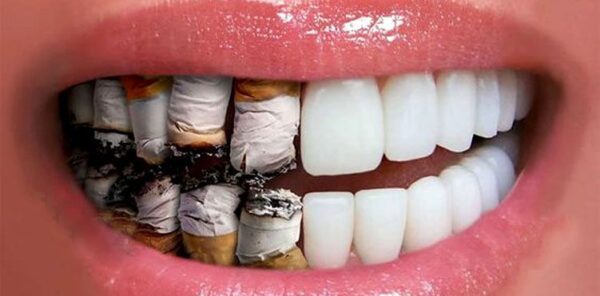
Effects on Periodontium or Gums
Gingivitis- People who smoke , show decreased inflammatory response to plaque accumulation decreased in smokers than non smokers thus reducing the effect of bleeding on probing.
Periodontitis- Though the gingival response to plaque accumulation decreased in smokers the overall effects on the periodontium are worse.
- There is increase in extent and severity of periodontal destruction- it exerts a major harmful effect on the protective elements of immune response
- Increased pocket depth, attachment loss, bone loss
- It Increases rate of tooth loss, coronal root caries, staining of teeth, darkening of lips
- Increased time to recover from local anesthesia
- Ability of wound healing response affected.
It is recommended that smoking patients follow a successful cessation program before the surgical procedures are implemented.
Smokers are three to six times more likely to develop gum disease, which attacks the roots and causes teeth to fall out. Even smokeless tobacco products can irritate gum tissue, causing gums to loosen around teeth, making it easier for bacteria to settle in and develop decay.
Effects of Smoking on Teeth
1. Smoking can increase plaque, tartar buildup, staining, gum inflammation, and risk of periodontal disease. If not removed daily, it can harden into tartar, also known as calculus, which requires a professional cleaning to remove. Smokers are three to six times more likely to develop gum disease or periodontal disease.
2. Smoking reduces blood flow and affects the immune response, which can make gum disease harder to detect and can delay healing after extraction, implant surgery, or gum treatment. It also delays healing after oral surgery for dental implants, tooth extraction or treatment of gum disease. This makes the recovery process difficult.
3. Smoking and tobacco use increase the risk of cancers of the mouth, throat, tongue and jaw. Smokers are six times more likely than nonsmokers to develop oral cancers.
4. Changes teeth and breath leading to yellow teeth and causing bad breath.
Introducing “Smoking Cessation Program”
To quit smoking. A smoking cessation program enables one to intake of cigarettes thereby lowering the risk of cancer and other serious health problems. Counselling, behaviour therapy, medicines, and nicotine-containing products, such as nicotine patches, gum, lozenges, inhalers, and nasal sprays, may be used to aid in quit smoking.
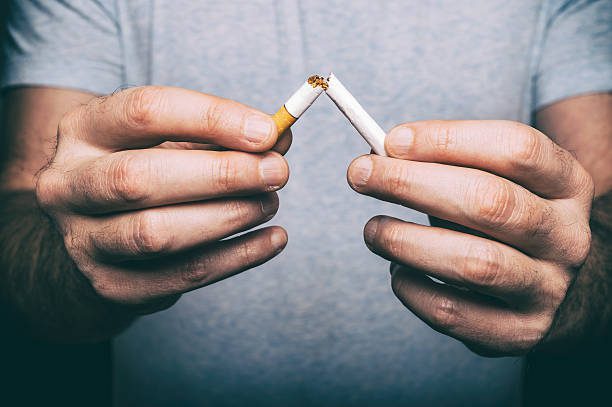
This program uses the “five A’s” for smoking cessation:
- Ask (Identify patients tobacco intake)
- Advice (On association between oral diseases and smoking)
- Assess (Patients interest and readiness to participate in tobacco cessation)
- Assist (Use appropriate techniques to assist patient in tobacco cessation)
- Arrange (Follow-up with patient)
In addition pharmacotherapy such as nicotin replacement therapy have proved effective. Therefore, Incidence of periodontitis in India observed in smokers is 15.6% , former smokers 10.5% and in non smokers is 4.9%. Former smokers have less risk for periodontitis than the current smokers than no risk in non smokers. The risk for periodontitis decreases with the increase number of years since one quits smoking. Hence the effect of smoking on the host are reversible with smoking cessation.
What does smoking do to oral health, teeth and gums?
Smoking affects the mouth in many ways. It can stain the teeth, cause persistent bad breath, increase plaque and tartar buildup, reduce saliva protection, irritate the gums, and increase the risk of gum disease.
The bigger problem is that smoking can hide early gum disease. Many smokers do not notice bleeding gums because nicotine can reduce blood flow to the gum tissues. This means gum disease may silently progress until the patient develops gum recession, loose teeth, bad smell, pus, or bone loss.
How does smoking affect dental implants and healing?
Smoking can delay healing after tooth extraction, gum surgery, bone grafting, and dental implant placement. It can also increase the risk of infection, poor gum attachment, bone loss around implants, peri-implant disease, and implant failure.
This does not mean every smoker is automatically rejected for implants. However, smokers need more careful planning, stronger maintenance, better oral hygiene, and honest counselling about risk. In many cases, stopping or reducing smoking before and after implant surgery improves healing and long-term prognosis.
When should a smoker visit a dentist?
A smoker should visit a dentist if there is bleeding, swelling, gum recession, loose teeth, bad breath, burning sensation, white patches, red patches, ulcers, pain while chewing, or any mouth ulcer that does not heal within two weeks.
Regular dental check-ups are important because smoking-related gum disease and oral tissue changes may not always be painful in the early stages. For tobacco users, an oral cancer screening and gum evaluation should be part of routine dental care.
How will dentist know you smoke?
Smoking impacts your teeth and gums in so many ways. These can be quickly identified by your dentist. So, yes, your dentist will know if you smoke. These factors include: bad breath, white spots on gums, teeth stain, yellow teeth, plaque, receding gums, tongue colour, lips colour and more.
Royal Dental Clinics
Royal Dental Clinics emphasises on maintaining good oral hygiene and help encourage our patients to quit tobacco in any form. Hence, we help our patients with nicotine withdrawal symptoms and psychologic factors associated with smoking cessation. Educating them about cessation program is also an integral component where treatment results are concerned.
FAQs
One of the most reasons for the lack of success of a dental implants attributed in several studies is; SMOKING. It aids in obstructing blood flow to the gum region and decelerates the curing process. Hence, According to studies, smokers can have a dental implant failure rate of up to 20%! You may have a far better outcome if you stop it one week before an implant and if you don’t smoke for a minimum of two months after implant placement.
Does smoking cause gum disease?
Yes. Smoking increases the risk of gum disease and can make gum treatment less effective. It affects blood flow, immunity, healing, and the balance of bacteria around the gums. Smokers may also notice fewer early warning signs like bleeding gums, so gum disease can progress silently.
Can smokers get dental implants?
Smokers can get dental implants in selected cases, but the risk of complications is higher. Smoking can delay healing and increase the risk of infection, bone loss, peri-implant disease, and implant failure. A dentist or oral surgeon should check bone quality, gum health, medical history, oral hygiene, and smoking habits before planning implants.
Will quitting smoking improve my oral health?
Yes. Quitting smoking can improve gum healing, reduce bad breath, lower staining, improve response to gum treatment, and reduce the risk of future oral health complications. The earlier a patient stops, the better the long-term benefit for gums, teeth, implants, and oral cancer risk.
© All rights reserved by Royal Dental Implants Pvt Ltd. Issued in public interest