Breath odour can defined as subjective perception after smelling someone’s breath. It can be pleasant or unpleasant. If unpleasant the terms bad breath, breath malodor, halitosis can be applied. Persistent breath malodor has some underlying pathology. Sadly, bad breath or smell, also known as halitosis, is a common oral problem across all ages. But, as much as we might think this is common, it’s usually a sign of other dental problems.
The unpleasant smell of breath mainly originates from volatile Sulphur compounds( VSCs) especially hydrogen sulphide, methylmercaptan and dimethyl sulphide. However most of these compounds result from proteolytic degradation by oral microorganisms of peptides present in saliva, shed epithelium, food debris, gingival crevicular fluid, interdental plaque, post nasal drip and blood. Hence gram negative anaerobic bacteria causes such proteolytic activity.
Who is this article for?
This article is for patients who suffer from bad breath occasionally or regularly and want to understand whether it is due to poor oral hygiene, tongue coating, gum disease, cavities, dry mouth, smoking, food habits, acidity, or another health issue. It is especially useful for people who brush daily but still feel their mouth smells bad, patients with bleeding gums, food lodgement, dental bridges, implants, dentures, mouth breathing, tobacco use, or dry mouth. Bad breath should not be ignored if it is persistent, because it may be a sign of an oral infection, gum disease, dry mouth, or a medical condition that needs proper evaluation.
Bad breath is a symptom, not just a smell problem
Bad breath, also called halitosis, is not always solved by chewing gum, mint, or mouthwash. These may cover the smell temporarily, but they do not remove the cause. In many patients, the source is plaque, tongue coating, gum infection, cavities, food trapped between teeth, old dental work, dry mouth, or smoking. The correct approach is to identify where the smell is coming from and then treat that cause. If bad breath continues even after good brushing, flossing, and tongue cleaning, a dental check-up is recommended.
Tongue cleaning is important for fresh breath
The tongue can hold bacteria, food particles, dead cells, and coating, especially on the back surface. This coating can produce unpleasant sulphur-like odours even when the teeth are brushed properly. Cleaning the tongue gently with a tongue cleaner or toothbrush can help reduce this bacterial load and improve breath freshness. However, aggressive scraping should be avoided because it may irritate the tongue. Tongue cleaning works best when combined with brushing, interdental cleaning, hydration, and treatment of gum or tooth problems if present.
When bad breath may be due to gum disease
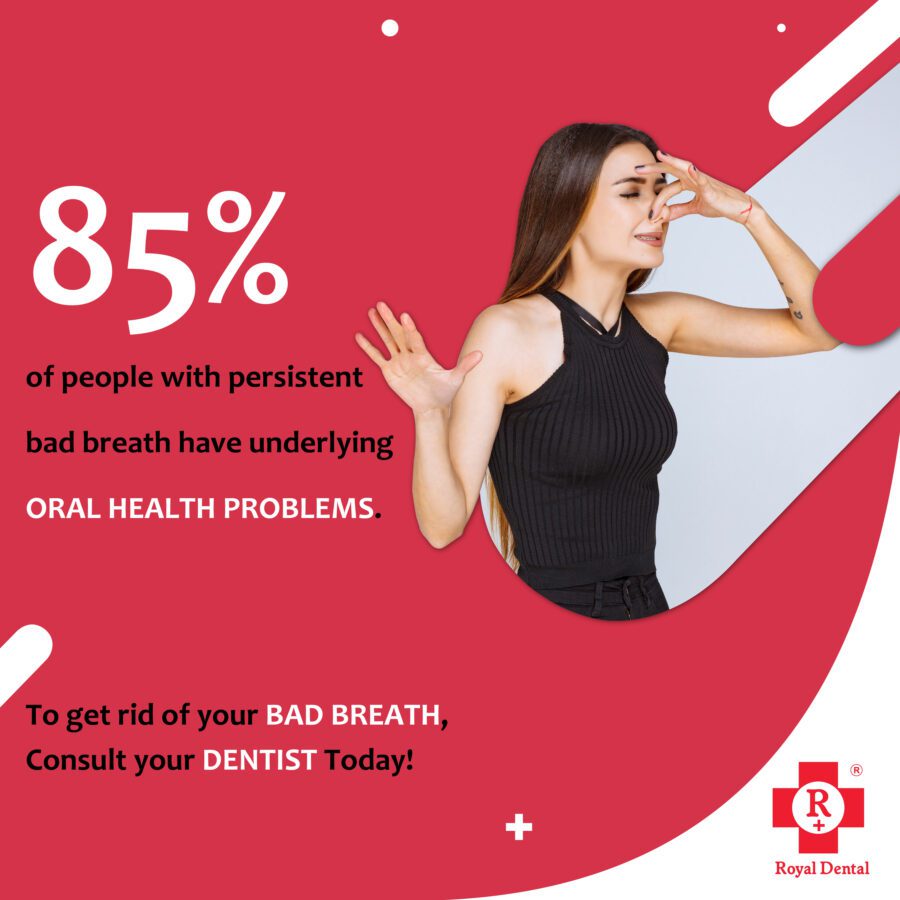
Persistent bad breath with bleeding gums, swelling, loose teeth, pus discharge, or food lodgement may indicate gum disease. In such cases, the smell is often related to plaque, tartar, bacteria, and inflammation around the teeth and gums. Mouthwash may reduce odour temporarily, but professional cleaning, scaling, root planing, and improved home care may be needed to control the real cause. A constant bad taste or bad breath that does not go away can be a warning sign of advanced gum disease.
Dry mouth can make bad breath worse
Saliva naturally helps wash the mouth, dilute acids, and reduce bacterial build-up. When saliva is reduced, the mouth becomes dry and bacteria can grow more easily, causing bad breath, burning sensation, cavities, and difficulty wearing dentures or prostheses. Dry mouth may happen due to medicines, mouth breathing, dehydration, smoking, salivary gland problems, diabetes, or ageing. Patients should sip water frequently, avoid tobacco, limit excessive tea or coffee, and ask their dentist if they need saliva substitutes or a dry-mouth-friendly mouthwash.
Bad breath after crowns, bridges, implants or dentures
Patients with crowns, bridges, implants, dentures, or aligners may develop bad breath if food gets trapped around margins, under bridges, between teeth, or inside removable appliances. In these cases, normal brushing may not be enough. Interdental brushes, floss threaders, water flossers, denture cleaning, and professional evaluation may be required. If there is a smell from one specific tooth, crown, implant, or bridge area, it may indicate food lodgement, cement leakage, gum pocket, decay, infection, or prosthesis fit issues and should be checked clinically.
When to visit a dentist for bad breath
A dental visit is advised when bad breath is persistent, keeps returning, or is associated with bleeding gums, tooth pain, swelling, pus, loose teeth, ulcers, dry mouth, burning sensation, or a bad taste. Patients should also seek evaluation if others repeatedly notice the smell despite regular brushing. A dentist can check for cavities, gum disease, tongue coating, faulty restorations, infected teeth, dry mouth, tobacco-related changes, and oral hygiene gaps. If the mouth appears healthy but the smell continues, medical causes such as reflux, sinus issues, diabetes, or other systemic conditions may need evaluation.
Extra-oral causes for Bad Breath
1) ENT- purulent sinusitis, acute pharyngitis, post nasal drip cause malodour.
2) Bronchi and lungs- chronic bronchitis, bronchial carcinoma
3) GIT- hernia in oesophageal wall , gastric hernia, regurgitation oesophagi’s
4) Liver- cirrhosis
5) Kidney- chronic glomerulo nephritis
6) Systemic metabolic disorders like diabetes in particular
7) Hormonal causes
8) Medications such as metronidazole cause breath malodor

Treatment for Bad Breath
1) Mechanical reduction of intraoral nutrients and microorganisms
Tongue cleaning should practiced on regular basis. It reduces both the amount of coating compared to the no of organisms. Hence it can done with a normal toothbrush or tongue scraper. In other words interdental cleaning and toothbrushing are essential mechanical means of dental plaque control. In conclusion one stage full mouth disinfection combining scaling and root planning with application of chlorhexidine is effective in reducing the malodor.
2) Chemical reduction
Chlorhexidine compared to the most effective antiplaque and antigingivitis agent. Chlorhexidine provides significant reduction in VSCs levels. In addition essential oils, chlorine dioxide, two phase oil water rinse, triclosan, stannous fluoride, hydrogen peroxide said to reduce the oral malodor.
Dental problems are never any fun, but the good news is that most of them can be easily prevented. Brushing twice a day, flossing daily, eating properly, and regular dental check-ups are essential steps in preventing dental problems and saving your teeth. Educating yourself about common dental problems and their causes can also go a long way in prevention.
If your bad breath continues despite your best efforts, make an appointment with your dentist.

Through a series by Dr. Chirag Chamria; he educates about everyone to be responsible for their oral hygiene and health by being aware of these common dental problems, what causes them and how to prevent them to save your teeth. Dental problems can be prevented and completely avoided if you are responsible for your oral health. So go ahead watch this series and stay on top of your Dental game. And yes don’t forget to smile subscribe to this channel as there is lots more coming up!
FAQs
Why does my breath smell bad even after brushing?
Bad breath after brushing may happen if bacteria remain on the tongue, between teeth, under the gums, inside cavities, around crowns or bridges, or in areas where food gets trapped. Dry mouth, smoking, mouth breathing, gum disease, acidity, and certain medical conditions can also contribute. If the smell continues despite brushing twice daily, flossing, tongue cleaning, and drinking enough water, a dental check-up is recommended to find the exact cause.
Can mouthwash cure bad breath permanently?
Mouthwash can help reduce bacteria and improve freshness, but it may not cure bad breath permanently if the cause is gum disease, cavities, tongue coating, dry mouth, food lodgement, infected teeth, smoking, or a medical issue. Some mouthwashes only mask odour, while others are used for specific dental conditions. Long-term use of strong antiseptic mouthwash, especially chlorhexidine, should be done only when advised by a dentist.