

A dental technician is a trained professional who creates and repairs custom dental appliances and restorations based on a dentist’s prescription and treatment plan. Dental technicians may work with materials such as ceramics, acrylics and metals to fabricate items including crowns, bridges, dentures, retainers and other dental appliances. Although patients may not interact with a dental technician directly, their work plays an important role in the quality, fit and appearance of many dental restorations.
Dental technicians make and repair dental appliances, such as false teeth, crowns, bridges, implants or braces. Dentists use these appliances to replace or improve their patients’ teeth, speech, appearance or ability to chew.
Who Is This Article For?
- Patients who want to understand who makes their dental crown or denture
- People considering dentures or dental implants
- Patients curious about the dental team
- People interested in the role of dental technicians
- Patients receiving laboratory-made dental restorations
- Anyone wanting to understand how dentists and dental laboratories work together
Dental Technician responsibilities
The dental technician’s responsibilities include fabricating dental appliances, administering anesthesia, sterilizing equipment, and assisting the dentist with diagnostic and treatment procedures. Dental technicians may work in the lab fabricating custom orthodontic appliances such as retainers, mouth guards, and dentures.
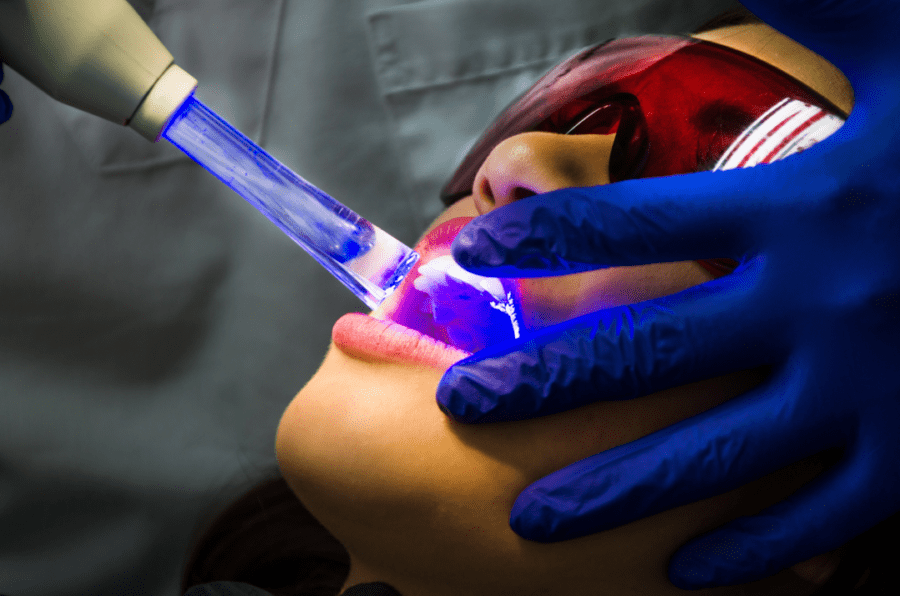
Technicians may also work in the office administering local anesthesia, taking x-rays, sterilizing equipment, and assisting the dentist during diagnostic and treatment procedures. Dental technicians must be aware of all state licensure requirements and may need to hold a license in order to practice.
Dental X-Ray by Technician
The dental x-ray technician’s responsibilities include preparing patients for x-rays by fitting the patient with a lead apron, positioning the patient’s jaw, and operating the x-ray machine. The x-ray technician must be familiar with the operation of the machine and be able to position the patient correctly for the best quality images. X-rays are an essential part of the dental examination.
They are used to detect hidden dental problems that are not visible to the naked eye, such as cavities, fractures, and infections. Because some dental problems are not visible to the naked eye, dentists rely on x-rays to accurately diagnose health conditions, such as infections and diseases, in the mouth.
Dental assistant responsibilities
The dental assistant’s responsibilities include taking medical histories, preparing equipment and materials, facilitating communication in the dental practice, monitoring patient comfort during dental procedures, and sterilizing and storing dental instruments. The dental assistant may also be responsible for scheduling appointments, greeting patients and visitors, and keeping the reception area stocked and clean. A Dental assistant may also be responsible for taking x-rays if state laws allow it.
Dental Ceramist responsibilities
The Dental ceramists are dental technicians who specialize in the production of custom mouthguards and dentures. They may work in a lab or as part of a dental team in a dental practice. Dental ceramists receive a cast of the patient’s mouth and use the information to create a custom-fitted mouth guard designed to protect the teeth during sporting activities or to replace missing teeth.

Dentures are another common dental ceramist project. They are artificial replacements for missing teeth. Dentures are created by taking an impression of the patient’s mouth and using special clay-like material to create a customized fit that fits snugly against the remaining teeth. Dental ceramists work with a wide variety of materials, including acrylic resins, various metals, and porcelain.
Dental laboratory technician responsibilities
Dental laboratory technicians produce custom orthodontic appliances such as retainers, mouthguards, and dentures. They may work in a lab or as part of a dental team in a dental practice. Lab technicians use a special machine called a thermoforming machine to create a model of the patient’s teeth. The technician takes the model and a prescription from the dentist to create a retainer, mouth guard, or denture.
Conclusion
A profession that is growing in demand, dental technicians play an important role in the dental industry. Their responsibilities vary depending on their specific job function and the size of their employer. Dental technicians are vital members of the dental team who make important contributions to patient health and well-being. Dental technicians (or dental technologists as they are often referred to) make the dentures, crowns, bridges and dental braces that improve patients’ appearance, speech and ability to chew.
Frequently Asked Questions
What does a dental technician do?
A dental technician fabricates and repairs dental restorations and appliances according to a dentist’s prescription and clinical records.
Does a dental technician work directly with patients?
Most dental technicians work primarily in dental laboratories rather than directly treating patients.
Can a dental technician make dental crowns?
Yes. Dental technicians can fabricate crowns according to the dentist’s prescription, design requirements and clinical records.
What is the difference between a dental technician and a dentist?
A dentist examines patients, diagnoses dental conditions and provides treatment. A dental technician primarily fabricates dental restorations and appliances based on the dentist’s prescription.
Does a dental technician make dentures?
Yes. Denture technicians can fabricate complete and partial dentures using clinical records provided by the dentist.