

You probably know that you have to take care of your teeth from a young age to prevent developing cavities or other oral diseases. As such, many people will brush their teeth at least once a day, floss regularly and visit the dentist for check-ups. Can cancer develop in a tooth? Learn the difference between oral cancer, rare odontogenic tumours and common dental problems that can cause tooth pain or swelling.
Who Is This Article For?
- People concerned about oral cancer
- Patients experiencing persistent mouth changes
- Tobacco or alcohol users
- Individuals with unexplained oral pain or swelling
- Anyone wanting to understand oral cancer symptoms
What is Oral Cancer?
Cancer is a disease in which abnormal cells grow and multiply uncontrollably. Although different types of mouth cancer exist, they all start when a cell that has been damaged or altered in some way fails to die. Instead, it divides uncontrollably and builds up a mass which can cause problems in surrounding tissues and organs, even if it stays in one place. There are many different types of cancer, and they are named according to the type of tissue they form in.
There are two main classifications of cancers: Oral cancers are cancers that occur in the mouth and surrounding areas, including the lips, tongue, and the inside of your cheeks. The rest of this article will focus on oral cancer, with a specific look at the risk factors and types of oral cancer that can develop from the teeth.
Why is it so rare to develop Cancer in a Tooth?
To understand why it is so rare for cancer to develop from a tooth, it is first important to understand the structure of the tooth and what is found inside of it. The tooth consists of a hard outer shell (enamel), soft connective tissue center (dentin), blood vessels, and nerves. In a healthy tooth, there is also a thin layer of bacteria that lives on the surface of the tooth.
Why is this important? Well, as a dentist, you might notice that certain stains on your teeth are very hard to remove. It’s because the bacteria in your mouth are very good at adhering to the surface of your teeth. As this bacteria is living in a pretty hostile environment, it produces chemical compounds to defend itself. So while the bacteria on the surface of your teeth are still bacteria, they don’t make toxins like those found in the bacteria that causes infections.
Factors for developing Cancer on Tooth
- Age – Being older increases the risk of developing cancer in general but it is unclear why this is. Some researchers believe that our immune systems get worse as we age and so we are less able to fight off infections.
- Gender – Men are slightly more likely to develop oral cancer than women.
- Race – People of Asian or African descent are more likely to develop oral cancer. This is thought to be due to a higher rate of smoking in these populations.
- Genetics – A person with a family history of oral cancer is more likely to develop it themselves. This can be due to a number of different genetic mutations.
- HPV – People with HPV are more likely to develop oral cancer. – Other risk factors can include smoking and drinking excessive amounts of alcohol.
Types of Cancer on Tooth
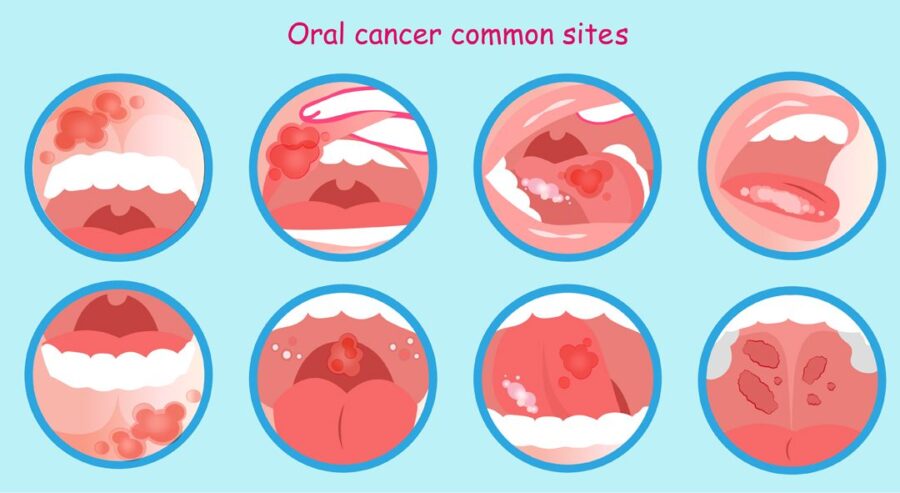
If you have seen pictures of people who have had oral cancer, you’ll know that it can cause a lot of damage to the surrounding tissues. Yes, you might develop cancer in a tooth but you could also develop cancer in your tongue, gums, palate or tonsils. The cancers that develop in the mouth are squamous cell carcinomas (SCC), which develops in the skin cells around your teeth, and cancers of the salivary glands. These cancers can also spread to other parts of the body and unfortunately, they have a very high death rate.
Can Cancer Start Inside a Tooth?
The hard tissues of a fully formed tooth are not a usual location for common oral cancer. Most oral cancers begin in the tissues lining areas such as the lips, gums, cheeks, tongue, floor of the mouth or palate—not in the enamel of a tooth. However, rare tumours known as odontogenic tumours can arise from tissues involved in tooth formation. These lesions generally develop within the upper or lower jaw rather than appearing as cancer growing on the visible surface of a tooth. Most odontogenic tumours are benign, but rare malignant forms are recognised. Therefore, the phrase “tooth cancer” can be misleading. A more accurate distinction is between oral cancer affecting tissues around the teeth and rare tumours arising from tooth-forming tissues or jawbone.
Can Oral or Jaw Cancer Feel Like a Dental Problem?
Some oral and jaw conditions can initially resemble a routine dental problem. A patient may experience unexplained pain, swelling, numbness, tooth mobility or difficulty chewing. Oral-cancer warning signs may include a persistent mouth ulcer, red or white patch, lump, unexplained bleeding, numbness or swelling of the jaw. A jaw swelling may also cause a denture to become uncomfortable or stop fitting correctly. These symptoms are far more commonly caused by non-cancerous dental or gum conditions. Nevertheless, persistent or unexplained symptoms should not be repeatedly treated without establishing the underlying diagnosis.
When Should a Tooth or Jaw Problem Be Investigated Further?
The dentist or oral and maxillofacial surgeon may examine the mouth, teeth, gums and neck and request an X-ray or three-dimensional scan. When abnormal tissue remains suspicious, a biopsy may be required to determine its exact nature. A photograph, online consultation or dental X-ray alone cannot reliably confirm or exclude cancer.
- An unexplained loose tooth
- Persistent pain without an obvious dental cause
- A swelling of the gum or jaw
- Numbness of the lip, chin or mouth
- A mouth ulcer or patch that does not heal
- Repeated unexplained bleeding
- Difficulty opening the mouth, chewing or swallowing
- A lesion that continues enlarging
Conclusion
Any persistent mouth ulcer, unexplained swelling, loose tooth without an obvious cause, red or white patch, or pain lasting longer than two weeks should be professionally evaluated. Routine dental examinations play an important role in identifying suspicious changes early, improving the likelihood of timely diagnosis and appropriate treatment. Early detection remains one of the most effective ways to achieve better treatment outcomes and protect long-term oral health.
Frequently Asked Questions
Is it possible to develop cancer on tooth?
No. Cancer does not develop within the hard structure of a tooth. Oral cancer develops in the surrounding soft tissues, such as the gums, tongue, cheeks, lips, palate, or floor of the mouth.
Can oral cancer cause tooth pain?
Yes. Oral cancer affecting nearby tissues or bone may sometimes cause pain, loose teeth, swelling, or discomfort that feels similar to a dental problem.
What are the early signs of oral cancer?
Early signs may include persistent mouth ulcers, red or white patches, unexplained swelling, lumps, difficulty swallowing, loose teeth without an obvious cause, or persistent pain lasting longer than two weeks.
How do dentists check for oral cancer?
Dentists examine the lips, tongue, gums, cheeks, palate, floor of the mouth, and surrounding tissues during routine dental examinations. Suspicious areas may require further investigation or referral for biopsy.
When should I visit a dentist for possible oral cancer?
You should arrange a dental examination if you notice a mouth ulcer lasting more than two weeks, unexplained swelling, red or white patches, loose teeth, persistent pain, or any unusual changes affecting your mouth or gums.
Is toothache usually a sign of cancer?
No. Toothache is much more commonly related to decay, infection, gum disease, cracks or problems with an existing restoration. Persistent unexplained pain should still be evaluated.
Can oral cancer make a tooth loose?
It can, although gum disease and dental infection are much more common causes of tooth mobility. An unexplained loose tooth requires clinical and radiographic examination.
Can a dentist detect cancer near a tooth?
A dentist may identify suspicious tissue or unusual jaw changes during an examination and refer the patient for specialist assessment. A biopsy is generally required to confirm cancer.
Are all jaw tumours cancerous?
No. Many jaw and odontogenic tumours are benign. Their behaviour and treatment depend on the particular tumour type, size and location.