
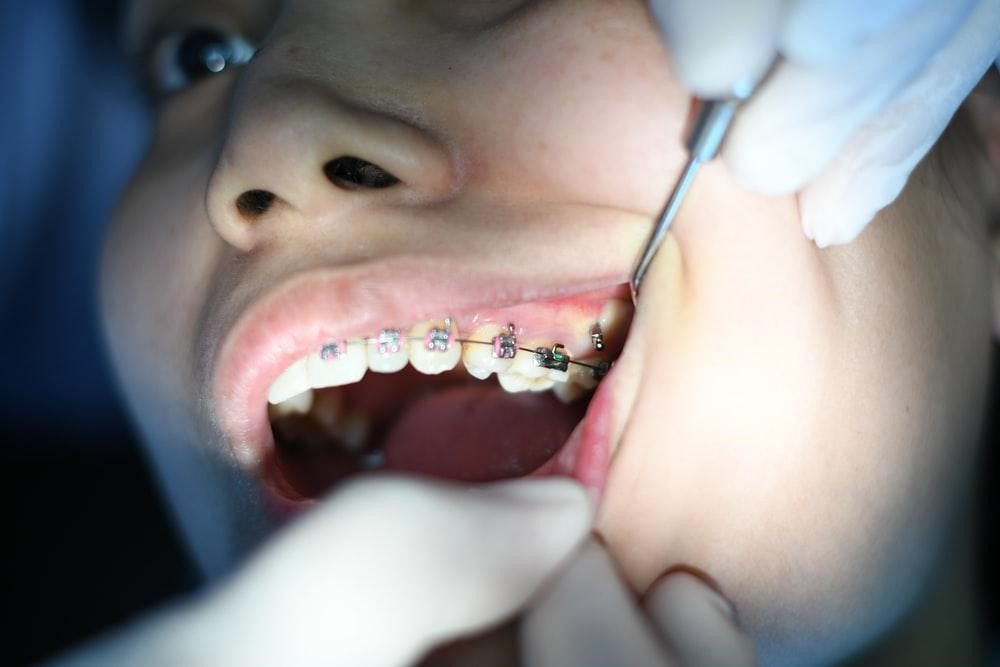
Not always. Wisdom teeth do not have to be removed before braces in every patient. The decision depends on whether the wisdom tooth is impacted, painful, infected, decayed, damaging the second molar, or interfering with the orthodontic plan. If the wisdom tooth is healthy, fully erupted, easy to clean, and not affecting treatment, it may only need regular monitoring. The safest decision is made after clinical examination and X-ray or CBCT evaluation. Learn when to extract wisdom teeth before braces, when it can be avoided, and how X-rays help plan orthodontic treatment.
Who is this article for?
This article is for teenagers, young adults, and parents who have been advised braces or aligners and are worried about wisdom tooth removal. It is also useful for patients who already have impacted wisdom teeth, jaw pain, swelling, food lodgement, or repeated gum infection behind the last molar. A consultation helps decide whether wisdom teeth should be removed before braces, during treatment, after treatment, or simply monitored.
When to extract wisdom teeth before braces is not possible?
Wisdom teeth may not need to be removed if they have erupted fully, are functional, painless, cavity-free, disease-free, and can be cleaned properly. Oral and maxillofacial surgery guidance also states that such wisdom teeth may be monitored with regular check-ups and periodic radiographs. In these cases, removal just because braces are starting may not be necessary.
When wisdom tooth extraction may be advised before braces?
Extraction may be advised if the wisdom tooth is impacted, infected, painful, repeatedly swollen, badly decayed, causing gum disease, damaging the second molar, associated with cystic changes, or blocking the orthodontic movement of teeth. NICE guidance recommends that surgical removal of impacted wisdom teeth should be limited to cases with pathology such as unrestorable decay, infection, cyst or tumour, resorption, fracture, or damage to adjacent teeth.
Do wisdom teeth cause teeth to become crooked again after braces?
This is a common fear, but the answer is not so simple. Teeth can shift after braces for many reasons, including natural ageing changes, gum health, bite forces, and not wearing retainers properly. Wisdom teeth are not the only reason for relapse. That is why retention after braces is very important, whether wisdom teeth are present or not. The existing article already mentions that not wearing a retainer correctly can affect alignment more than wisdom teeth alone.
Why X-ray or CBCT is important before deciding
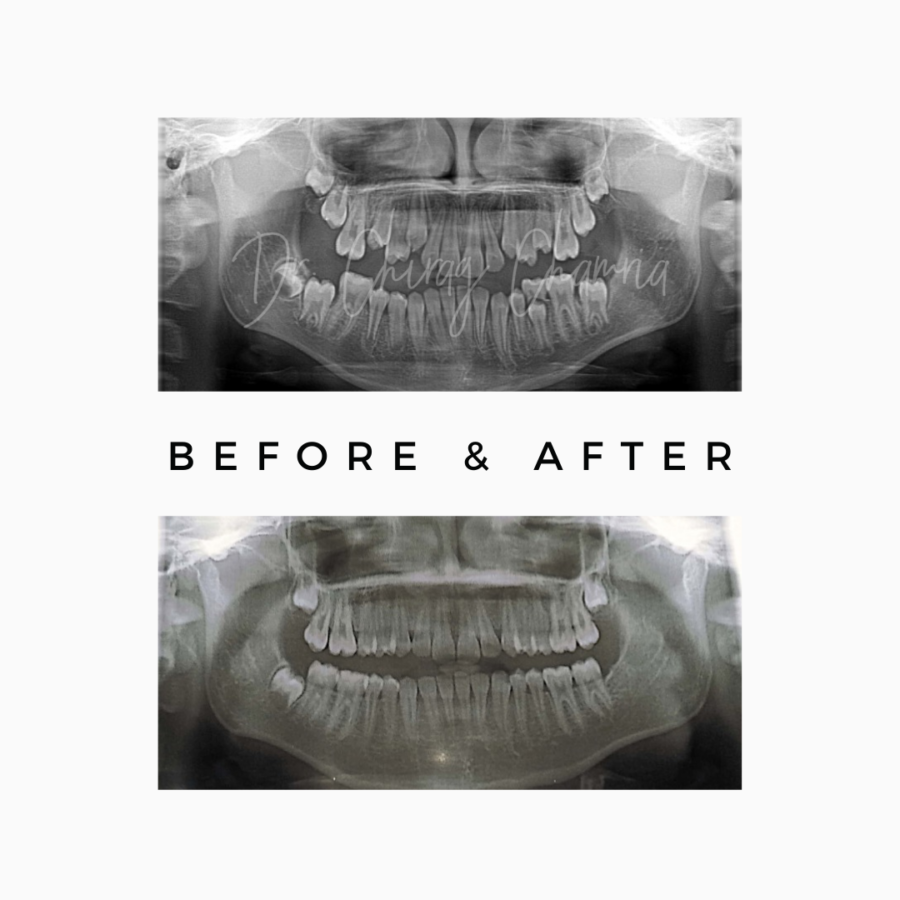
A dentist or orthodontist cannot decide only by looking inside the mouth. A panoramic X-ray or CBCT scan helps check whether the wisdom tooth is vertical, tilted, horizontal, partially erupted, close to the nerve, touching the second molar, or surrounded by infection. This imaging also helps the orthodontist plan whether space is needed for tooth movement and whether the oral surgeon should remove the tooth before braces.
Should we extract wisdom teeth before or after braces?
The timing depends on the case. If the wisdom tooth is painful, infected, or damaging nearby teeth, removal may be done before starting braces. If it is not causing a problem, the orthodontist may start braces and monitor it. In some patients, wisdom teeth are removed after orthodontic treatment if they become symptomatic or difficult to maintain. There is no one fixed rule for every patient.
Can braces start if wisdom teeth are still inside the jaw?
Yes, braces or aligners can often begin even if wisdom teeth are still developing or unerupted. The orthodontist will check whether they are likely to interfere with tooth movement or future stability. If there is no active disease or obstruction, monitoring may be enough.
Missing topic to add — wisdom teeth can sometimes be useful
In rare cases, a wisdom tooth may be useful. If a nearby molar is badly decayed or missing, the orthodontist may consider moving the wisdom tooth forward to replace that space. This is case-dependent and requires proper planning. Therefore, wisdom teeth should not be removed automatically without checking their position, health, and possible future use.
Braces are used to straighten crooked teeth, align bite, or create space so that permanent teeth can properly come in as they grow.
Wisdom teeth have been off great debate amongst orthodontists. Extraction of wisdom teeth before starting braces treatment depends on variety of factors. Hence, one of the main reasons that patients undergo wisdom teeth removal is that there is not enough space for the molars to erupt resulting in tooth impaction. If the teeth impacted, infection, cavities, overcrowding and periodontal disease are more likely to occur. The reason behind this is if wisdom teeth erupt after the orthodontic treatment, it will affect and undo the smile and teeth alignment that the braces helped to create.
-Frank Schaffer
In other cases, where there space in the jaw, these third molars act as an anchor for orthodontic treatment and left in place. However, one more problem that occurs involves the posterior teeth cracking and breaking. During and after orthodontic treatment, tightly secured appliances given that shift the teeth and keep them in place. As the wisdom teeth push against the teeth and because the teeth are not able to more due to orthodontic appliances, it can cause significant damage to surrounding teeth. As a result, these is possibility that the tooth may require toot canals, dental crowns and even extractions.
Braces Treatment and Wisdom Teeth
In general, wisdom teeth removed if they have surrounding gum disease, cavities that can’t be restored, infected or have associated tumors or cysts. In addition, wisdom teeth that erupting improperly or damaging the neighboring teeth need removed.
Orthodontic treatments may require removal of wisdom teeth to create space to correct crowding or if wisdom teeth have moved into an un favourable position and are interfering with the function. However, there conditions where the wisdom teeth moved orthodontically to replace badly decayed and extracted neighbouring molar teeth. In short, unless there a specified orthodontic need for wisdom teeth removal the should be restored.
There are numerous reasons why wisdom teeth may be extracted by an oral surgeon. However, none of these reasons have to do with the shifting of the rest of your teeth. Wisdom teeth do have the potential to cause tooth decay, create cysts, and generate a lot of unnecessary pain.
Dentists suggest getting your wisdom teeth removed if you are experiencing any of the following conditions, symptoms, or situations:
- Excessive tooth decay
- Various forms of gum disease are experienced
- Damage to nearby teeth caused by crowded molars
- Fluid-filled cysts have been detected
- Constant, chronic or persistent pain
Most, if not all, people who develop wisdom teeth will need to have them extracted. Some unique cases don’t require wisdom tooth extraction, but these are few and far between. Additionally, wisdom teeth should be easy to access with a toothbrush and floss to reduce the chance of tooth decay and cavities. At the end, it’s a personal decision whether or not you want to wait until the wisdom teeth come in to get braces. Just know, that wisdom teeth will not affect the alignment of already straightened teeth, but not wearing a retainer correctly could.
FAQs
Do I always need wisdom teeth removed before braces?
No. Wisdom teeth do not always need to be removed before braces. If they are healthy, painless, fully erupted, and not affecting the orthodontic plan, they may only need monitoring.
Can I start braces before removing wisdom teeth?
Yes, in many cases braces can start even if wisdom teeth are present. The orthodontist will check the X-ray and decide whether removal is needed before, during, or after treatment.
When should wisdom teeth be removed before braces?
They may be removed before braces if they are impacted, infected, painful, decayed, damaging the second molar, causing gum disease, or blocking planned tooth movement.
Will wisdom teeth make my teeth crooked again after braces?
Not necessarily. Teeth can shift due to several reasons, especially poor retainer wear. Wisdom teeth alone should not be blamed for every relapse after braces.
Is wisdom tooth extraction painful?
The procedure is usually done under local anaesthesia, so sharp pain should not be felt during removal. Some swelling, soreness, or limited mouth opening may happen after surgery and is managed with post-operative care.
Do I need CBCT before wisdom tooth extraction?
A CBCT may be advised if the wisdom tooth is close to the nerve, deeply impacted, unusually positioned, or if surgical planning needs more detail than a regular X-ray.
Can wisdom teeth be kept during orthodontic treatment?
Yes. If they are healthy and not disturbing the treatment plan, wisdom teeth can be kept under observation with regular dental check-ups and X-rays.
Who should decide — orthodontist or oral surgeon?
Ideally, both should be involved. The orthodontist evaluates tooth movement and space, while the oral surgeon evaluates impaction, infection, nerve relation, and surgical risk.