Dental technology has come a long way in recent years, and one of the most exciting developments is the rise of oral dental scanners. These devices use 3D imaging technology to create an accurate digital impression of a patient’s teeth and gums, allowing dentists to diagnose and treat dental issues more effectively than ever before. But how exactly do these scanners work, and what benefits do they offer over traditional methods? In this article, we’ll take a closer look at oral dental scanners, exploring the technology behind them and how they are transforming the field of dentistry. Whether you’re a dental professional or simply interested in the latest advances in dental technology, read on to discover why oral dental scanners matter – and why they’re here to stay.
Who Is This Article For?
- Patients undergoing dental treatment
- Individuals considering dental implants
- People receiving crowns or veneers
- Patients interested in modern dental technology
- Anyone curious about digital dentistry
How do Oral Dental Scanners work?
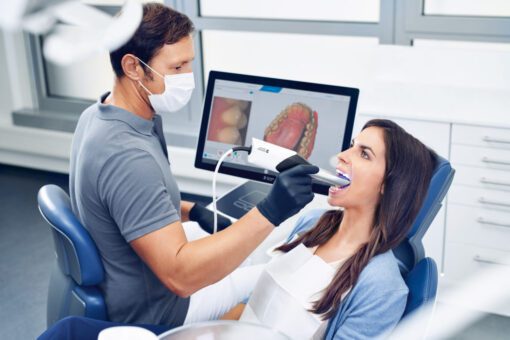
They are handheld devices that use 3D imaging technology to create digital impressions of a patient’s teeth and gums. These impressions are created by taking multiple images of the teeth from different angles, which are then combined to create a 3D model of the patient’s mouth. The scanner is moved around the mouth, capturing images of each tooth as well as the surrounding gums and tissue. The images are then combined to create a highly accurate 3D model of the patient’s mouth. One of the key benefits of oral dental scanners is their speed and accuracy. Traditional methods of taking impressions, such as using dental putty or trays, can be time-consuming and uncomfortable for patients.
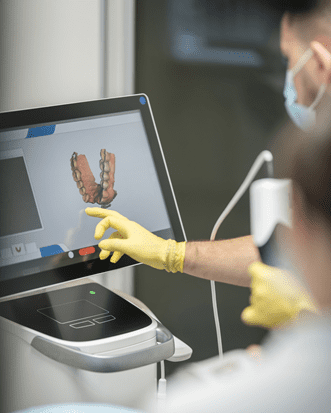
With an oral dental scanner, the entire process can be completed in just a few minutes, and the accuracy of the digital impression is much higher than with traditional methods. This digital impression can then be used to create dental restorations, such as crowns or bridges, that fit perfectly with the patient’s teeth and gums.
Another advantage of them is their ease of use. The scanner is lightweight and easy to handle, and the images can be viewed instantly on a computer screen. This allows the dentist to check the accuracy of the impression and make any necessary adjustments before sending the digital impression to the dental lab. This also means that there are no messy materials to deal with, and the scanner can be easily sterilized between patients.
Benefits of Oral Dental Scanners
Improved patient experience; They are much more comfortable for patients than traditional methods of taking impressions. Patients no longer have to endure the discomfort of having dental putty or trays in their mouth, which can cause gagging or discomfort. Instead, the scanner is simply moved around the mouth, capturing images of each tooth and the surrounding tissue.
Greater accuracy: Oral dental scanners create highly accurate digital impressions of the patient’s mouth. This means that dental restorations, such as crowns or bridges, can be made to fit perfectly with the patient’s teeth and gums. This leads to better outcomes for the patient, as well as fewer remakes or adjustments needed.
Faster turnaround times: Because they create digital impressions, they can be sent instantly to the dental lab. This means that dental restorations can be made more quickly, reducing the amount of time the patient has to wait for their restoration. This is especially important in cases where a patient needs a restoration quickly, such as in the case of a broken tooth or a dental emergency.
More efficient workflow: They can help dental practices become more efficient by reducing the amount of time spent on taking impressions and creating dental restorations. This means that dental professionals can see more patients in less time, increasing the productivity of the practice.
Comparison: Alginate Impression vs Intra-oral Scanning
To fully appreciate the benefits of oral dental scanners. It’s important to compare them to traditional methods of taking dental impressions. Here are some of the key differences between these two methods:
Comfort: Traditional methods of taking impressions can be uncomfortable for patients. Dental putty can cause gagging or discomfort, and trays can be difficult to tolerate for patients with a sensitive gag reflex. Oral dental scanners, on the other hand, are much more comfortable for patients.
Accuracy: Oral dental scanners create highly accurate digital impressions of the patient’s mouth. Traditional methods, such as dental putty or trays, can be subject to distortion or shrinkage. Which can lead to inaccurate impressions.
Speed: Taking impressions with traditional methods can be time-consuming. Especially if adjustments need to be made or if multiple impressions are needed. Oral dental scanners can create an accurate digital impression in just a few minutes. Reducing the amount of time the patient has to spend in the dental chair.
Ease of use: Oral dental scanners are easy to use, with a short learning curve for dental professionals. Traditional methods, such as dental putty, require more skill and experience to use effectively.
Types of Oral Dental Scanners
Intraoral scanners: Intraoral scanners are the most common type of oral dental scanners. They are handheld devices that are used to scan the teeth and gums from inside the mouth. These scanners are highly accurate, fast, and easy to use.
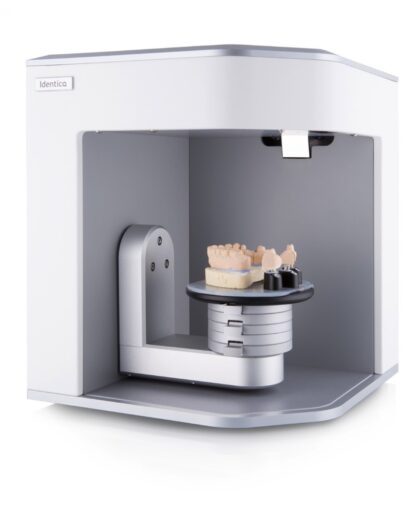
Desktop scanners: Desktop scanners are larger than intraoral scanners and are designed to be used on a desktop or a countertop. They are ideal for scanning dental models or impressions that have been taken with traditional methods.
Portable scanners: Portable scanners are smaller and more lightweight than desktop scanners. Making them ideal for use in the field or remote locations. They are battery-powered and can be easily transported from one location to another.
Wand scanners: Wand scanners are a type of intraoral scanner that uses a wand-like device to scan the teeth and gums. They are highly accurate and offer excellent image quality.
Factors to consider when choosing a Scanner
Accuracy: The most important factor to consider when choosing an oral dental scanner is accuracy. Look for a scanner that creates highly accurate digital impressions, with minimal distortion or shrinkage.
Speed: The speed of the scanner is also important, as faster scanners can help increase efficiency in dental practice. Look for a scanner that can create an accurate digital impression in just a few minutes.
Ease of use: Oral dental scanners should be easy to use, with a short learning curve for dental professionals. Look for a scanner that is intuitive and easy to handle.
Compatibility: Make sure that the scanner is compatible with your dental practice’s software and equipment. This will ensure that the digital impressions can be easily integrated into your workflow.
Cost: Finally, consider the cost of the scanner. Oral dental scanners can vary widely in price, with some models costing several thousand dollars. Consider your budget and the potential return on investment when choosing a scanner for your practice.
Top brands of Oral Dental Scanners
- Medit: Medit is excited to announce of New Intra Oral Scanner, New Medit i700. The Mediti700 makes the scanning experience a comfortable one for both dentist and patient.
- iTero: iTero is a popular brand of intraoral scanners that offer high accuracy and excellent image quality. Their scanners are also fast and easy to use, with an intuitive interface.
- 3Shape: 3Shape is another popular brand of oral dental scanners, known for their high accuracy and advanced features. Their scanners are also highly compatible with a variety of software and equipment.
- TRIOS: TRIOS is a brand of intraoral scanners that offers excellent accuracy and speed. Their scanners are also lightweight and easy to handle, with a comfortable grip.
Case Studies: Effectiveness of Oral Dental Scanners
Dental restorations
Oral dental scanners can be used to create highly accurate digital impressions that are used to create dental restorations, such as crowns or bridges. i can be made to fit perfectly with the patient’s teeth and gums, leading to better outcomes and fewer remakes.
Orthodontics
Oral dental scanners are also used in orthodontics to create digital models of the patient’s teeth and gums. These models can be used to plan and monitor the progress of orthodontic treatment. Leading to better outcomes and more efficient treatment.
Implant planning
Oral dental scanners can be used to create digital models of the patient’s mouth that are used to plan dental implant placement. This leads to more accurate implant placement and a higher success rate for the implant.
Training and Support
Dental professionals who are interested in using oral dental scanners should seek out training and support to ensure that they can use the devices effectively. Many manufacturers offer training programs and support for their scanners, helping dental professionals to get up to speed quickly and effectively. In addition, dental professionals should consider attending conferences or workshops that focus on the use of them. These events provide an opportunity to learn from experts in the field and to network with other dental professionals who are using these devices. Overall, training and support are essential for dental professionals who are interested in incorporating oral dental scanners into their practice.
Future of Oral Dental Scanners in dentistry
They are quickly becoming an essential tool in dental practices around the world. As the technology continues to improve, these devices will likely become even more accurate, faster, and easier to use. In addition, oral dental scanners are likely to become even more versatile. With new applications in areas such as oral cancer, airway analysis, and sleep apnea diagnosis. As dental professionals continue to explore the potential of these devices. The future of oral dental scanners in dentistry looks bright.
Conclusion
Oral dental scanners have transformed modern dentistry by replacing traditional impression materials with fast, accurate digital imaging. These advanced devices create detailed three-dimensional models of the teeth and gums, helping dentists plan treatments more precisely and improve patient comfort. Digital scanners are widely used for dental implants, crowns, bridges, veneers, orthodontics, and smile makeovers. By improving accuracy, reducing treatment time, and enhancing the patient experience, oral dental scanners have become an important part of modern digital dentistry.
FAQ
What is an oral dental scanner?
An oral dental scanner, also known as an intraoral scanner, is a digital device that captures highly detailed images of the teeth, gums, and surrounding oral structures to create a three-dimensional digital model.
How does an intraoral scanner work?
The scanner uses a small handheld wand that moves around the mouth while capturing thousands of images. Specialized software then combines these images into a precise digital impression.
Are digital dental scans more accurate than traditional impressions?
Yes. Digital scans often provide greater accuracy, improved detail, and reduced distortion compared to conventional impression materials, especially for complex dental procedures.
What treatments use oral dental scanners?
Dental scanners are commonly used for dental implants, crowns, bridges, veneers, orthodontic treatment, clear aligners, dentures, and smile makeover planning.
Are oral dental scanners comfortable for patients?
Yes. Most patients find digital scanning more comfortable than traditional impressions because it eliminates the need for bulky impression trays and impression materials.
How long does a dental scan take?
Most intraoral scans can be completed within a few minutes, depending on the complexity of the case and the area being scanned.
Why are oral dental scanners important in modern dentistry?
They improve treatment accuracy, enhance communication between dentists and dental laboratories, reduce chair time, increase patient comfort, and support better overall treatment outcomes.