
Crown act as a way to extend the life of an existing tooth that may harmed due to damage or erosion. Dental crown given over a fractured tooth, root canal treated teeth or a dental implant. The extensive masticatory forces usually fracture or brake the crown. In some cases an imbalanced occlusion can also lead dislodgement of the crown or breakage of the crown. Other causes of crown fractured could be breakage due to trauma, biting on hard objects, clenching or grinding of teeth. Dealing with a Broke-off with Dental Crown? Read more!
Who is this article for?
This article is for patients who have chipped, cracked, fractured, or broken a tooth due to trauma, biting hard food, sports injury, fall, decay, grinding, or an old filling. It is also useful for patients who are not sure whether a broken tooth can be saved or whether they need bonding, filling, root canal, crown, extraction, bridge, or dental implant.
What should you do immediately after breaking a tooth?
Rinse your mouth gently with clean water. If there is bleeding, apply gentle pressure with clean gauze. If there is swelling, use a cold compress from outside the face. Try to save the broken tooth fragment if available and carry it to the dentist. Avoid chewing from that side and do not place aspirin or painkiller directly on the tooth or gum.
When is a broken tooth an emergency?
A broken tooth should be treated urgently if there is severe pain, bleeding, swelling, exposed nerve, loose tooth, sharp edge cutting the tongue, trauma to the face, or difficulty closing the mouth. Even if there is no pain, a broken tooth should be checked because cracks may extend deeper than what is visible from outside.
Can a broken tooth be saved?
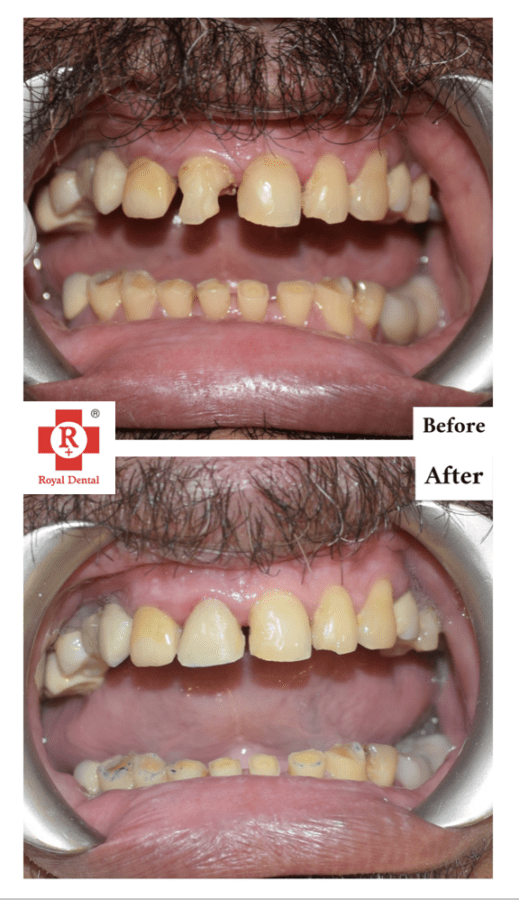
In many cases, yes. A broken tooth can often be saved if enough healthy tooth structure remains and the root is not vertically fractured. The dentist will check the depth of the fracture, nerve involvement, gum level, bite, X-ray findings, and restorability before deciding the treatment.
Small chip vs half-broken tooth vs deep fracture
A small chip may need only polishing, bonding, or enameloplasty. A half-broken tooth may need filling, root canal, post and core, or crown depending on nerve exposure and tooth strength. A deep fracture extending below the gum or into the root may need more advanced treatment, and in some cases extraction may be required.
Treatment options for a chipped or broken tooth
Treatment depends on the amount of damage. Options may include smoothing the sharp edge, tooth-coloured bonding, filling, veneer, dental crown, root canal treatment, post and core, gum correction, splinting, extraction, bridge, or dental implant. The aim is to save the natural tooth whenever possible, but only if it can be restored safely and predictably.
What if the broken tooth is a front tooth?
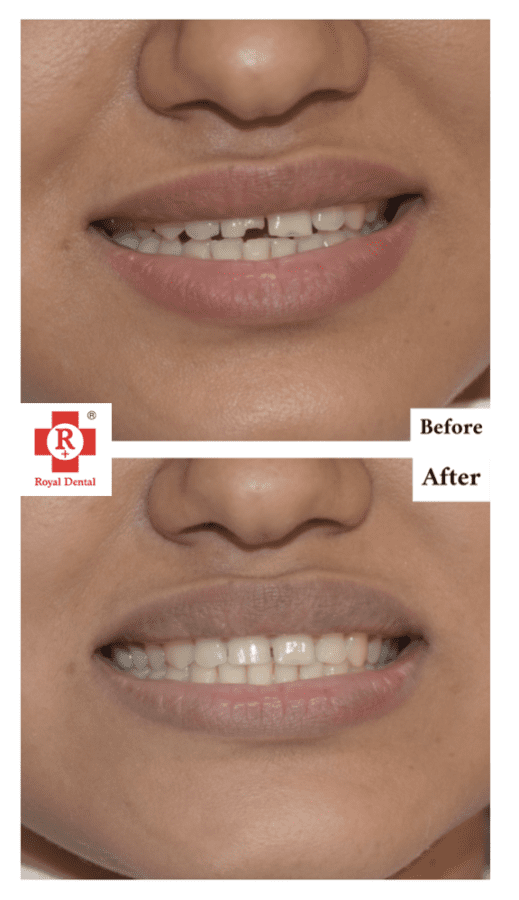
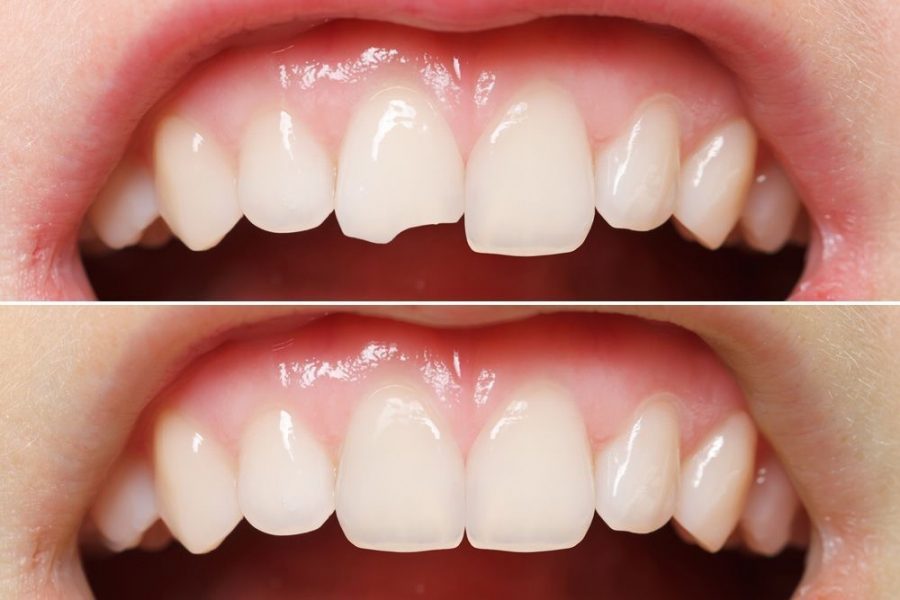
A broken front tooth affects smile, speech, and confidence. Depending on the fracture, treatment may include bonding, veneer, crown, root canal, or implant if the tooth cannot be saved. Front tooth treatment needs careful shade matching, tooth shape planning, and gum-line evaluation so that the result looks natural.
What if the broken tooth is a back tooth?
Back teeth take heavy chewing pressure. A small fracture may be restored with filling or crown, but deeper cracks may need root canal and full coverage crown. If the fracture extends into the root or the tooth is split, extraction and replacement may be discussed.
What not to do after breaking a tooth
Do not ignore the broken tooth because it is not painful. Do not chew hard food from that side. Do not file the sharp edge at home. Do not use household glue. Do not delay treatment if the tooth is sensitive to cold, painful while biting, or if the gum is swollen.
What to do when your dental crown breaks-off?
It’s important to find out what actually happened that your crown came off. If your crown comes off while a root canal is being done or your crown broke during the procedure, then you will need to refer to your dentist as soon as possible. It will be safe to say that this is not something to worry about. Crowns fabricated using shock absorbable permanent materials such as SAPT.Resin, SAPT.HIPC or SAPT.BioPeek. Crowns can also be non-polymer such as Ceramic and Zirconia.
If a dental crown damaged or fractured?
Or cracked, one may need to see a dentist. The broken crown with sharp edges can whereas cause soreness to the tongue and ulceration. Some may have experienced hot and cold sensitivity depending upon the underlying tooth. Inspect the crown and check if pieces are missing or dislodged. If the crown is easily removable then you may pull-off rather than swallowing it. Repairing the cracked or fracture dental crown depends on various types of material the crown fabricated on also the amount of damage and its severity.
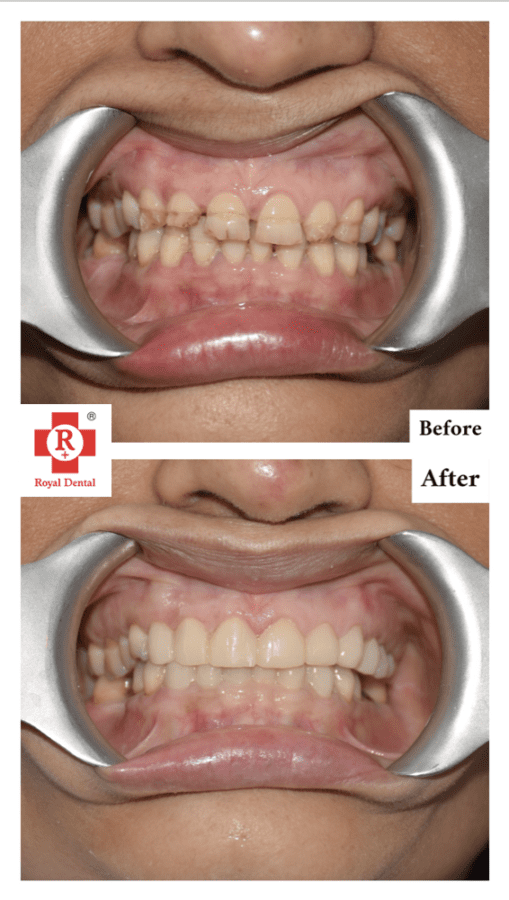
Royal Dental Clinics approach
At Royal Dental Clinics, broken tooth treatment starts with diagnosis. The dentist checks the fracture pattern, nerve involvement, bite, gum level, X-ray, and remaining tooth structure. The treatment plan may focus on saving the natural tooth with bonding, root canal, post and core, or crown. If the tooth cannot be saved, fixed replacement options such as bridge or dental implant may be discussed.
Conclusion
If a dental crown is damaged or cracked, call your dentist for advice on how soon you need to be seen. You may need to see an emergency dentist. ental crowns can break. People frequently break or chip crowns made of porcelain. If the chip is tiny, the chip can be repaired using composite resin and the crown may remain in the mouth. However, in a case where the chipping is extensive or when there are many chips, the crown may have to be replaced. Dental crowns are known as cap that surround your severely damaged tooth. Dental crowns are restore the strength the appearance of your tooth. You would need to gently clean the inside of the tooth first. Then, your dentist will dental adhesive to “glue” the crown back into its spot on your jawline.
FAQs
What should I do if I break a tooth?
Rinse your mouth, save the broken piece if possible, avoid chewing from that side, and visit a dentist as soon as possible.
Can a chipped tooth repair itself?
No. Enamel does not grow back on its own. A dentist can smooth, bond, fill, or restore the chipped area depending on the damage.
Does a broken tooth always need extraction?
No. Many broken teeth can be saved with bonding, filling, root canal, post and core, or crown. Extraction is considered when the tooth is not restorable.
Why does my broken tooth not hurt?
A broken tooth may not hurt if the nerve is not exposed or if the tooth is already root-canal-treated. However, it still needs evaluation.
Can a half-broken tooth be fixed?
Yes, if enough tooth structure remains. Treatment may include root canal, post and core, and crown depending on the fracture depth.
When do I need a crown for a broken tooth?
A crown may be needed when the tooth has lost significant structure, has a large filling, has undergone root canal, or needs full coverage for strength.
When is an implant needed for a broken tooth?
An implant may be considered if the tooth root is fractured, the tooth is split, or the remaining structure cannot support a predictable restoration.