
Previously in cases where there was thin or less bone, removable dentures very offered as the treatment of choice. However, this was not an acceptable solution for many persons. Similarly, removable dentures apply pressure over the gums and cause soreness, which reduces the eating efficiency as does not get adequate support from the bone, like in natural or fixed teeth solution. In less or no bone can you get Get Dental Implant For Missing Teeth?
Who is this article for?
This article is for patients who have been told they have less bone, weak bone, thin upper jaw bone, or “no bone” for regular dental implants. It is especially useful for denture wearers, patients with missing upper teeth, failed bridges, previous implant failure, severe gum disease, long-term tooth loss, or those who do not want removable dentures. In selected cases, advanced implant options such as zygomatic implants may help provide fixed teeth even when regular implants are difficult.
What does “no bone for dental implants” really mean?
When a dentist says there is “no bone,” it usually does not mean there is absolutely no bone anywhere in the face. It means the usual jawbone area may not have enough height, width, or quality to hold regular dental implants safely. This can happen after long-term missing teeth, gum disease, ageing, infection, trauma, or wearing dentures for many years. A CBCT scan helps the dentist understand how much bone is available and which implant option is suitable.
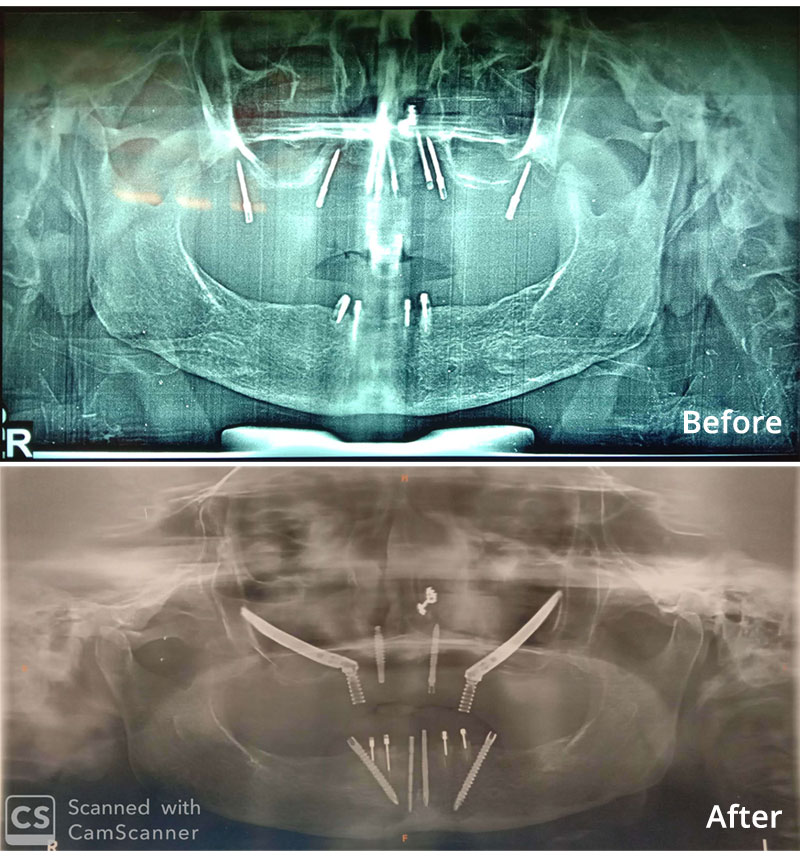
Why the upper jaw loses bone faster?
The upper jaw can become challenging for implants because the bone may be softer, thinner, and affected by the sinus area. After teeth are lost, the bone slowly shrinks, and the sinus space may reduce the available height for implants. This is why some patients are told they need bone grafting, sinus lift, or advanced implants. The treatment plan depends on how much bone is left and whether the patient wants fixed or removable teeth.
Zygomatic implants for severe upper jaw bone loss
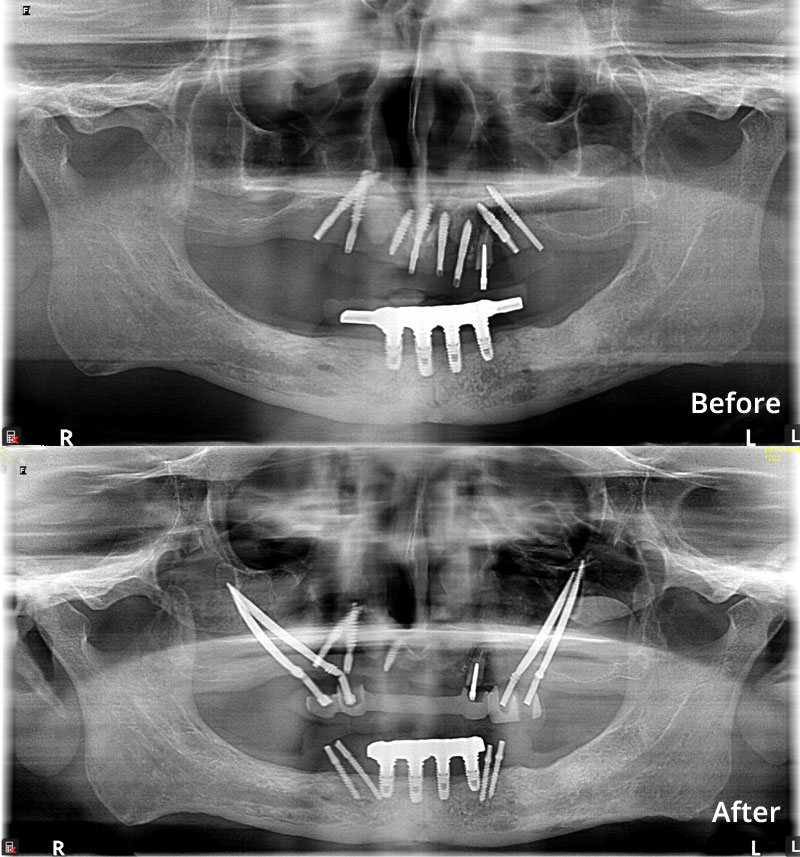
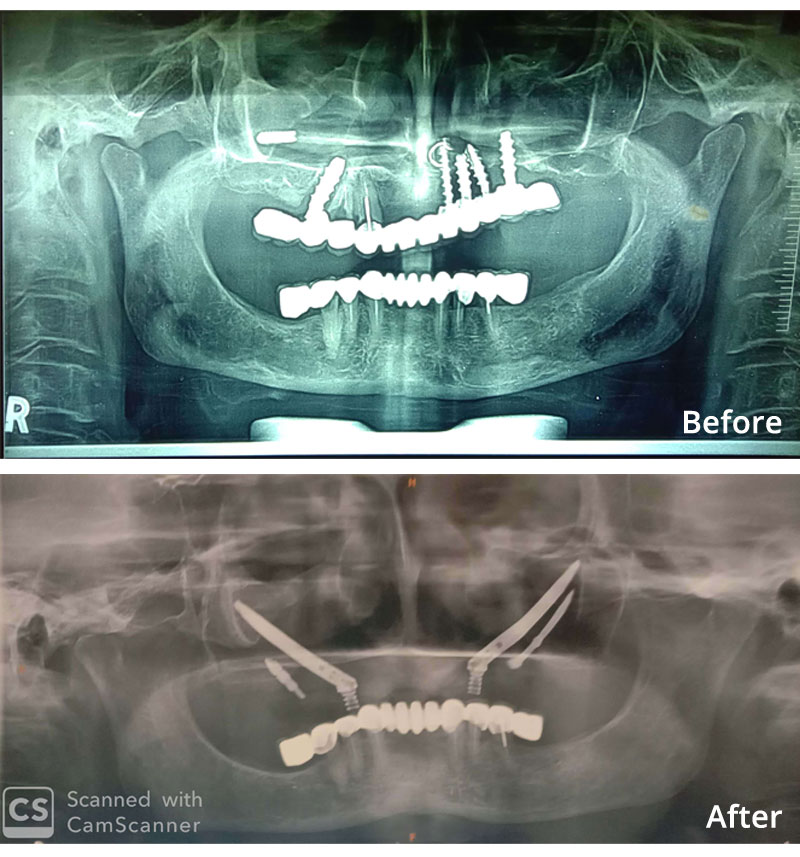
Zygomatic implants are longer implants used in selected patients with severe upper jaw bone loss. Instead of depending only on weak upper jaw bone, they take support from the cheekbone area. This can help some patients avoid removable dentures or multiple bone grafting procedures. Zygomatic implants are advanced implants and should be planned only after CBCT scans, medical history review, bite assessment, and specialist evaluation. Research reviews describe zygomatic implants as a promising alternative to formal bone grafting techniques in severely atrophic upper jaws.
Can fixed teeth be given in one day?
In selected cases, implants can be placed and fixed temporary teeth can be given on the same day. This is commonly called immediate loading or same-day fixed teeth. However, same-day teeth are not suitable for every patient. The dentist must check implant stability, bone support, bite force, gum condition, infection, medical health, and the patient’s ability to maintain hygiene. The final teeth may be made later after healing, depending on the case.
Zygomatic implants vs bone grafting
Bone grafting may be advised when the jawbone needs rebuilding before regular implants. However, grafting can increase treatment time and may require healing before implant placement. Zygomatic implants may be considered in selected upper jaw cases where regular implants and grafting are not ideal. The choice is not the same for every patient. Some patients benefit from grafting, some from zygomatic implants, and some from a combination of regular and advanced implants.
Role of digital planning, CBCT and 3D printing
In no-bone implant cases, planning is very important. CBCT scans help the dentist study bone, sinus, cheekbone support, and important anatomical structures. Digital planning, CAD-CAM and 3D printing can help plan implant position, temporary teeth, surgical guides, and prosthesis design before treatment. Technology improves planning, but the treatment still depends on clinical judgement, surgical experience, patient health, and follow-up.
SAPTeeth in no-bone implant cases
When implants are placed in weak bone or advanced cases, the final teeth should be comfortable, cleanable, and protective. SAPTeeth may be considered in selected cases because they are designed to be lightweight and shock-absorbable. This can be helpful in full-mouth or same-day fixed teeth cases where bite forces need to be controlled. However, material selection should be based on the patient’s bite, implant support, gum condition, hygiene access, and long-term maintenance.
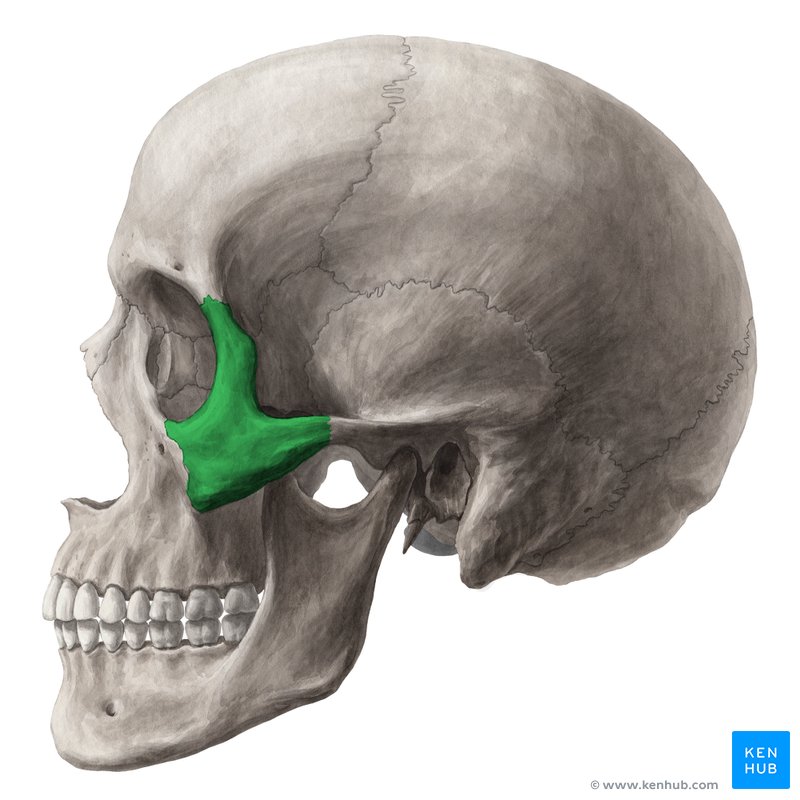
However, with the revolutionary SAPTeeth™ technology along with advances in dental implants a more success oriented, efficient, stable and capable solution can now offered as a permanent treatment choice. The difference between a Zygomatic Implant and a normal dental implant is that the former longer and placed diagonally into the cheek bone (zygoma), to make use of the extra bone here. Moreover, this bone usually does not resorb. Therefore, zygomatic implants used as an alternative to complex cases in Oral Implantology.
Who may not be suitable for same-day no-bone implants?
Same-day fixed teeth may not be suitable for patients with uncontrolled diabetes, active gum infection, heavy smoking, poor oral hygiene, severe grinding, poor medical fitness, or inability to attend follow-up appointments. These factors do not always rule out treatment, but they may require stabilisation before implants are placed. The safest plan is decided after examination, scans, and medical review.
When to get Zygomatic Implant?
- If you have lost your bone and tissue due to an accident or an infection; you may need to get them.
- Multiple failed dental implants may also be the reason for getting a zygomatic implant.
- These may be recommended if you’ve had facial trauma or cancer surgery.
- If the tissue around your mouth has decreased, regular dental implants may not help you.
Warning signs after implant treatment
After implant treatment, patients should contact the dentist if they notice increasing pain, swelling, bleeding, pus, bad smell, fever, loose teeth, loose prosthesis, sinus discomfort, numbness, or difficulty chewing. Mild soreness can happen after surgery, but worsening symptoms should not be ignored. Early follow-up can often correct small problems before they become larger complications.
Royal Dental Clinics Is A Pioneer For Same Day Fixed Teeth On Implants & Has Been Congratulated By The Scientific Committee Of World Congress On Oral Implantology An Apex Forum In The World; At USA In 2004.
Important advantage for Dental Implant in no bone
In this technology of a Zygomatic Implant; you get fixed teeth on the same day. In addition, the implant and prosthesis require less chair time for repair even follow-up procedure are relatively simple. Most of the treatment done on the dental chair, in local anaesthesia. Therefore, in cases where the complexity high then the same procedure performed in conscious sedation.
However, no bone dental implants are performed at a dental clinic with the support of 3D scanner, CBCT technology, 3D printer, CAD-CAM and Virtual Surgical. Therefore, SAPTeeth™ makes the treatment more success oriented, efficient and a capable solution.
Zygomatic Implants plummeted success rate to an impressive 97% with their new, innovative techniques. Zygomatic Implants with SAPTeeth™ by Royal Dental Clinics, takes upto a few weeks to heal and several procedures are completed in one to two days. In most cases, Royal Implant provides one-day treatment with immediate loading of dental implants.
Book Your Free Consultation Now!
Advantages of Zygomatic Dental Implant and SAPTeeth™
- Secure the Denture: One of the most common uses for zygomatic implants is to secure the bridge and framework made in SAPTeeth™ in place. Zygomatic implants work in all-on-4 or all-on-6 which can be used to secure the bridge.
- May have Plaque Build-up: Because the fixed bridge function as a permanent solution, they need to be professionally cleaned at least once in 6 months.
- Improved Oral Hygiene: While zygomatic dental implants are not a cure-all for poor oral hygiene, they can help some people who do not have the ability to keep their dentures clean. Because gums and teeth are less likely to become damaged with these dental implants, better oral hygiene is possible
The success of zygomatic implants over 5 years has been documented to be around 96% and over 10 years has been about 93%. With advanced Implantology; dental treatment for missing teeth in less or no bone can be completed in just One Day or a Single Sitting.
There are also risks associated with using such implants. If the implant is not secured properly, the implant may become infected. When this happens, the infection can spread beyond the implant and cause damage to the surrounding bone and tissue. This is why it is so important to get a professional opinion before using these implants.
The quality of life improves as you can now eat!
Dental Implants been around since the 1950s and have been perfected by various Institutional bodies over the years. Certainly, a dental implant can do wonders for confidence, since it resembles an ordinary tooth. Numerous individuals who were timid about smiling as a result of space from loss of a tooth, feel better after a dental implant.
Conclusion
In conclusion, as per Dr. Chirag Chamria, Maxillofacial Surgeon at Royal Dental Clinics, “Those who do not have enough jaw bone for the secure insertion of implants don’t have to give up on fixed dental prostheses, thanks to Zygoma implants.” With advanced Implantology; dental treatment for missing teeth in can be completed in just One Day or a Single Sitting.
To schedule a consultation for complete dental rehabilitation even in less jaw bone email on info@royaldentalclinics.com.
FAQs: No Bone Dental Implant
Implants are foreign materials in the body, do they cause any harm?
Firstly, they are QC and fit for human implantation. Dental implants have not shown any allergic reaction. This material is similar to the materials used by orthopaedic surgeons for fracture treatment, knee replacements etc.
I have heard, Implants in thin/weak bone are not stable in long term, what is different in this technology?
Zygomatic dental implants by itself has a success rate higher than the conventional dental implants Internationally. SAPTeeth with zygomatic dental implants offer added advantage of reduced pressure on the jaw bone. Hence, this technology offers long term stability.
Will my smile and looks change?
A good smile is the one in which the edges of the upper teeth seat just above the lower lip. In other words, your looks will not change, but it will be enhanced youthfully.
How long will the new teeth last?
The success rate of dental implant is 95% over a 5 year period and 90% success rate over a 10 year period. However, Royal Dental Clinics offers a 5 year service free warranty for the treatment performed.
Can I enjoy non- vegetarian food such as meat with these teeth?
As in cases of stress during eating, SAPTeeth™ technology offers considerable reduction in the force transmitted to the implant and bone. This technology also allows for the implant and tooth under the SAPTeeth™ teeth to relax. Therefore, this allows to harder food particles to chewed with relative ease.
How much time would my treatment take?
Depending on the case, the treatment will usually take a few hours with 2-3 short duration follow-up appointments.
Is it painful?
With the advances in local anesthesia, minimal/no pain if felt during the treatment. After that, minor pain killer can be prescribed. However, in cases, where due to apprehension or otherwise, if you want the treatment can perform in complete sedation as well.
What if my implant or teeth break or fail?
Failure of dental implant is a known but rare complication. However, in such cases repair or replacement of the implant done. In addition, the repairs in SAPT technology is simple, and can be done on the dental chair itself.
Are they expensive?
In someway, zygomatic dental implant considered better than traditional implants. However in cases where the bone is less for traditional implants, bone grafting is the alternative solution which may take around half a year for healing followed by dental implants.
Medical Disclaimer
This article is for patient education only. Dental treatment should be planned after clinical examination, medical history review, and X-rays or scans where required. Treatment suitability, cost, timeline, healing, and results vary from patient to patient.