
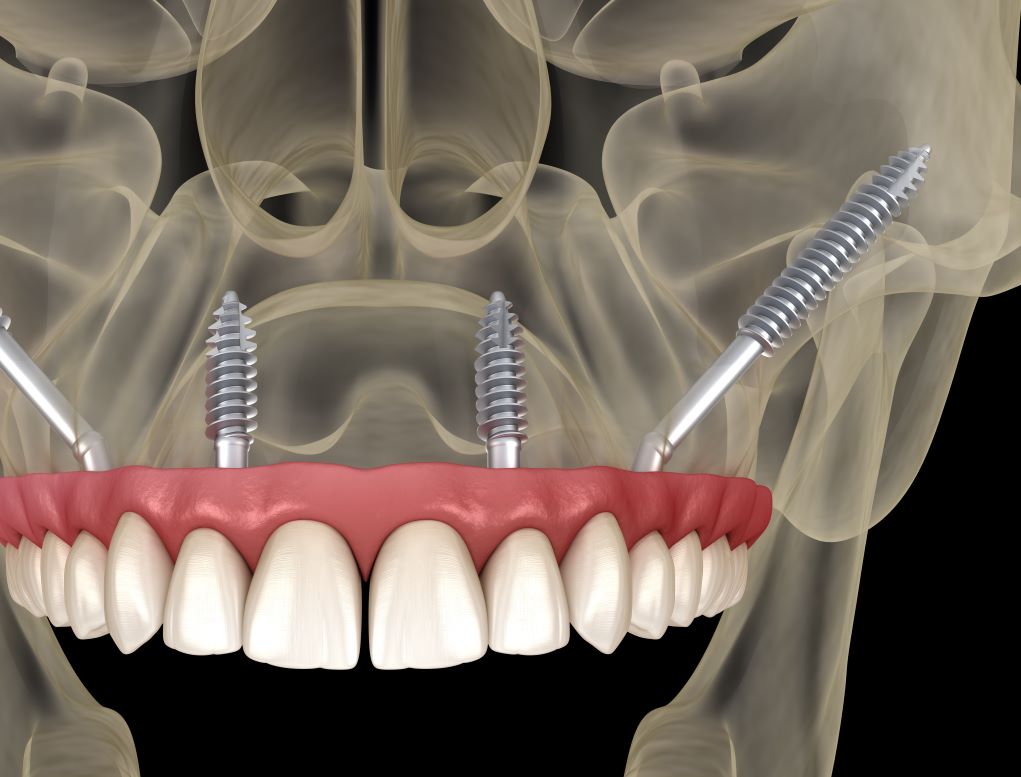
Zygomatic Implant treatment is an advanced solution for patients who have severe bone loss in the upper jaw and may not qualify for conventional dental implants. Instead of placing implants into the jawbone, zygomatic implants are anchored into the cheekbone (zygoma), providing excellent stability without requiring extensive bone grafting. This innovative approach allows many patients to restore their smile with fixed teeth and improved oral function.

Zygomatic Implant treatment is an advanced solution for patients with severe bone loss in the upper jaw who are not suitable candidates for conventional dental implants. By anchoring the implant into the cheekbone (zygoma) instead of the jawbone, this procedure provides a stable foundation for fixed teeth and often eliminates the need for extensive bone grafting.
With modern 3D imaging, digital treatment planning, and guided implant surgery, zygomatic implants have become a predictable and reliable option for restoring oral function, improving chewing ability, and helping patients regain a confident smile.
Who Is This Article For?
This article is ideal for:
- Patients with severe upper jaw bone loss
- Individuals told they require bone grafting
- People struggling with loose dentures
- Patients looking for fixed teeth solutions
- Individuals considering full mouth dental implants
What are dental zygomatic implants?
These are artificial tooth roots that are surgically installed in the upper jaw. The implants are made up of titanium. Zygomatic are designed to support dental crowns that replace missing teeth. A dental implant is anchored into zygoma or cheek bone, where eventually implant will fuse with surrounding tissue. This creates an anchor point for new teeth to be attached and supported by new bone growth.
Who is a candidate for dental zygomatic implants?
Dental zygomatic implants are not typically used for missing teeth in the front of the mouth. Rather, they are typically used when you have lost your back molars or premolars. If you have lost all your teeth, and want to replace those missing teeth with dental crowns; dental zygomatic implant is a good option for you! If you are wearing complete dentures or have been told that you need a bone graft; then zygomatic implants are a better fixed option for you.
What is the process of getting dental zygomatic implants?
The first step is to consult with your dentist and discuss your treatment options. Your dentist can provide you with an estimate for the cost of the implant and the procedure. You will also be guided with the timelines for your detnal treatment. Following which you will need to undergo a dental check-up and an x-ray to make sure there are no other dental issues. If all is clear, your treatment will be scheduled and the process will begin!
During this time, your gums will be numbed and you will be lightly sedated. The surgeon then places the implants into the missing tooth region using drills and screws. Using the advantage of 3D printing and CAD-CAM technology, now it is possible to place dental implant with minimally invasive surgery.
You should also know that getting dental zygomatic implants isn’t just about replacing missing teeth with artificial ones. It’s also about giving back stability to your jawbone such that it can hold the SAPTeethTM in place.
What should I expect after getting zygomatic implants?
After the placement of zygomatic implants, dental impressions will be fabricated. Following that in a matter of few hours, your implants will be ready for the dental crowns. Together, the implants and new crowns form a replacement for your missing teeth.
Some people may notice some sensitivity as the bone heals around the new roots. This is normal as the new roots integrate with your jawbone. However, this should go away after about 4-6 weeks. There can be some alterations in speech which would adjust in about 6 weeks.
After you have healed from the procedure, you can have complete confidence in your smile! Dental zygomatic implants ensure that you can comfortably chew food and speak without worrying about what people might think of your appearance.
Conclusion
A Zygomatic Implant is an excellent solution for patients with severe upper jaw bone loss who wish to avoid complex bone grafting procedures. Using advanced digital planning and modern implant techniques, many patients can restore their smile with fixed teeth, improved chewing ability, and renewed confidence. A consultation with an experienced implant dentist is the best way to determine whether this treatment is right for you.
If you’ve been told you don’t have enough upper jaw bone for conventional dental implants, a Zygomatic Implant may be the ideal solution. Schedule a consultation with the implant specialists at Royal Dental Clinics to explore your treatment options and receive a personalized rehabilitation plan.
FAQs
1. What is a zygomatic implant?
A zygomatic implant is a long dental implant anchored into the cheekbone to support fixed teeth in patients with severe upper jaw bone loss.
2. Do I need bone grafting before a zygomatic implant?
Many patients can avoid bone grafting because the implant is secured in the zygomatic bone rather than the weakened upper jaw.
3. Is zygomatic implant surgery painful?
The procedure is performed under anesthesia or sedation, and most patients experience only mild discomfort during recovery.
4. How long does recovery take?
Initial healing generally occurs over a few weeks, while complete implant integration takes several months.
5. Are zygomatic implants permanent?
With proper care and regular dental check-ups, zygomatic implants can provide a long-lasting solution for missing teeth.