
Both veneers and crowns are restorations used to correct the appearance of your teeth. Both can be used to mask imperfections and improve your smile, but they have some important differences you should know. To help you understand what’s available, know your reason of going for cosmetic dentistry. Both veneers and crowns are dental restorations that are used to improve the appearance of teeth by covering them with a new layer of material that is more aesthetically pleasing than what is beneath the surface. They each serve different functions, but both can correct imperfections such as stained or crooked teeth, gaps between teeth, or pointed teeth that give a gaunt or aged appearance.
Difference Between Veneers and Crowns is important for patients who want to improve their smile but are unsure which dental treatment is suitable. Veneers are usually thin coverings placed on the front surface of teeth for cosmetic improvement, while crowns cover the full tooth and may be used when the tooth needs more strength, support, or repair.
Who is this Article For?
This article is for patients who want to improve their smile but are confused between dental veneers and dental crowns.
This blog helps patients understand that veneers are usually used for appearance-related corrections, while crowns may be needed when the tooth requires more coverage, strength, or repair.
What is a Veneer or Laminates?
A veneer is a thin, tooth-colored covering that is bonded to the surface of the tooth. They can cover stained or discolored teeth, crooked teeth, and short or gapped teeth. Veneers are very thin and are usually made from porcelain or resin. Laminates are usually bonded to the teeth, but there may be some instances where they are screwed into place.
Veneers can be used to conceal a single tooth. Veneers tend to be more expensive than crowns because they are more time-consuming to create and require more materials. They are also less durable than crowns and will need replacement after several years. Veneers are often a good choice for patients who want to maintain their natural look. They are also a good option for people who have stained teeth, but don’t want to remove and replace their entire tooth.

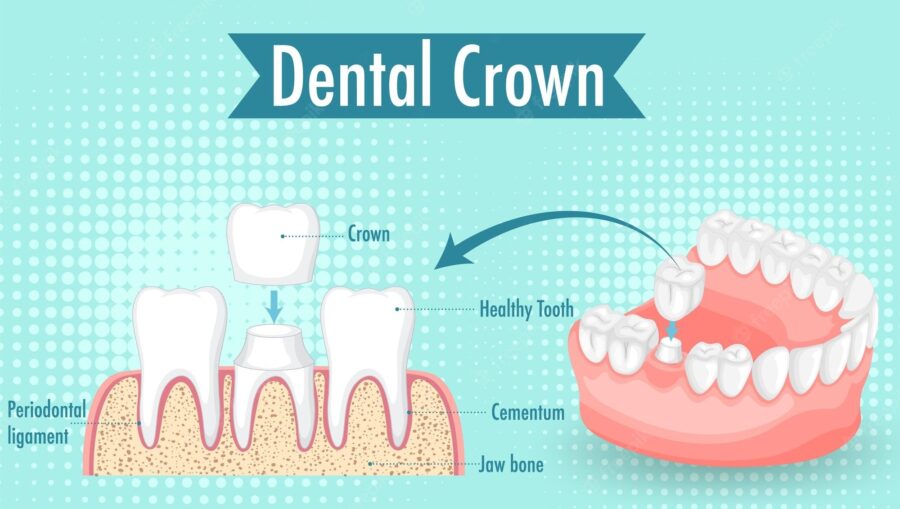
What is a Dental Crown?
A crown is a restoration that completely encases the tooth to hide discolouration or damage. Dental Crowns are made from a variety of materials like gold, porcelain, or tooth-coloured resins. They are more durable than laminates and can last anywhere from 5 to 25 years. SAPTeeth crowns are used to correct a single tooth but can also be used to cover a larger area such as the entire upper or lower jaw. Dental Crowns are a good option for teeth that are badly decayed or need extensive repair. If you want to change the shape of your teeth, crowns are not an option.
Which one should you choose for cosmetic dentistry?
The best treatment is the one that solves your specific problem. Veneers are more affordable than dental crowns and can be used to mask the appearance of a single tooth. Laminates can also be used to cover a larger area of teeth, such as the upper or lower jaw.
Crowns are more expensive than veneers but are more durable and can be used to repair teeth that are badly decayed or need extensive repair. If your tooth is in good shape but its appearance is not up to your standards, veneers are a good option. However, if your tooth is decayed or damaged beyond repair, a crown is the better choice. Veneers are also not a good option for teeth that need a lot of support.
However, veneers are definitely the more cosmetic option. Although they look great, they are not as durable as dental crowns. This is why veneers are most commonly used in patients who want to solve their smile issues quickly.
Where can you get them?
If you decide to get veneers or crowns, you can find a nearby dental office that performs cosmetic dentistry by using google to find right dentist. When you locate a dental clinic, make sure to ask if they perform veneers or crowns and if they have experience in treating the type of issues you are having. Veneers and crowns are dental procedures, so it’s best to find a dental office that has experience with these types of procedures.
When you find a dental clinic, ask them if they do veneers or crowns and if they have experience in treating the type of issues you are having. When you’re looking for a dental clinic, it can sometimes be challenging to tell whether or not they have the experience you’re looking for. To help you with your search, we’ve created a handy checklist of things to look for when evaluating a dental office.
Conclusion
Veneers and crowns are both dental restorations used to correct the appearance of teeth by covering them with a new layer of material that is more aesthetically pleasing than what is beneath the surface. They each serve different functions, but both can correct imperfections such as stained or crooked teeth, gaps between teeth, or pointed teeth that give a gaunt or aged appearance. Veneers are more affordable than crowns and can be used to mask the appearance of a single tooth. Veneers can also be used to cover a larger area of teeth, such as the upper or lower jaw. Crowns are more durable than veneers and can be used to repair teeth that badly decayed or need extensive repair.
Veneers and crowns are both used to improve the appearance and function of teeth, but they are not the same treatment. Veneers are thin coverings placed on the front surface of teeth and may be suitable for smile correction, stains, gaps, or minor shape concerns. Crowns cover the full tooth and may be recommended when the tooth is weak, damaged, decayed, or needs stronger support.
FAQs
1. What is the main difference between veneers and crowns?
Veneers cover mainly the front surface of the tooth, while crowns cover the entire tooth. Veneers are commonly used for cosmetic improvement, while crowns are often used when the tooth needs more strength, protection, or repair.
2. When are veneers recommended?
Veneers may be recommended for patients with stained teeth, small gaps, mildly crooked-looking teeth, short teeth, uneven teeth, or minor smile concerns. The tooth should have enough healthy structure before veneers are planned.
3. When are dental crowns recommended?
Dental crowns may be recommended when a tooth is badly damaged, decayed, weak, broken, or needs more complete coverage. Crowns can also be used after root canal treatment or when a tooth needs stronger support.
4. Are veneers better than crowns?
Veneers are not better than crowns for every patient. Veneers may be better for cosmetic changes when the tooth is healthy, while crowns may be better when the tooth needs repair, protection, or stronger coverage.
5. Do veneers and crowns look natural?
Yes, both veneers and crowns can be planned to look natural when the colour, shape, size, material, and smile design are selected properly. The final appearance depends on treatment planning, tooth condition, gum health, and lab work.
6. Which lasts longer, veneers or crowns?
Crowns are usually more durable because they cover the whole tooth and provide more support. Veneers can also last for several years with proper care, but they may not be suitable for teeth that need heavy chewing support or extensive repair.
7. How do I know whether I need veneers or crowns?
A dentist needs to check your teeth, gums, bite, enamel, tooth damage, smile concern, and X-rays if required. After evaluation, the dentist can suggest whether veneers, crowns, bonding, whitening, or another cosmetic dental option is more