

Is there a demand for oral surgeons? Absolutely. Oral and maxillofacial surgeons play a vital role in treating complex conditions affecting the teeth, jaws, face, and mouth. As the demand for dental implants, wisdom tooth removal, facial trauma management, corrective jaw surgery, and oral pathology treatment continues to increase, the need for highly trained oral surgeons remains strong. Ongoing advancements in dental technology and growing awareness of oral health further contribute to the expanding opportunities within this specialised field.
Who Is This Article For?
- Dental students considering oral surgery
- Dentists exploring specialisation
- Healthcare professionals
- Students interested in dental careers
- Anyone curious about oral and maxillofacial surgery
Who is an Oral Surgeon?
An oral surgeon is a dentist who specialises in procedures that affect the face and mouth, such as the extraction of teeth, surgical removal of cysts and tumours, jaw realignment, and facial reconstructive surgery. In some cases, oral surgeons also prescribe medication. Oral surgeons are also trained in oral and maxillofacial pathology, which is the study of diseases.

They can diagnose and treat diseases in the mouth, such as gingivitis, infections, and oral and gum cancers. Like general dentists, oral surgeons can work in private practices, group practices, dental schools, or hospitals. They also earn a higher salary than general dentists ($139,000 per year versus $104,000 per year). However, owing to variety factors, the number of jobs for oral surgeons is expected to decline over the coming years.
Why the demand for Oral Surgeons is rising?
The main reason for the rise in the demand for oral surgeons is that the population is ageing. This leads to an increase in the number of patients with dental issues such as gum disease and tooth loss. As a result, general dentists are handling a more number of extractions, and dental hygienists and assistants are handling a greater number of cleanings. But trauma, alignments or even cancers are managed by oral surgeons.
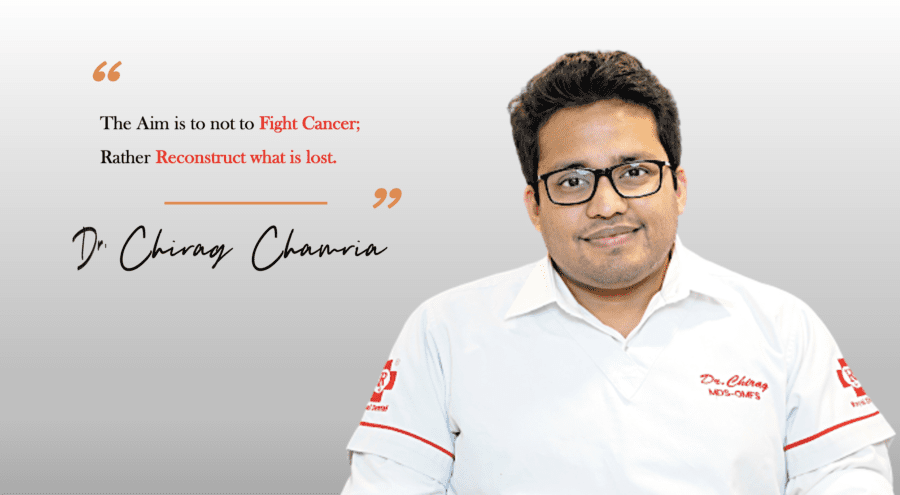
Aim is to not to ‘Fight Cancer’; Rather ‘Reconstruct what is lost’
Dr Chirag Chamria
Because oral surgeons are expensive than dentists or dental hygienists, many patients are opting for second opinion from them before going in for full mouth rehabilitations. Also with the COVID pandemic, the entire arena of medical has shifted to more super-specialisations.
Oral Surgeon Scope in India
Since an Oral Surgeon is one of the primary doctor’s lists, Oral Surgeons are in huge demand. Those who love to keep their lives busy can work both as lecturers and Surgeons. Those who love the teaching profession can work as lecturers at universities and colleges pursuing Oral Surgery. As per Dr Chirag Chamria, “For us, excellence is our constant pursuit. Patients want immediate results & are no longer ready to hold back for days to restore their smile. We strive for nothing less than the mastery of this medium in which we have chosen to craft.”
Challenges as an Oral Surgeon
The scope is rapidly expanding and the future generations will have more scope in Oral and Maxillofacial Surgery. The only problem is that, most people do not that such a speciality exists. If they know it exists they know us as Dentists. Few people think that OMFS is a super speciality after General Surgery and many don’t know the wide range of services we provide. So it’s us who have to take the onus and tell people in hospitals about what services we can offer to patients.
Regarding the higher oppurtunities, an OMF Surgeon can opt to train in Orthognathic Surgery, Facial esthetic surgery, Oral Oncology, Implantology, Trauma, Head and Neck Oncology and Microvascular surgery, Cleft and Craniofacial surgery, TMJ surgeries etc. Association of Oral and Maxillofacial Surgeons’ of India (AOMSI) has already started fellowship programs in Orthognathic Surgery, Craniomaxillofacial trauma, and Oral and Maxillofacial Oncology.
Life after PG; Dr Chirag Chamria
It is a fact that immediately after finishing the post-graduate training, Maxillofacial Surgeons neither have a good financial package in corporate hospitals nor have a job security in the government hospitals. It takes time for an OMFS to settle down in life. But once settled and with surgical skills improved, one can only scale north. As far as academics in OMFS is concerned oppurtunities are not many, but talent always has its way.
As previously mentioned about the AOMSI fellowship program, AOMSI fellows are paid salary for 1 or 2 years of the fellowship program. This could be a better option for immediate passed outs; more training with some financial assistance. One has to clear an entrance exam though, the standard of which is high and the exam is conducted with high degree of transparency and honesty.
Various other platforms offer higher training after Oral and Maxillofacial Surgery residency program. Working in a good Maxillofacial unit after post-graduation helps improve the scope and surgical skills. It’s up to an individual to choose as to what path is correct for them and their career in OMF Surgery.
Conclusion
For students considering a career in dentistry, oral and maxillofacial surgery offers a challenging yet highly rewarding professional pathway. It combines advanced clinical skills, surgical precision, and compassionate patient care while providing opportunities for continuous learning and professional growth. As healthcare needs continue to evolve, qualified oral surgeons will remain an integral part of multidisciplinary dental and medical teams, helping patients achieve better oral health, function, and quality of life.
Book a Consultation
Whether you require wisdom tooth removal, dental implant surgery, corrective jaw procedures, or treatment for complex oral conditions, the experienced team at Royal Dental Clinics is committed to providing safe, advanced, and personalised surgical care. We use modern diagnostic techniques and evidence-based treatment approaches to ensure the best possible outcomes while prioritising your comfort and long-term oral health. Book your consultation today to receive expert advice and a personalised treatment plan tailored to your individual needs.
FAQs
Is there a demand for oral surgeons?
Yes. Oral and maxillofacial surgeons are in demand due to the growing need for dental implants, wisdom tooth removal, facial trauma care, corrective jaw surgery, and treatment of oral diseases.
What does an oral surgeon do?
An oral surgeon diagnoses and surgically treats conditions affecting the mouth, jaws, face, and neck. They perform procedures such as tooth extractions, dental implant placement, jaw surgery, facial trauma reconstruction, and treatment of oral pathology.
Is oral surgery a good career?
Oral and maxillofacial surgery is considered a rewarding career for those interested in advanced dentistry. It offers opportunities to perform specialised procedures, improve patients’ quality of life, and work in hospitals, private practices, and academic settings.
What qualifications are required to become an oral surgeon?
The pathway varies by country, but it generally involves completing dental education followed by specialised postgraduate training in oral and maxillofacial surgery.
Why is the demand for oral surgeons increasing?
The demand is driven by an ageing population, increased awareness of oral health, greater acceptance of dental implants, advances in surgical techniques, and the need for specialised treatment of complex oral and facial conditions.