
Oral and Maxillofacial Surgeon in India is one of the most advanced specialties in dentistry, focusing on the diagnosis and surgical management of conditions affecting the mouth, jaws, face, and related structures. Becoming an oral and maxillofacial surgeon requires years of education, specialised surgical training, and continuous professional development. These highly trained specialists manage everything from impacted wisdom teeth and facial trauma to jaw deformities, oral pathology, dental implants, and reconstructive surgery.
Who Is This Article For?
- Students considering a career in dentistry
- Dental graduates interested in surgery
- Parents guiding students towards healthcare careers
- Individuals interested in oral and maxillofacial surgery
- Anyone wanting to understand the role of a maxillofacial surgeon
Who is an Oral and Maxillofacial Surgeon?
A maxillofacial surgeon is an oral and maxillofacial surgeon (OMS) who specialises in surgery of the head, neck, jaws, and face. The surgeon may also perform surgeries on the cranial nerves, the paranasal sinuses, and the salivary glands. The surgeon may also do biopsies, remove cysts and tumours, and treat any other pathology of the head and neck region. It may be board certified by the American Board of Oral and Maxillofacial Surgery.
Maxillofacial surgeons can also perform corrective surgeries for patients with cleft or craniofacial deformities, or for patients who have undergone craniofacial surgery as infants. They can also perform reconstructive surgeries for burn victims, cancer patients, and patients with congenital birth defects, such as cleft lip and palate. Maxillofacial surgeons can also perform cosmetic surgeries, such as rhinoplasty and face lifts.
Responsibilities of a Maxillofacial Surgeon in India
- The responsibilities of a maxillofacial surgeon may include performing surgeries, diagnosing medical conditions, and managing patient care.
- Maxillofacial surgeons must know how to interpret medical images and results, order lab tests, and interpret results.
- Oral surgeon must also understand how medications work and how they interact with other drugs. They must be able to communicate effectively with their patients and provide them with instructions.
- They must also communicate with other healthcare providers, such as other surgeons, dentists, and radiologists. Maxillofacial surgeons must be able to lift, move, and position patients who are undergoing surgery.
- They must be able to manage their own time effectively, prioritize tasks, and meet deadlines. It must be able to manage their own stress and be able to work under pressure.
- They must be able to work long hours and be able to work on weekends and holidays and also be able to lift and carry equipment and supplies.
Educational Requirement: Maxillofacial Surgeon
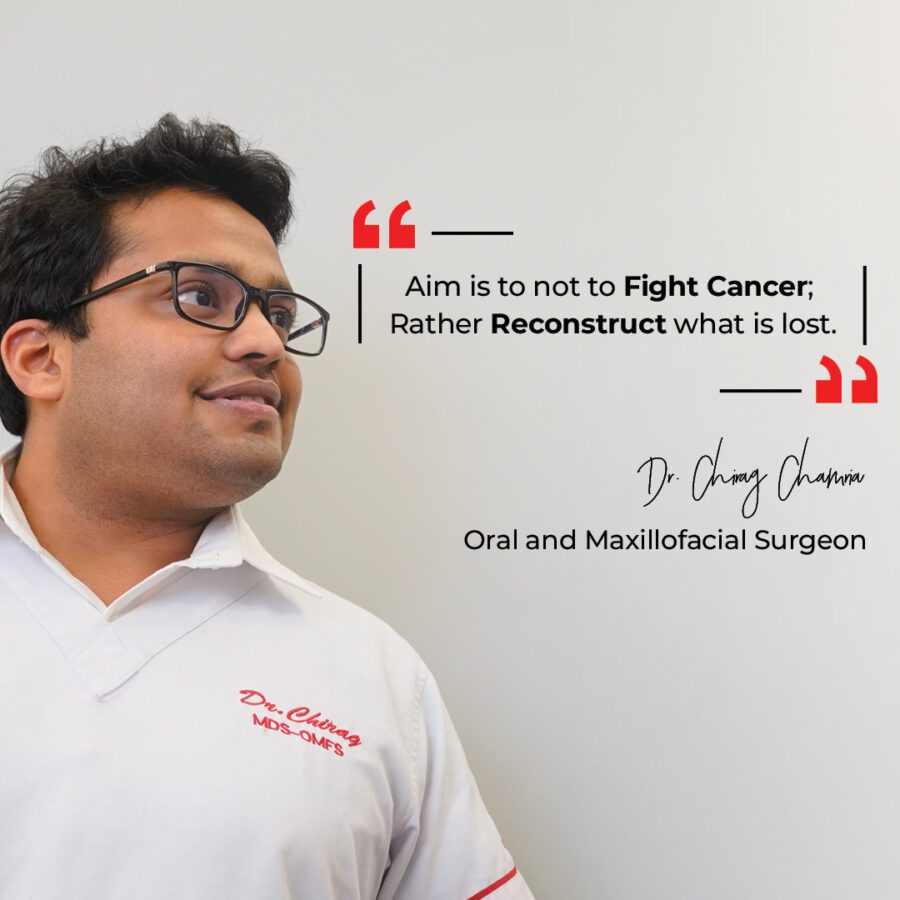
Dr Chirag Chamria specialises in Oral and maxillofacial surgery from DY Patil Dental Institute. To become a maxillofacial surgeon, one must complete a undergraduate degree in any field. The Medical schools accept students who have a Bachelor of Dental Surgery degree and who have taken the Medical College Admission Test (NEET). The Medical school is followed by a residency program, which can last up to seven years. During this time, surgeons complete rotations in various specialties, such as surgery, neurology, and critical care, among other areas of medicine. Finally, surgeons must pass a certification exam to become board-certified.
Job Prospects for Maxillofacial Surgeons
The job prospects for maxillofacial surgeons are expected to grow at a rate of 10% from 2020 to 2026, which is slower than the average growth rate for other occupations. This slower rate is due to an aging population and demand for surgeons. More people are seeking surgery as they get older and face more health issues such as joint replacements, which IS often assist with.
The competition for THSI positions is high, as there are more people graduating with a degree in medicine each year. There are more positions available in this field, but there are also more medical students competing for these positions. To increase one’s chances of being hired as a maxillofacial surgeon, it is important to apply for these positions as early as possible. It is important to have a strong resume, references, and letters of recommendation.
What Is the Educational Pathway in India?
The usual pathway begins with completing a recognised Bachelor of Dental Surgery degree. After BDS, the graduate must complete the compulsory rotating internship and obtain provisional or permanent registration with the appropriate State Dental Council. Admission to postgraduate dental courses is through NEET-MDS and the applicable counselling process. A candidate who secures a recognised postgraduate seat can pursue MDS in Oral and Maxillofacial Surgery. Under current MDS regulations, the postgraduate programme is a three-year, full-time course. Therefore, the Indian pathway should not be described as requiring an unrelated undergraduate degree, medical school or a seven-year American residency.
What Does MDS Oral and Maxillofacial Surgery Training Include?
Postgraduate training develops knowledge and clinical ability in areas involving the mouth, jaws, face and associated structures. Residents may receive supervised exposure to:
- Difficult tooth and wisdom-tooth surgery
- Facial injuries and jaw fractures
- Cysts and tumours of the jaws
- Oral biopsy and pathology
- Dental implant surgery
- Jaw deformities and orthognathic surgery
- Infections of the face and jaws
- Reconstructive procedures
- Medical and surgical management of patients
What Skills Does a Maxillofacial Surgeon Need?
The speciality requires a strong understanding of anatomy, pathology, radiology, pharmacology and general surgical principles. Surgeons must also develop precise hand skills, three-dimensional judgement and the ability to manage complications. Communication and teamwork are equally important because complex cases may require coordination with anaesthetists, plastic surgeons, ENT surgeons, oncologists, orthodontists, prosthodontists and radiologists. After MDS, a surgeon may work in a hospital, dental college, multispecialty centre or private practice. Additional fellowships can be considered for focused exposure, but they do not replace a recognised postgraduate qualification.
Conclusion
As technology and surgical techniques continue to advance, oral and maxillofacial surgeons play an increasingly important role in delivering safe, precise, and patient-centred care. Whether managing impacted teeth, facial injuries, jaw deformities, or complex oral conditions, these specialists combine surgical skill with comprehensive clinical knowledge to achieve optimal treatment outcomes. Understanding the training and expertise required for this specialty helps patients appreciate the high level of care provided by oral and maxillofacial surgeons.
Frequently Asked Questions
How can one become a maxillofacial surgeon?
To become an oral and maxillofacial surgeon, a dentist must complete a recognised dental degree followed by specialised postgraduate training in oral and maxillofacial surgery. Training requirements vary depending on the country and regulatory authority.
What does an oral and maxillofacial surgeon treat?
Oral and maxillofacial surgeons diagnose and treat conditions involving the mouth, jaws, face, facial bones, oral soft tissues, impacted teeth, facial trauma, jaw deformities, oral pathology, and dental implant surgery.
Is a maxillofacial surgeon different from a general dentist?
Yes. While general dentists provide routine preventive and restorative dental care, oral and maxillofacial surgeons receive additional specialist training to perform complex surgical procedures involving the mouth, jaws, and facial structures.
Do oral and maxillofacial surgeons perform dental implant surgery?
Yes. Oral and maxillofacial surgeons are highly trained in dental implant placement, bone grafting, sinus augmentation, and other advanced surgical procedures related to tooth replacement.
When should I consult a maxillofacial surgeon?
You may be referred to an oral and maxillofacial surgeon for impacted wisdom teeth, jaw pain, facial trauma, corrective jaw surgery, oral cysts or tumours, dental implant treatment, or other complex oral and facial conditions requiring specialised surgical care.
Can an MBBS graduate directly become an oral surgeon in India?
The standard dental pathway to MDS in Oral and Maxillofacial Surgery requires a recognised BDS qualification and fulfilment of the applicable postgraduate dental admission requirements.
How long does it take after BDS?
After completing the compulsory BDS internship, the recognised MDS programme is generally three academic years of full-time postgraduate training.
Is NEET-MDS required?
NEET-MDS is the current national entrance examination used for admission to recognised MDS courses in India. Applicants should check the latest official bulletin because dates and counselling procedures can change.