

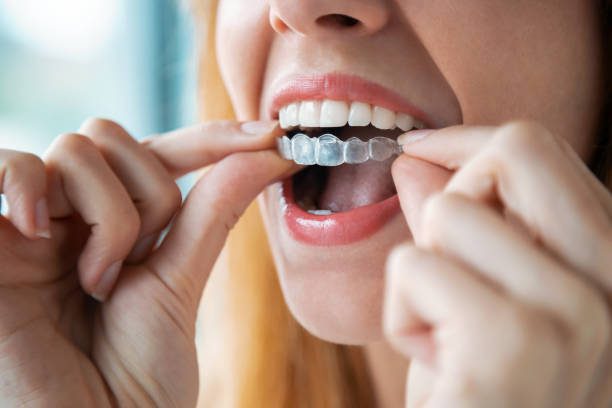
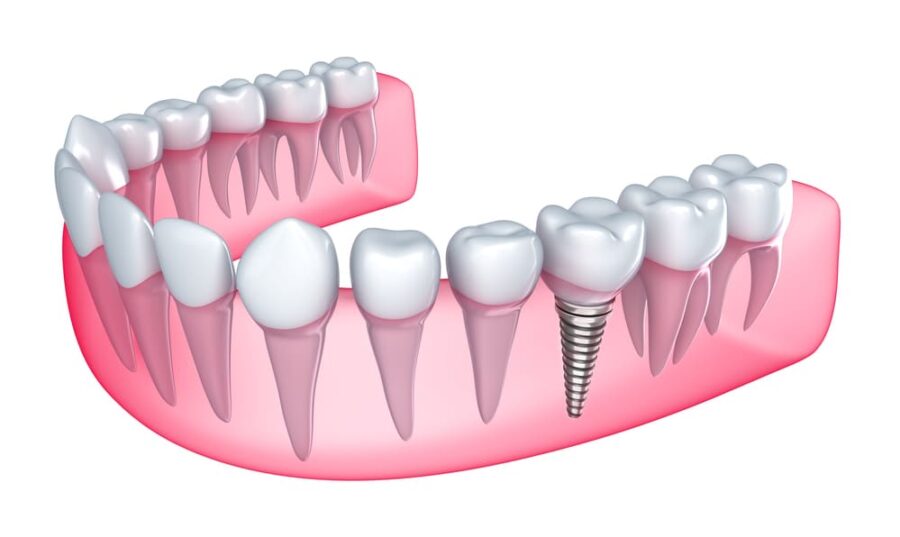
Invisalign vs dental implants are sometimes compared because both can improve a person’s smile. However, they are completely different treatments designed for different dental problems. Invisalign uses a series of clear aligners to gradually move and straighten natural teeth. A dental implant, on the other hand, replaces the support of a missing tooth and is later restored with a crown, bridge or denture. Invisalign cannot replace a missing tooth, and an integrated dental implant cannot be moved by aligners like a natural tooth.
Some patients may require both treatments. In such cases, orthodontic alignment is often planned before implant placement so that the correct space, root position and bite can be established. The appropriate sequence depends on the patient’s teeth, available bone, missing-tooth location and overall treatment goals. This article explains the differences between Invisalign and dental implants, their cost factors and how the two treatments may be combined.
Should Invisalign Be Done Before an Implant?
In many cases, orthodontic treatment is completed first because natural teeth can be moved to create the correct space for the implant and crown. The sequence may be:
- Orthodontic assessment
- Movement of natural teeth
- Retention or stabilisation
- Implant planning
- Implant placement
- Implant crown
- Continued retainer use
Can Invisalign Move a Dental Implant?
No. Once an implant has integrated with the jawbone, aligners cannot move it like a natural tooth. The implant may sometimes be used as anchorage, but this requires specialist planning. Aligners can move natural teeth around an implant, provided the implant’s fixed position is incorporated into the treatment plan.
Can You Get Invisalign After an Implant?
Possibly. It depends on whether the implant is in a position compatible with the desired final alignment. If it is poorly positioned for the proposed orthodontic result, treatment options may be limited.
Can an Implant Be Placed During Invisalign Treatment?
It may be possible in selected cases, but timing matters. Placement is usually planned only after the required implant space, root positions and bite have been established.
Which One Costs More?
Aligner cost depends on:
The cost of Invisalign depends on the severity of your condition, the number of your treatment sessions, the complexity of the treatment plan, and the number of appliances required. Generally, Invisalign treatment costs around $2000 to $3000 per retainer. This means that you would need to invest a little over $5000+ for full treatment if you want a retainer for both your upper and lower teeth. If you want to also get a retainer for your bite, the cost of Invisalign goes up to $13,000 or more.
- Complexity of tooth movement
- Number of aligners
- Treatment duration
- Refinements
- Retainers
- Additional orthodontic procedures

Implant cost depends on:
The cost of getting teeth implants will vary from one dentist to another. It is difficult to estimate the exact cost of implants since several factors influence the price, such as the dentist’s location, the implant materials, and the length of the treatment. Generally, good-quality implants can cost anywhere between $350 and $500. The $6000 price tag is considered to be a high-end estimate. While $4000 is the minimal cost at which you can get the procedure done.
- Number and type of implants
- Extraction
- Bone grafting
- Investigations
- Implant components
- Crown material
- Surgery or sedation
- Provisional and final restoration

Invisalign vs Dental Implant
| Factor | Invisalign or clear aligners | Dental implant |
|---|---|---|
| Main purpose | Move and align natural teeth | Replace a missing tooth |
| Surgery | Usually not required | Required |
| Artificial tooth | No | Supports a crown, bridge or denture |
| Can move natural teeth | Yes | No |
| Can replace a missing tooth | No | Yes |
| Treatment duration | Depends on orthodontic movement | Depends on surgery and healing |
| Maintenance | Retainer generally required | Cleaning and implant maintenance required |
| Main clinician | Orthodontist or trained dentist | Implant dentist/surgeon and restorative team |
Here’s how Invisalign can help at any stage of the Implant process:
Before: Most dentists will likely suggest getting Invisalign before dental implants because it makes things easier overall and gives the orthodontist more flexibility to design your perfect smile before placing a permanent implant. There may be exceptions, however, if your dentist thinks you don’t have enough bone support or it may deteriorate by the time you receive your implant.
During: If necessary, you can get dental implants in the middle of Invisalign treatment. The dentist will simply need to determine the correct order of sequences and keep in mind that the dental implant will be in a permanent position.
After: As mentioned above, if you already have dental implants, you can still be a candidate for Invisalign. Your dentist will implement a treatment plan that addresses the teeth around the dental implant, thus straightening your overall smile.
Which one is more affordable: Invisalign or implants?
Invisalign is less expensive than implants in the long run, but it isn’t necessarily more affordable upfront. Both treatments require you to make significant investments upfront. And you will have to wait until the end of your treatment before you see the results. This means that both Invisalign and implants will force you to make large upfront payments to make them happen.
So, it doesn’t matter if Invisalign is cheaper than implants if you can’t make the necessary investments. This means that you should consider your financial situation before choosing a treatment. If you can afford to make an upfront investment, you can get any of these treatments. You will have to wait until you save enough money.
Pros and cons of Invisalign
Invisalign is less invasive than implants, which is why it’s usually recommended first by dentists. It is suitable for most people, but it has some limitations. One of the main pros of Invisalign is that it is much less invasive than getting teeth implants. This means that it doesn’t require you to surgically place artificial teeth in your mouth. Instead, Invisalign uses a series of custom-made trays that are placed in your mouth to slowly push your teeth into the right position.
This also means that there is little to no risk of tooth damage caused by the trays. People who want to get Invisalign also often prefer it because it’s less invasive and less expensive than getting teeth implants. You won’t have to worry about the pain and discomfort that comes with getting teeth implants. You also won’t have to worry about breaking your teeth or damaging your gums since Invisalign doesn’t require you to forcefully push your teeth.
Pros and cons of Teeth Implants
While Invisalign is less invasive than implants, implants are more effective than Invisalign. This means that teeth implants are better at permanently fixing the alignment of your teeth and holding the tooth onto your gums. People who get implants report less movement in their teeth and less discomfort than people who get Invisalign. This means that teeth implants are more effective at correcting the alignment of your teeth.
Teeth implants are more durable than Invisalign and won’t break during treatment. This means that implants last longer than Invisalign and can be used by multiple patients if they are professionally cleaned and maintained. This can significantly reduce the cost of implants.
Final Words: Invisalign vs Dental Implants
In the end, it comes down to your preference. You can talk to your dentist and get a free consultation to help you determine which treatment is right for you. Once you have spoken to your dentist and decided on a treatment. You will have to wait for a few weeks until your treatment starts. This is when you will have to start investing in your smile.
FAQs
Can Invisalign replace a missing tooth?
No. Invisalign moves natural teeth but cannot replace a missing tooth. A dental implant, bridge or denture may be required for tooth replacement.
Can Invisalign move a dental implant?
No. Once integrated with the jawbone, an implant remains fixed. Aligners can move the natural teeth around it when properly planned.
Should Invisalign be completed before a dental implant?
Often, yes. Aligning the natural teeth first can help create the correct space and bite before implant placement. However, the sequence varies by case.
Can I use Invisalign if I already have a dental implant?
Possibly. The implant will remain fixed while selected natural teeth are moved. Suitability depends on the implant’s position and the intended result.
Can an implant be placed during Invisalign treatment?
It may be possible in selected cases once the required space and root positions have been established. The orthodontist and implant dentist should coordinate the timing.
Which costs more: Invisalign or a dental implant?
There is no direct comparison because they treat different problems. Invisalign cost depends on orthodontic complexity, while implant cost depends on surgery, bone, components and the final restoration.
Can Invisalign close a missing-tooth gap?
Sometimes aligners can close or redistribute a space, but this is not appropriate for every missing tooth. The bite, roots and overall treatment plan must be assessed.
Will I need a retainer after Invisalign and implant treatment?
Usually, a retainer is required after orthodontic treatment to help maintain the position of the natural teeth. The retainer must be designed around the implant restoration.
Are Invisalign and dental implants painful?
Aligners may cause temporary pressure as teeth move. Implant placement is performed under anaesthesia, although some soreness or swelling may occur during recovery.
Who should plan combined Invisalign and implant treatment?
Treatment should be coordinated between clinicians experienced in orthodontic tooth movement, implant placement and restorative dentistry.