Poor oral health is one of the most common health conditions. Hence, maintaining oral hygiene is of utmost importance. People are increasingly anxious about their physical appearance. The art of brushing your teeth daily in morning and before bed leads to a good oral health. Use of mouth wash, floss after meals keeps the mouth odour free. Regular visits to your dentist in order to check for cavities, gum health plays an important role in maintaining one’s oral hygiene. One should have a few things in a dental kit at home for self care! Let’s read more to find out.
Sometimes due to time constraints it is not possible for us to visit the dentist for follow-ups. Home flossing, interdental brushing, use of antiseptic mouthwashes, used to maintain healthy teeth and gum conditions.
Who is this article for?
This article is for patients and families who want to manage minor dental discomfort at home until they can visit a dentist. It is especially useful for patients with sudden tooth sensitivity, mild gum irritation, food stuck between teeth, temporary crown discomfort, braces irritation, bad breath, or travel-related dental emergencies. The current article already talks about toothbrush, toothpaste, floss, mouthwash, interdental brushes and temporary self-care, but it should clearly say that a home dental kit can ease symptoms, not permanently treat cavities, infection, swelling, broken teeth, or severe toothache.
Following must haves for Dental Kit at Home!
Toothbrush and toothpaste:
Use soft or medium bristle toothbrush is a must in a dental kit. They are preferred according to the specific oral care needs of the patients. There are various toothpaste available in the market such as whitening, fluoridated, desensitising toothpaste, gum care toothpaste, tooth mousse.
Mouthwash:
It comes in different flavours and concentration. It provides antiseptic, antiplaque, antibacterial, antifungal effects. Mouth wash not recommended in children below 6 years due to the fear of swallowing. It should used in 1:1 dilution with water. Mouthwash should not be used immediately after toothbrushing. One can rinse with the mouthwash at anytime in a day. In addition, rinsing twice daily for a 30 secs to minute with a mouthwash after brushing flossing is effective.
Dental Floss:
Flossing helps to remove food debris stuck in between the teeth which in turn leads to decrease in tooth decay and gum disease.
Tongue Cleaner:
It is one of the essential item and should be included in a dental kit. It is used for scrapping the surface of tongue thus removing the tongue coating.
Oral Analgesic Gel:
They provide instant pain relief for oral pain or painful gums. They offer short term temporary relief from pain.
Home Bleaching Kit:
Prefabricated trays and gels are available in the market to get rid of discoloured teeth. These are user friendly but should be used under dentist prior instructions.
What Should a Home Dental Kit Contain?
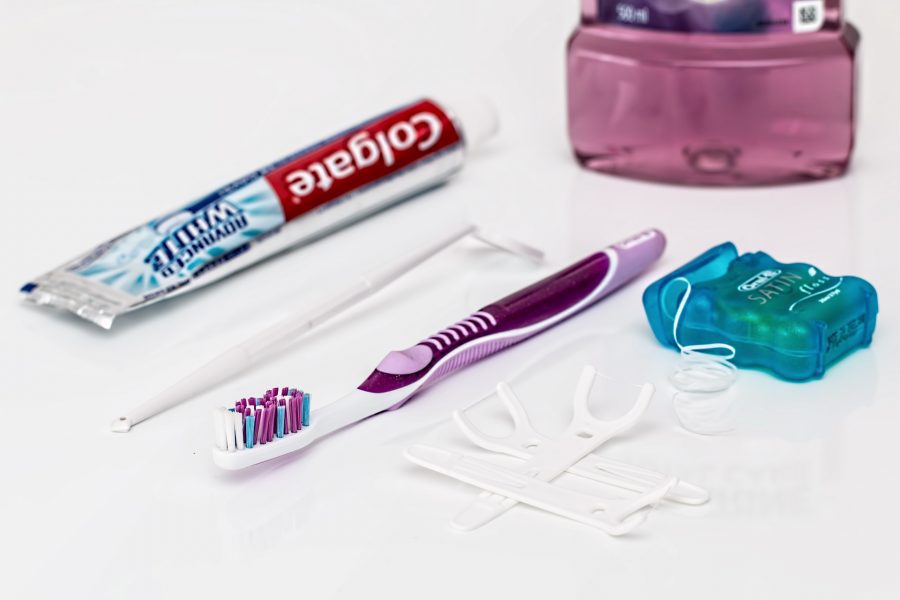
A home dental kit should contain simple items that help maintain oral hygiene and manage minor discomfort until a dentist can examine the problem. Patients can keep a soft toothbrush, fluoride toothpaste, dental floss, interdental brushes, tongue cleaner, alcohol-free mouthwash, desensitising toothpaste, orthodontic wax, sterile gauze, a small mirror, and the clinic’s emergency contact number. Patients with crowns, bridges, braces, implants, or dentures may need extra cleaning aids because food and plaque can collect around artificial teeth and appliances more easily. Brushing twice daily with fluoride toothpaste and cleaning between the teeth daily remain the foundation of home oral care.
What a Dental Kit Cannot Treat at Home
A dental kit can give temporary comfort, but it cannot cure the actual cause of dental pain. It cannot repair a cavity, drain an abscess, treat a deep infection, fix a fractured tooth, remove tartar, tighten a loose implant, or replace a broken crown permanently. If toothache lasts for more than two days, or if pain keeps returning, the patient should visit a dentist because the underlying cause may worsen if left untreated.
When Dental Pain Becomes an Emergency
Patients should not depend only on home remedies if they have facial swelling, pus discharge, fever, trauma, uncontrolled bleeding, difficulty opening the mouth, difficulty swallowing, severe toothache, or a loose permanent tooth. These signs may indicate infection, injury, or a dental emergency. A home dental kit may help the patient stay comfortable for a short time, but urgent dental evaluation is needed to prevent the problem from spreading or becoming more complicated.
Dental Kit for Crowns, Bridges, Implants and Braces
Patients with crowns, bridges, implants, aligners, or braces need a more specific home-care kit. Interdental brushes, floss threaders, water flossers, orthodontic wax, and non-abrasive toothpaste can help clean difficult areas where regular brushing may not reach. The aim is to reduce food lodgement, gum irritation, bad breath, plaque buildup, and inflammation around dental work. However, if a crown, bridge, implant, or braces wire becomes loose or painful, it should be checked by a dentist instead of being adjusted at home.
FAQs
Can a dental kit at home cure tooth pain?
No. A dental kit at home can only give temporary comfort in selected situations, such as sensitivity, food lodgement, mild gum irritation, or braces discomfort. It cannot cure a cavity, infection, abscess, cracked tooth, or failed dental work. If pain lasts more than 2 days, or if there is swelling, pus, fever, or severe pain, a dentist should examine the tooth.
What should I keep in a home dental emergency kit?
A simple home dental kit should include a soft toothbrush, fluoride toothpaste, dental floss, interdental brushes, tongue cleaner, alcohol-free mouthwash, desensitising toothpaste, orthodontic wax, sterile gauze, a small mirror, and your dentist’s emergency contact number. Patients with crowns, bridges, implants, braces, or dentures may need additional cleaning aids recommended by their dentist.
When should I not manage dental pain at home?
Do not rely on home care if there is facial swelling, pus, fever, trauma, uncontrolled bleeding, difficulty swallowing, difficulty opening the mouth, a broken tooth with pain, a loose permanent tooth, or severe toothache. These signs may indicate infection or dental emergency. Home care may reduce discomfort temporarily, but the cause needs professional treatment.