
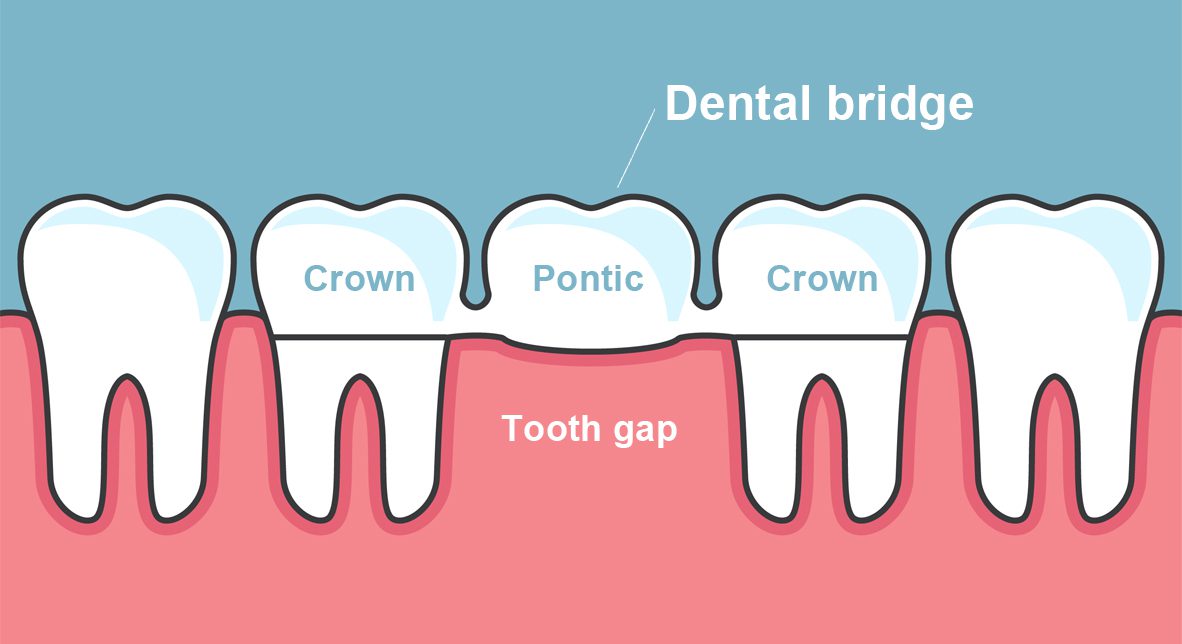
Dental bridges are artificial replacements for missing teeth. They can be used to replace a single tooth or several missing teeth; they’re even used to replace entire jaws in some cases! The way that dental bridges work is pretty straightforward. The bridge itself is fitted at Dentist in Mumbai with artificial crowns (SAPTeeth) on either side of its gap, which are anchored by metal posts planted directly into your remaining teeth.
Are Dental Bridges Permanent? This is one of the most common questions patients ask when they are planning to replace missing teeth with a fixed dental bridge. While dental bridges are fixed restorations, their long-term success depends on oral hygiene, supporting teeth, bite pressure, material quality, and regular dental check-ups.
These anchor points will remain in place for the rest of your life, acting as a base for new replacement crowns every few years. While this all sounds like a pretty great trade-off for losing a tooth, you might still be wondering if dental bridges are permanent. If so, you’re not alone.
A common concern regarding any treatment is that the natural teeth gets altered. After all—with everyone being so conscious about the appearance of their smile these days, nobody wants to deal with replacing their natural teeth.
Who is This Blog For?
This blog is for patients who have missing teeth and are considering dental bridges as a fixed replacement option. The blog also helps patients compare bridges with other missing-teeth solutions and understand that bridges can be long-term, but still require proper care, follow-up, brushing, flossing, and dental check-ups.
What happens with SAPTeeth Bridges?
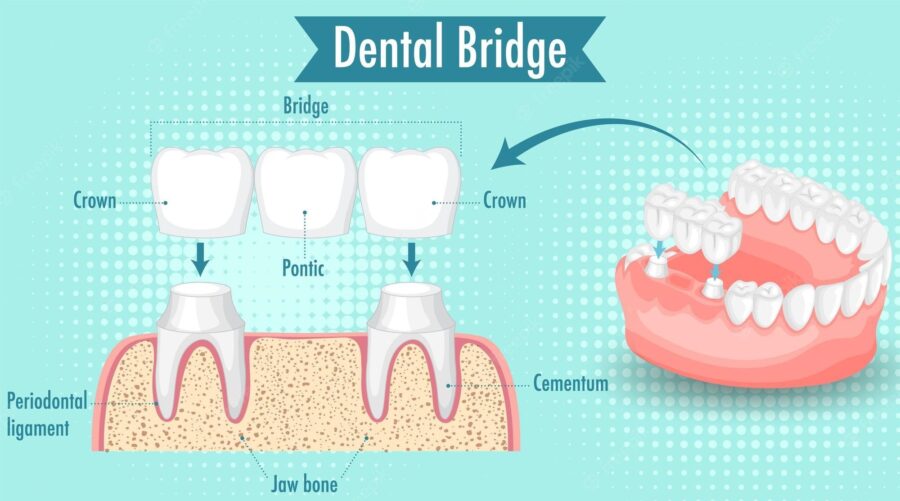
If you lose a tooth, the surrounding teeth will start to shift out of place. This can make it difficult to eat normally, and it can also lead to gaps between your teeth that look unsightly. A dental bridge is a way to prevent these issues. A dental bridge is a type of false tooth that spans the gap left by one or more missing teeth. Pontics are anchored to existing teeth on either side of the gap using SAPTeeth crowns.
A bridge spans the gap between teeth by connecting a false crown on each side with SAPTeeth crowns in the middle that mimics the size, shape, and colour of your real tooth. A dental bridge is usually treated as a semi-permanent solution because it doesn’t actually replace the missing tooth. Rather, it is bonded to neighbouring teeth, which must be strong enough to support the extra pressure the bridge forces upon them. This is why, in many cases, dental bridges are permanent.
Why are Dental Bridges permanent?
There are a number of reasons why dental poetics might be considered permanent. First of all, the process of getting a dental bridge can be quite involved; it’s not something that you can just fix and then walk away from. Instead, you’ll need to visit your dentist every few years to get a new crown fitted onto each anchor point. This frequent maintenance is a strong indication that dental bridges are a long-term solution. Moreover, the process of getting a dental bridge can be pretty invasive.
Good News from Dentist in Mumbai!
The good news about dental bridges being permanent is that you won’t have to worry about replacing them anytime soon. If you’re on the lookout for a solution to replace missing teeth, you’re bound to come across a few different alternatives to dental poetics. However, many of these options are short-term solutions that will need to be replaced at some point. This can be costly and time-consuming, and it can be stressful not knowing exactly when you’ll have to endure another visit to the dentist. Given the fact that dental bridges are permanent, you can rest assured that you won’t have to deal with any of those issues anytime soon.
Bad News from Dentist in Mumbai
The bad news about bridges being permanent is that they’re pretty invasive. Once the dentist has installed the bridge, they’ll need to remove a bit of your natural tooth to make room for the anchor points. This is not only painful—it can also damage the surrounding nerves and tissues.
Additionally, the procedure is likely to cause bleeding, which can be very difficult to control. This blood can negatively impact the neighbouring teeth and gums, leading to inflammation that can cause serious complications over time. Because dental poetics are so invasive, they’re bound to cause significant damage to your natural teeth. This can increase the likelihood of developing a serious dental condition in the future.
Where can you find Permanent teeth?
If you’re wondering whether or not dental bridges are permanent, you’re not alone. Many people ask the same question when they’re weighing up the pros and cons of a particular surgical option. If you want to know if dental pontics are permanent, you can always ask your dentist in Mumbai. Most dentists are more than happy to discuss their patients’ options, so you shouldn’t have any trouble getting a straight answer.
There’s no one-size-fits-all solution for replacing missing teeth. While some options are short-term solutions, others are considered permanent. If you’re weighing up your options for replacing a missing tooth, make sure you know whether or not dental bridges are permanent before making a decision.
Final Words
While dental bridges are often considered to be a permanent solution, this is not a hard and fast rule. They can be replaced just as easily as they can be fitted—the difference is that it’s a lot more complicated and expensive to do so. If you’re worried about the longevity of a dental bridge, talk to your dentist in MUmbaiabout ways you can help it last as long as possible. You may want to avoid strenuous activity and eating certain foods, and you may want to take extra care to brush and floss regularly.
Conclusion
Dental bridges can be a reliable and long-term solution for replacing missing teeth, but they may not always be “permanent” for every patient. Their durability depends on the patient’s oral hygiene, condition of supporting teeth, bite pressure, material used, and regular dental follow-ups. At Royal Dental Clinics, dental bridge treatment is planned after checking the patient’s teeth, gums, bite, and overall oral health. With proper care, timely maintenance, and the right treatment planning, dental bridges can help restore chewing comfort, speech, smile appearance, and confidence for many years.
FAQs
1. Are dental bridges permanent?
Dental bridges are fixed restorations, but they may not last forever for every patient. Their lifespan depends on oral hygiene, bridge material, bite pressure, supporting teeth, and regular dental check-ups.
2. How long can a dental bridge last?
A dental bridge can last for many years when it is properly planned and maintained. Brushing, flossing, avoiding excessive pressure, and visiting the dentist regularly can help improve its long-term success.
3. Can a dental bridge be removed?
A dental bridge is fixed in the mouth and is not removed daily like a denture. However, if it becomes loose, damaged, infected, or needs replacement, a dentist may remove or replace it professionally.
4. Do dental bridges need special care?
Yes, dental bridges need proper daily care. Patients should brush twice a day, clean under and around the bridge, use floss or interdental aids as advised, and maintain regular dental visits.
5. What can damage a dental bridge?
Poor oral hygiene, gum disease, tooth decay under the bridge, hard biting, teeth grinding, trauma, or lack of follow-up care can affect the strength and lifespan of a dental bridge.
6. Is a dental bridge better than a dental implant?
Both options can replace missing teeth, but the right choice depends on your oral health, bone support, condition of nearby teeth, budget, and treatment goals. A dental consultation helps decide whether a bridge or implant is more suitable.