After your smile, your nose is one of the most distinctive features of the face. Needless to say that its basic function is essential in our day to day life. But what happens when we are unhappy with the way our face looks? Or may be have functional defects of the nasal spectrum that make it difficult for us to breathe? As a surgeon, Maxillofacial doctors look at the aesthetics of the complete face. Beauty lies in the balance of all the facial structures and not an ideal configuration. Nose reshaping surgery in Mumbai enhances facial harmony and balances proportions of your nose.
Who is this article for?
This article is for patients who feel their nose does not match the rest of their face, especially when they smile or look at their side profile. It may also help those who have a crooked nose, broad nose, nasal hump, drooping nasal tip, or breathing difficulty due to nasal structure. A consultation helps the doctor understand whether the concern is only cosmetic, functional, or a combination of both.
Why nose shape matters in facial balance?
The nose sits at the centre of the face, so even a small change in its shape can affect how the eyes, lips, smile, and jawline look together. Rhinoplasty, commonly called nose reshaping or nose job, is done to improve facial harmony and, in some cases, to correct breathing issues caused by structural defects.
What happens during a nose consultation?
During consultation, the surgeon studies the nose from the front, side, and base view. Photographs, clinical examination, and sometimes scans may be used to understand the nasal bones, cartilage, facial proportions, and smile line. Scientific assessment of the nose includes visual analysis, palpation, and evaluation from different facial views before planning treatment. Your existing article already mentions that consultation may include photographs and CBCT scans for planning.
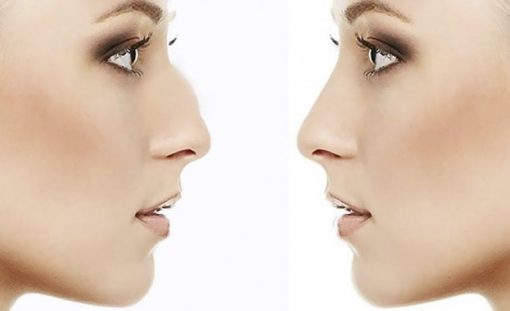
After an external and internal nasal examination, the surgeon will come up with a treatment plan and alternate for you as per your preferences. The surgeon then classifies the nose on the basis of work required.
Level I
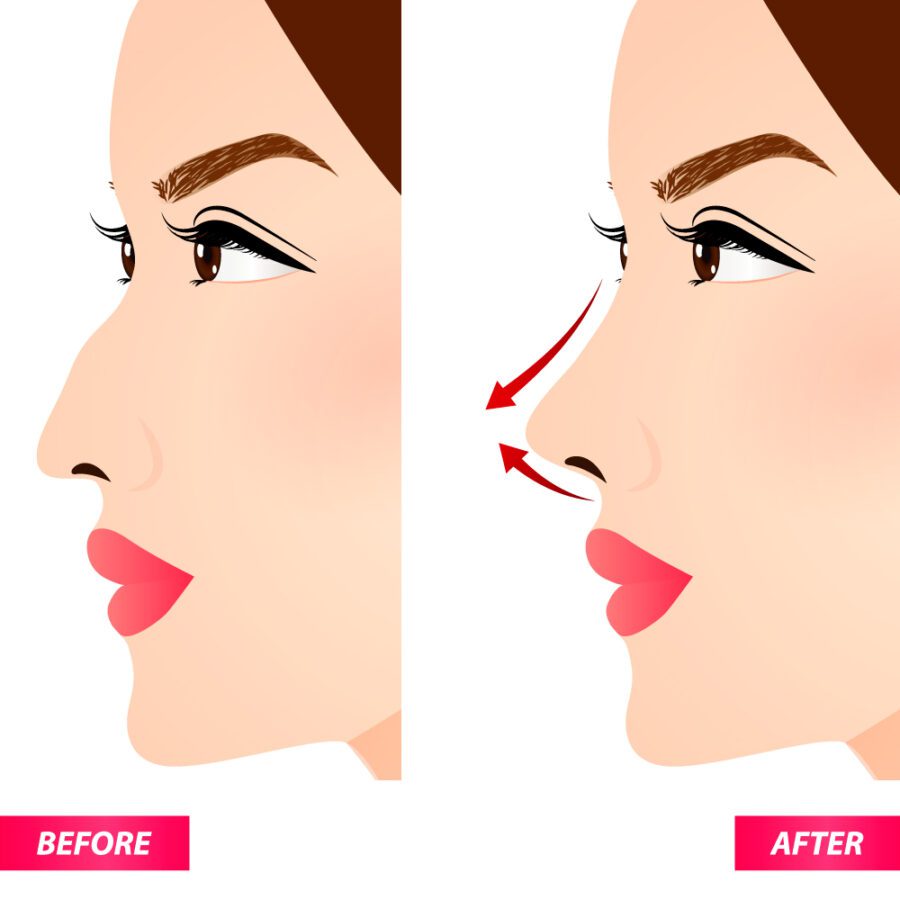
This is a typical type which requires minor corrections including hump reduction, narrowing of it and minimal tip refinement for better face.
Level II
Level 2 is a slightly more complicated case with more nasal deviation or obstruction. The tip moves with smile and the tip requires refinement and also grafting. These are about 4-5 % in private practice.
Level III
This is the most complex type, which may require additional grafting procedures and suturing techniques. These constitute in about 1 percent of the population.

What should patients know before choosing nose reshaping?
Nose reshaping should not be planned by copying another person’s nose. The aim is to create a nose that suits your own face, age, skin thickness, jaw relation, and smile. Patients should also understand that swelling takes time to settle. Initial swelling reduces in a few weeks, but the final nasal contour may continue to refine for up to a year.
Missing topic to add — Nose, teeth, and smile connection
Many patients look only at the nose, but the teeth, lips, chin, and jaw also influence the facial profile. A small-looking chin, protruding teeth, missing teeth, or collapsed bite can sometimes make the nose appear more prominent. At Royal Dental Clinics, facial evaluation should consider both dental and facial structures so that the final result looks balanced and natural, not artificial.
Do you notice the nose while you smile through teeth?
The twinkle in your eye or the eye bags? Sharp healthy nose or a big hump? Cleaning glistering teeth or crooked patchy teeth? If any of your answers were latter, then this article should make sense to you. 90% of the untouched noses would have a slight deviation or a small hump. These may also have downturned tip or a fat tip. Most often these slight variations do not bother an individual’s face. But if it bothers you then you should checked it.
Know more about Nose today:
- You may be advised to get an increase or decrease nose size.
- Get the nostrils a new shape or reduce nasal tips.
- Enhance a balance and harmony between other face features.
- Have a positive effect on your overall facial aesthetic.
- Correct problems associated with a deviated septum.
- Improve breathing airway circulation.
Who can opt for a Nose Surgery in Mumbai?
In Mumbai, nasal surgeries are the most popular treatment among models, actors, and other artists involved in the show business who need a sharp and bold look. Though they are meant for sculpting, it helps to improve appearance, provides relief in nasal injury and improves breathing.
A nose job in Mumbai if your nose requires:
- Reducing an enlarged nose
- Aligning the nasal bridge with the face
- Reshaping the tip of the nose
- Narrowing the nasal base or nostrils
- Reshaping large, flared nostrils
- Refine the nose after a traumatic accident
- Smoothening out a dump or bulge on the nasal bridge
- Correcting the nose width w.r.t. the face
What happens in a Rhinoplasty Consultation?
During your first consultation, our cosmetic surgeon will understand face expectations and goals from this surgery and suggest the most suitable treatment approaches if you are found to be a good candidate. One of the first things that any surgeon would confirm is if you have practical reasons to seek a nose job and are mentally prepared for a body-altering procedure.
After the consultation, the surgeon inspects your nose to understand the root causes of its defective shape. Your nasal structure will be mapped with photographs and CBCT scans to plan the types of surgeries required. It is always performed in a single session, so the surgeon will ask you to choose a convenient date and time for your surgery.
The surgeon will give you a personalised list of precautions to follow from at least a week before the procedure. These usually include medical or lifestyle-related factors such as avoiding painkillers, smoking cigarettes, drinking, changes in diet, among other things. Your consultation charges will be approximately Rs. 1,500/- when you first visit our surgeon at Royal Cosmognathic Clinic.
Conclusion
Rhinoplasty is one of the most popular facial plastic surgery procedures available after smile correction. The treatment can improve both cosmetic and functional issues you may be having, addressing breathing problems and/or nasal shape, size, and symmetry.
Based on the findings, a treatment procedure date is selected and preferable to be performed under general anesthesia. The plasters are removed after 6 days and the swelling keeps reducing continuously for 12 months.
FAQs
Is nose reshaping only for beauty?
No. Nose reshaping may be done for cosmetic improvement, breathing correction, post-injury deformity, or facial balance. Some patients need only aesthetic correction, while others may need functional correction also.
Can dental problems affect how my nose looks?
Yes, indirectly. Missing teeth, reduced bite height, protruding teeth, jaw position, or lip support can change the way the nose and face appear. That is why a complete facial and dental evaluation is useful before planning major aesthetic treatment.
Is the result visible immediately after nose surgery?
Some change is visible early, but swelling is normal. Bruising and swelling around the nose and eyes may take weeks to settle, and mild swelling can continue for months. Final refinement may take up to one year in some patients.
Is every patient suitable for rhinoplasty?
Not always. Suitability depends on age, medical history, breathing concerns, skin thickness, nasal structure, expectations, and overall facial balance. A surgeon must examine the patient before advising treatment.
Can I get a nose and smile makeover together?
In selected cases, yes. Smile design, dental rehabilitation, jaw relation, and nose reshaping may be planned together when facial balance is the goal. However, the sequence and timing should be decided after proper consultation.
Medical Disclaimer
This article is for patient education only. Dental treatment should be planned after clinical examination, medical history review, and X-rays or scans where required. Treatment suitability, cost, timeline, healing, and results vary from patient to patient.