
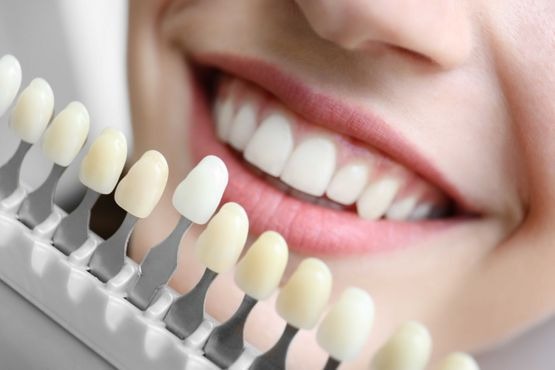
Both veneers and dental crowns are dental restorations that can be used to improve the appearance of your teeth, but they are different from one another. Both veneers and crowns are made from natural materials such as porcelain or gold, and both are cemented onto the surface of your teeth to change their appearance in a positive way. However, there are some key differences that you need to know when it comes to choosing between veneers vs. crowns. This article will walk you through the pros and cons of each treatment, so you can make an informed decision about which option is right for you.
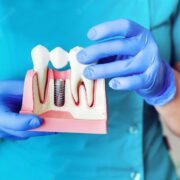
Veneers only cover the front-facing surface of a tooth. A crown typically replaces the entire biting surface of a tooth. A veneer must be applied to a natural tooth. A dental crown can actually be used on a dental implant to act as a replacement for a natural tooth.
Who is this article for?
This article is for patients who want to improve their smile but are confused between veneers and dental crowns. It is useful for people with yellow teeth, chipped teeth, gaps, uneven teeth, worn teeth, old restorations, or root-canal-treated teeth. Veneers and crowns can both improve appearance, but they are not the same treatment.
What are dental veneers?
A veneer is a dental restoration bonded onto your tooth’s surface using either resin or porcelain cement. A veneer is predominantly used to improve the appearance of your teeth by covering up imperfections such as discolouration, minor chips or cracks, misshapen teeth, and misalignment. Veneers are very thin and are designed to be barely visible above your teeth.

Veneers are often the best option for patients who want to improve the appearance of their teeth but do not want to change their tooth structure in any way. Another reason patients choose to have veneers is if they have had previous dental work such as fillings or root canals that have weakened their tooth structure and caused further damage. A veneer is a more conservative dental treatment that does not require you to change your natural tooth structure.
What are dental crowns?
A crown is a dental restoration that is used to cover the entire surface of a tooth and is commonly used to treat teeth with large fillings, fractures, and tooth decay. A crown can be used to change the shape or size of a tooth. And a crown can be placed on any tooth in your mouth.
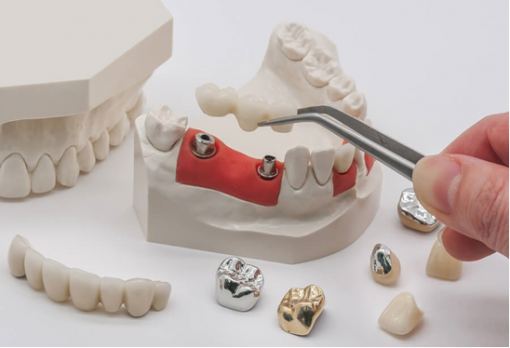
Crowns are one of the most common dental restorations used by dentists. And they are often used in combination with other dental treatments such as fillings and root canals. A crown is made by first preparing the tooth by removing some of the tooth structure. Which allows the dentist to place a fabricated crown over the tooth to restore. It to its original shape and size.
What is the main difference between veneers and crowns?
Veneers usually cover the front surface of the tooth and are mainly used for cosmetic improvement. Crowns cover the entire visible part of the tooth and are used when the tooth needs more strength, support, or protection. Veneers are generally more conservative, while crowns are more protective in structurally weak teeth.
When are veneers a better option?
Veneers may be suitable when the tooth is healthy but has cosmetic concerns such as mild gaps, stains, minor chips, shape issues, or smile asymmetry. They are commonly used in the front teeth where appearance is the main concern.
How are dental veneers made?
The first step of the veneer procedure is to prepare the tooth by removing a small amount of enamel. Which allows the veneer to sit flush against the surface of your teeth. The next step is to take an impression of the prepared tooth and send it to the dental lab where your veneers will be created.
The dentist will then place a temporary veneer made from a resin material that is designed to be worn for several weeks until your new natural-looking surface is ready for you to pick up at the dental office. Once you have your veneers, it is important to maintain a healthy diet. Good oral hygiene routine. And regular dental visits to prevent future dental problems.
When are crowns a better option?
Crowns may be better when the tooth is root-canal-treated, heavily filled, cracked, weak, badly worn, or structurally damaged. A crown gives full coverage and can protect the remaining tooth better than a veneer in such cases.
Can veneers and crowns be combined in smile design?
Yes. Some smile makeover cases may need a mix of veneers, crowns, bonding, whitening, gum correction, or aligners. The treatment should be planned tooth by tooth rather than applying the same solution to every tooth.
Dental Crowns can be made of several different materials:
- Metal: They can be made of gold, palladium, nickel, or chromium. They only require a small amount of your tooth to be removed for placement.
- Porcelain fused to metal: While metal is the primary material used, a porcelain overlay gives the tooth a more natural appearance.
- SAPTeeth: This is one of the most advanced options for restoration. The wear and tear has easy and quick chair side repair.
- Ceramic: These offer the most natural colour. They are a good option for front teeth that are more visible in your mouth.
How do you know which one is right for you?
If your tooth has a large filling, a root canal, or is very worn or cracked, a crown is likely the best option. If your tooth is basically intact and the restoration is for cosmetic purposes, a veneer may be the best option. Dental Veneers can also be used for minor shape corrections.
A dental veneer is bonded to just the front surface of your tooth, while a crown covers your entire tooth. This tends to make veneers more aesthetically pleasing than crowns because they show less gum margin. Crowns are thicker than veneers—two millimeters compared to one millimeter—and are more permanent.
How much do they cost?
Veneers and crowns can be costly. Individual costs vary, depending on the size of your tooth, where it is in your mouth, and the average prices in your area. Most dental insurance programs won’t cover cosmetic dentistry. Also, most dental plans have a maximum annual limit of coverage. Check with your insurance company to see what they’ll cover.
Conclusion
When it comes to veneers vs. crowns, both of these dental solutions can be used to improve the appearance of your teeth, however, they are different from one another. Veneers are a more conservative treatment and can be used to cover up tooth discolouration, small chips, large fillings, misalignment, and misshapen teeth. Crowns are more commonly used to treat teeth with large fillings, fractures, and tooth decay.
FAQs
Are veneers better than crowns?
Not always. Veneers are better for selected cosmetic cases, while crowns are better when the tooth needs strength and protection.
Do veneers require less tooth cutting than crowns?
Usually, yes. Veneers often need less tooth preparation than crowns, but this depends on tooth position, enamel, bite, and smile design goals.
Can crowns make teeth look like veneers?
Yes, crowns can be made aesthetic, but they are usually chosen when the tooth also needs protection or full coverage.
Which lasts longer: veneer or crown?
Both can last for years with proper care. Longevity depends on material, bite force, oral hygiene, habits, and regular dental visits.
Medical Disclaimer
This article is for patient education only. Dental treatment should be planned after clinical examination, medical history review, and X-rays or scans where required. Treatment suitability, cost, timeline, healing, and results vary from patient to patient.