
Dental planning with 3D Printing provides customisation and treatment arrangements which makes it the key for dentistry successful results in complex cases. As compared to conventional methods, creating a 3D model for missing teeth is more precise with 3D-Printing! Crowns are rapidly created just by checking and displaying the patient’s teeth. Dental 3D printing is the key to modern dentistry, as it is really helpful for dental labs and dentist. Prosthesis or implants have to match with the patient’s morphology. With 3D printing in dentistry patient planning for dental treatments have become more precise and accurate results can be predicted.
Who is this article for?
This article is for patients who want to understand how 3D printing and digital planning can make dental treatment more customised, clear, and predictable. It is especially useful for patients planning dental implants, full mouth rehabilitation, zygomatic implants, crowns, bridges, dentures, aligners, smile correction, or oral cancer rehabilitation. 3D printing does not replace the dentist’s diagnosis, but it helps the dentist plan and explain treatment better.
How 3D printing helps patients understand treatment
Many patients find it difficult to understand scans, X-rays, or dental measurements. With 3D printing, a physical model or guide can be made from digital planning, which helps the patient visualise the teeth, jaw, missing areas, and proposed treatment. This makes the consultation easier because the patient can see what is being planned instead of only hearing technical explanations.
3D printing in dental implant planning
In implant dentistry, 3D printing can be used to make models and surgical guides that help the dentist plan implant position more accurately. This is especially useful when bone is limited, when multiple implants are being placed, or when the final teeth need to be planned before surgery. The FDA lists dental restorations such as crowns among medical devices produced using 3D printing, and the ADA guide notes uses such as surgical guides, night guards, crowns, dentures, orthodontic appliances, and custom trays.
3D printing for zygomatic implant cases
Zygomatic implant cases are usually more complex because they are planned for patients with severe upper jaw bone loss. In such cases, 3D models and digital planning can help the surgeon study the jaw, cheekbone support, sinus area, and final teeth design before treatment. This does not make the case “simple,” but it improves communication, planning, and patient understanding before surgery.
3D printing for crowns, bridges and dentures
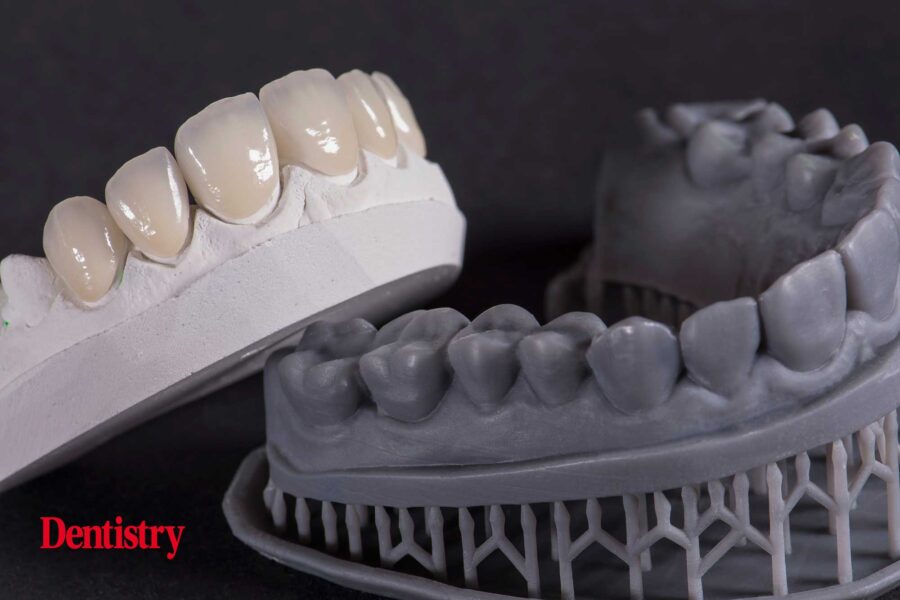
3D printing can support the making of crowns, bridges, temporary teeth, dentures, and trial models. For patients, this may mean better customisation, quicker planning, and a clearer idea of how the final teeth may look and fit. However, the quality still depends on good scanning, correct design, suitable material, lab skill, and clinical adjustment by the dentist.
Automation does not mean treatment is fully automatic
Automation helps with scanning, designing, printing, and repeating planned steps more efficiently, but dental treatment is still a clinical procedure. The dentist must check the bite, gums, bone, smile, comfort, hygiene access, and medical history. Technology improves planning, but it should not replace experience, judgement, and patient-specific decision-making.
Use of 3D Printing for Dental Planning
3D printed braces with LED lights: The aim of these braces is to align and straighten the teeth faster. The semi translucent 3d printed braces put a battery on each tooth. Now that’s a blinding smile! New 3D-printed braces will have two LED lights and one non-toxic lithium battery on each tooth to cut time and cost of straightening
3D printed dental implants: It is actually possible to create a 3D model to replace a missing tooth. This technology allows replacement of tooth, with higher accuracy than traditional method. Also, it is easy and economical, and the final product has a good finish.
3D printed Dentures: Its also possible to 3D print complete denture with gum and teeth with biocompatible materials. Which can easily adapted to patient’s morphology. Read more about SAPTeeth.
3D printed crowns and bridges: This is a dentist friendly technique which reduces dentist’s effort and time to rectify the mistake. One just has to scan the impression/cast and crown can be made over it in no time. Thus it can repaired digitally if any mistakes observed, thereby making dentist practice less exhausting without the concern of approaching the dental lab if the clinician has the software and 3Dprinter.
Apart from the above; 3D printing in dental can be used to make:
- Surgical Guides for complex zygomatic implants and cancer rehabilitation cases.
- Bleaching Trays for whitening
- Night guards
- Aligners for crooked teeth
- 3D models for diagnostic purposes and patient treatment planning
- In combination of the software of CBCT scan it can used in efficient computerised imaging.
Digital Dentistry requires special 3D-printing materials. Furthermore, when it comes to dental products, you have to use a biocompatible material like resin; offered by carbon and another companies. Uses of 3D-printer include the production of drills for dental implants, fabricating physical models for prosthodontics, orthodontics and surgery, the manufacture of dental implants, and the fabrication of copings and frameworks for implant and dental restorations!
As you can see this amazing manufacturing process is already getting its bearings, 3D printing in dental restorations have a bright and promising future together to come in dentistry.
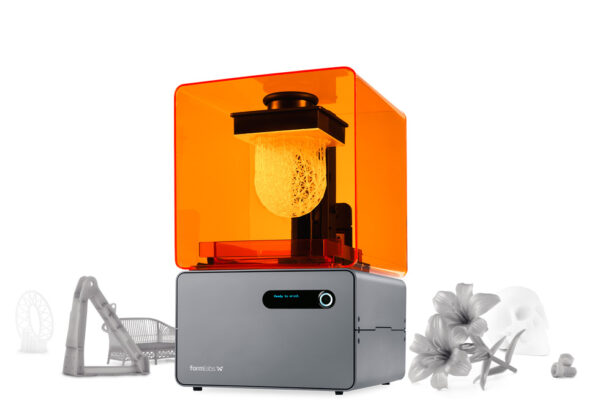
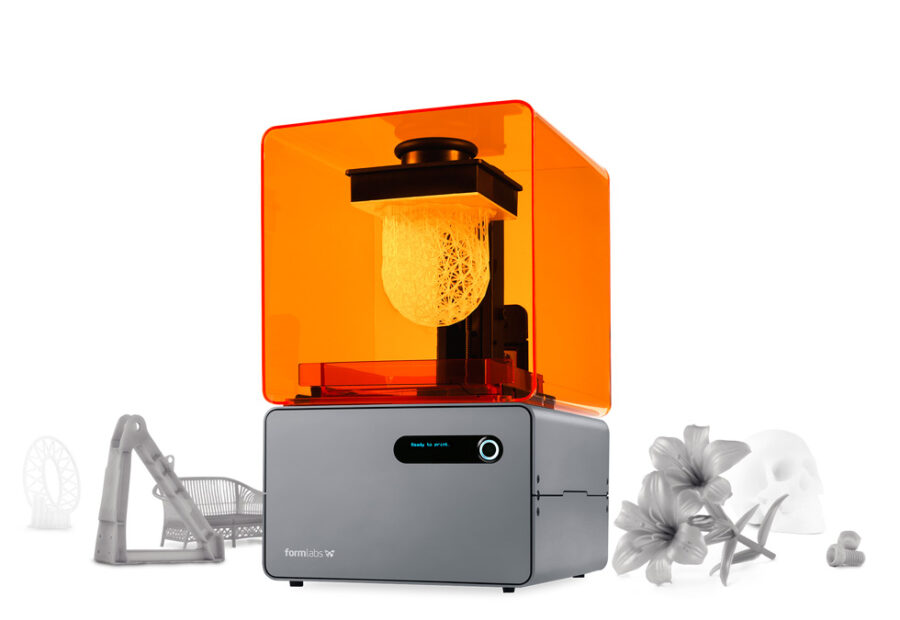
Additive manufacturing or 3D printing at Royal Dental Laboratory allows to produce dental crowns very quickly. This process can be done by the person scanning and planning itself. It makes possible to get a scan of the patient’s teeth, model it and to directly print the dental crown. Royal Dental Clinics specialises in planning patient cases through the 3D printing design on Formlabs Form2.
Can 3D printers print teeth?
Yes! Why Not. 3D printing is most commonly used in the creation of dental implants and crowns. This process yields the final product that is indistinguishable from your natural teeth. The shape, size, colour, and position of the artificial tooth or crown are all precisely crafted to ensure a perfect match for your smile.
3D-Printing Dental Planning
Dental 3D-printing is a key at Royal Laboratory for modern dentistry solutions, as it really helps for customisation and accurate planning. In addition, additive manufacturing also has an important role in dental implant surgery, including zygomatic implant surgeries.
It is actually possible to create a 3D model, to replace missing tooth with more accuracy than with traditional methods. We can even produce crowns very quickly by scanning the patient’s teeth, modelling it and printing the crown. Royal Dental Laboratory has been one of the early adopters of 3D printing technology a Dental Clinic in Mumbai.
FAQs to be added
Does 3D printing make dental treatment faster?
In many cases, 3D printing can make planning and lab work faster, especially for models, guides, temporary teeth, dentures, and trial designs. However, treatment time still depends on the patient’s case, healing, infection, bone support, bite, and the type of final teeth being made.
Is 3D printed dental treatment safe?
3D printed dental parts can be safe when proper dental-grade materials, correct design, quality control, and dentist supervision are used. Not every printed material is meant to stay in the mouth, so the dentist and dental lab must use suitable biocompatible materials for each purpose.
Suggested Article –
Medical Disclaimer
This article is for patient education only. Dental treatment should be planned after clinical examination, medical history review, and X-rays or scans where required. Treatment suitability, cost, timeline, healing, and results vary from patient to patient.