
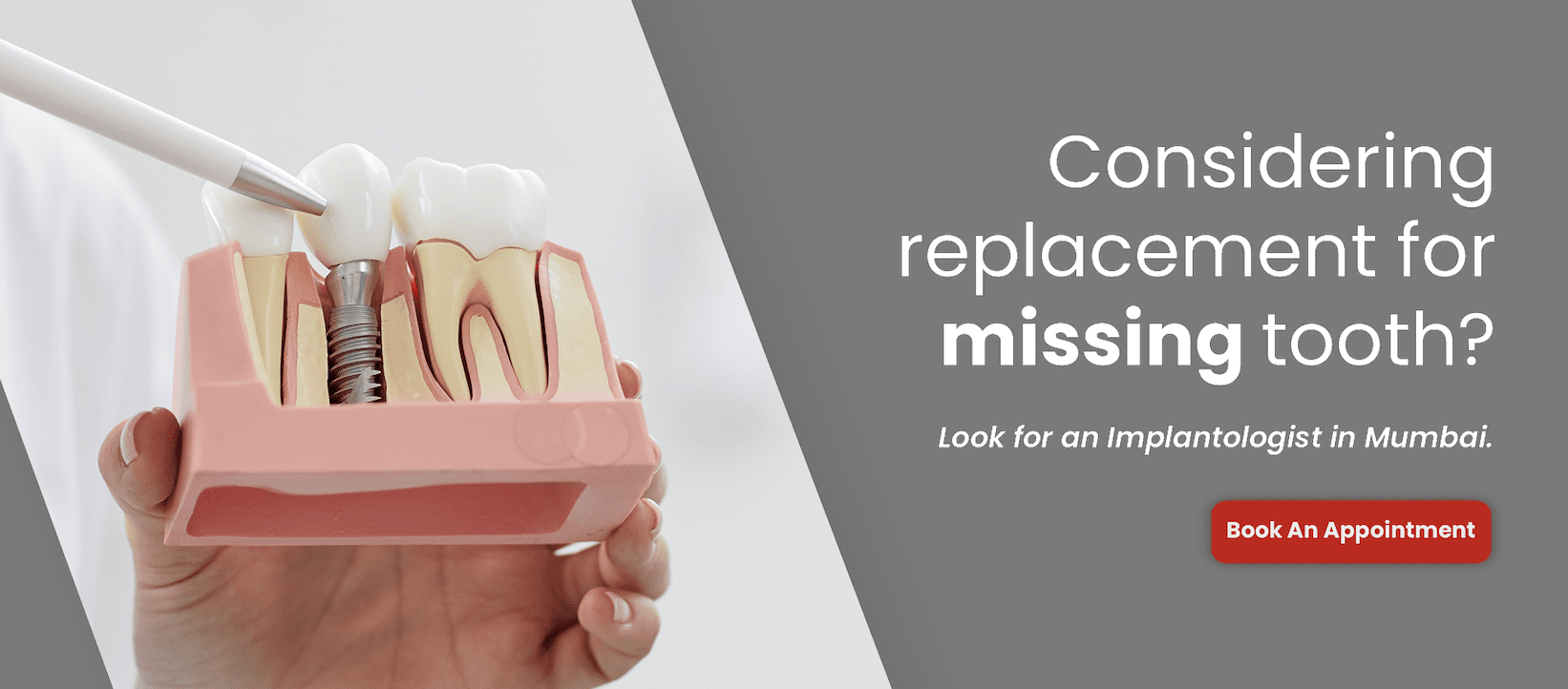
Immediate loading dental implants are a special type of implant used to replace missing teeth. This type of implant in that it immediately after the tooth removed. Other types of implants an extended period of healing before they placed, which means patients wait several weeks before undergoing surgery again. Immediate load dental implants this restriction and placed in one sitting. This article will explain everything you need to know!
Who Is This Article For?
This article is for patients who have one missing tooth, several missing teeth or complete tooth loss and want to know whether fixed teeth can be provided soon after dental implant surgery.
It may also help patients with failing teeth, loose dentures, severe upper-jaw bone loss or those considering full-mouth or zygomatic implant treatment. Immediate loading is not suitable for every patient. The decision depends on bone condition, implant stability, bite forces, medical history and the design of the temporary teeth.
At Royal, we have in house CBCT (dental x- rays) and in-house laboratory with the latest CAD-CAM and 3D printing technology to ease the process.
When is Immediate Load Implant used?
An immediate loading implant used when the patient already had a tooth removed and the implant at the same time as the tooth extraction. An immediate load implant at the same appointment as a tooth extraction. There is no need for an extended healing period because the implant will not affect the surrounding teeth.
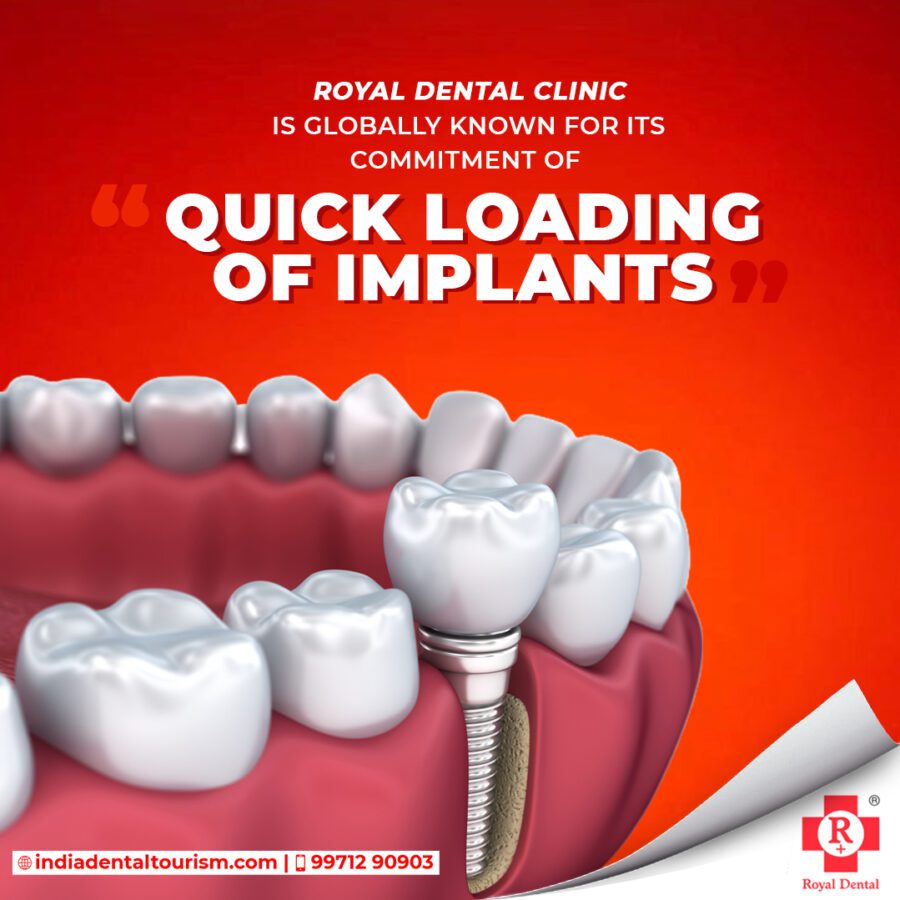
After therefore advanced training and innovative research conducted by International Institute of Dental Research now same day loading of dental implants with predictive results, possible even in very less or virtually no bone. The success of implants is around 90% for a 10 year period and 95% for a 10 year period. To successfully and predictively place dental implants and then to be able to fix shock absorbable permanent teeth with function and aesthetics requires a seamless coordination between the doctors, radiology, staff, laboratory and patient.
Immediate Loading VS Immediate Implant
- Immediate implant placement means placing an implant into the extraction socket soon after a tooth is removed.
- Immediate loading means attaching a functional or fixed restoration shortly after implant placement. An implant may therefore be placed immediately after an extraction but left unloaded during healing. Similarly, an implant placed in an already healed jaw may receive a temporary fixed tooth on the same day.
- Single-stage implant surgery means that the implant or healing component remains accessible through the gum rather than being completely covered during healing. It does not necessarily mean that a fixed tooth is attached immediately.
The treatment plan should clearly mention whether the proposal involves immediate placement, immediate loading or both.
Procedure for Immediate Loading Implant?
Treatment begins with a clinical examination, medical-history review and appropriate imaging. A CBCT scan may be used to assess the height, width and shape of the jawbone and the relationship of the proposed implant sites to nearby anatomical structures. Any teeth with a hopeless prognosis are removed carefully. The implants are then inserted into planned positions within the jawbone. Their primary stability is evaluated during surgery.
When the implants are sufficiently stable, an impression or digital scan is taken. The dental team and laboratory design a crown, bridge or full set of fixed teeth that fits over the implants. The bite is adjusted to reduce harmful pressure during healing.
Who May Be Suitable for Immediate Loading?
Immediate loading may be considered when the implants achieve good primary stability at the time of surgery. Primary stability refers to the mechanical firmness of the implant immediately after it is inserted into the bone. Suitability also depends on the available bone, implant position, number and distribution of implants, gum condition, opposing teeth and the patient’s bite.
Research identifies primary implant stability as an important requirement for predictable immediate-loading treatment. Bone quality, implant design and surgical technique can all influence the stability achieved during placement. A suitable patient should also be willing to follow dietary restrictions, maintain oral hygiene and avoid unnecessary pressure on the temporary restoration while the implants integrate.
When Might Immediate Loading Not Be Recommended?
- Immediate loading may be delayed when adequate implant stability cannot be achieved or when uncontrolled forces could interfere with healing.
- Conventional healing may be preferred when there is poor bone quality, inadequate bone quantity, extensive infection, uncontrolled gum disease, severe grinding, an unfavourable bite or a medical condition that could affect healing.
- Heavy smoking, difficulty maintaining oral hygiene and inability to follow a soft-food diet may also influence the decision.
- Choosing conventional loading does not mean that the treatment has failed. Allowing additional healing time may be the safer and more predictable approach in certain patients.
How mush does this implant Cost?
The cost of an immediate load dental implant will vary from one patient to another. It will depend on the materials used to create the implant, the type of implant, the location of the surgery, and the experience of the surgeon. The average cost of an immediate load dental implant is around $5,000 to $6,000.
Two-Stage or Traditional Dental Implant
Two-stage dental implant requires multiple surgeries where the implant placed in the jawbone and the gum tissue stitched back in place to allow the implant to heal for three to six months. The second stage involves minor surgery to expose the implant, attach the titanium posts, and then place the teeth prosthesis over it. This procedure takes about six to eight months to complete.
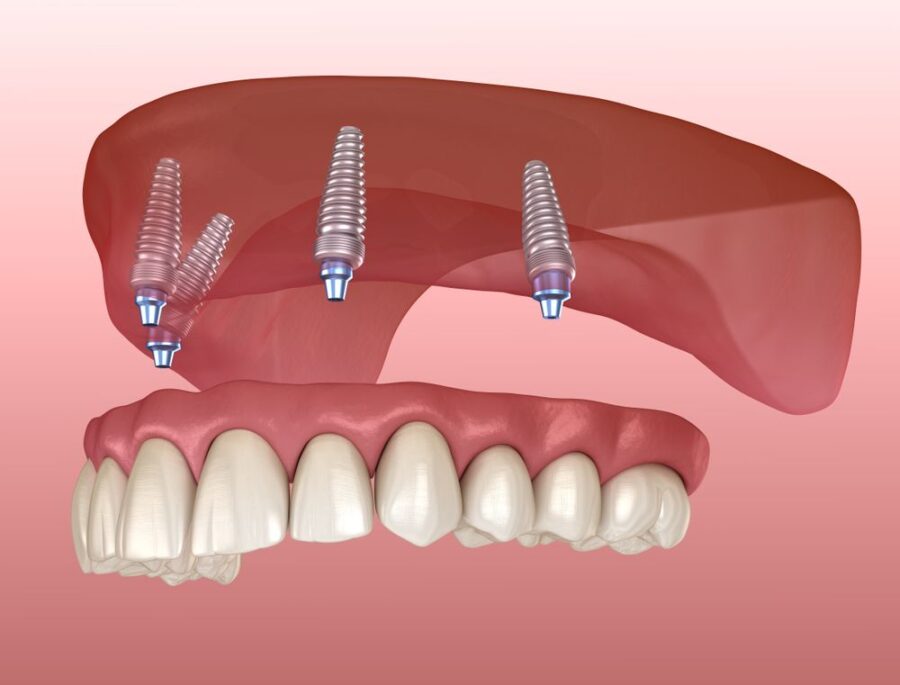
Single-Stage Implant Procedure In One Day
Single-stage dental implants are an advanced procedure that allows dentist to place the implants in one visit. The implant and even the prosthesis done on the same day. Mini dental implants are an ultra-small diameter (1.8-millimetre width), biocompatible titanium alloy implant screws, conceived and designed over 25+ years ago by a board-certified Manhattan Dentist, Victor I. Sendax, DDS. Dr Sendex originally created the unique design of this unique dental product as a transitional device to help support fixed bridge replacements for lost teeth.
The most important factor the material of the tooth which used over the implants. Royal Dental Clinics, uses its in-house manufactured SAPTeeth. These are the most advanced materials in Dentistry. What makes them unique is that they are Shock Absorb-able. With over 15 years of experience, the success rate of Implants In One Day or Same Day Implants is astonishing. To put it in numbers it is around 95% in 5 years and 90% in 10 years period.
Can Immediate Loading Be Used for a Single Missing Tooth?
Yes, a permanent SAPTeeth crown can be attached soon after placing a single implant in most cases. In visible front-tooth areas, the provisional crown may help maintain appearance and guide the surrounding gum shape.
Immediate loading is commonly considered in selected full-arch implant treatments. Several strategically positioned implants may be joined through a fixed bridge soon after surgery. Splinting the implants helps distribute forces, but the design must control cantilevers, bite pressure and movement of the provisional prosthesis.
Conclusion
An immediate load dental implant placed immediately after a tooth removed. This type of implant does not need to heal before being used, as does not affect surrounding teeth. Immediate load dental implants are best for patients who have had a tooth removed and need to have an implant placed.