
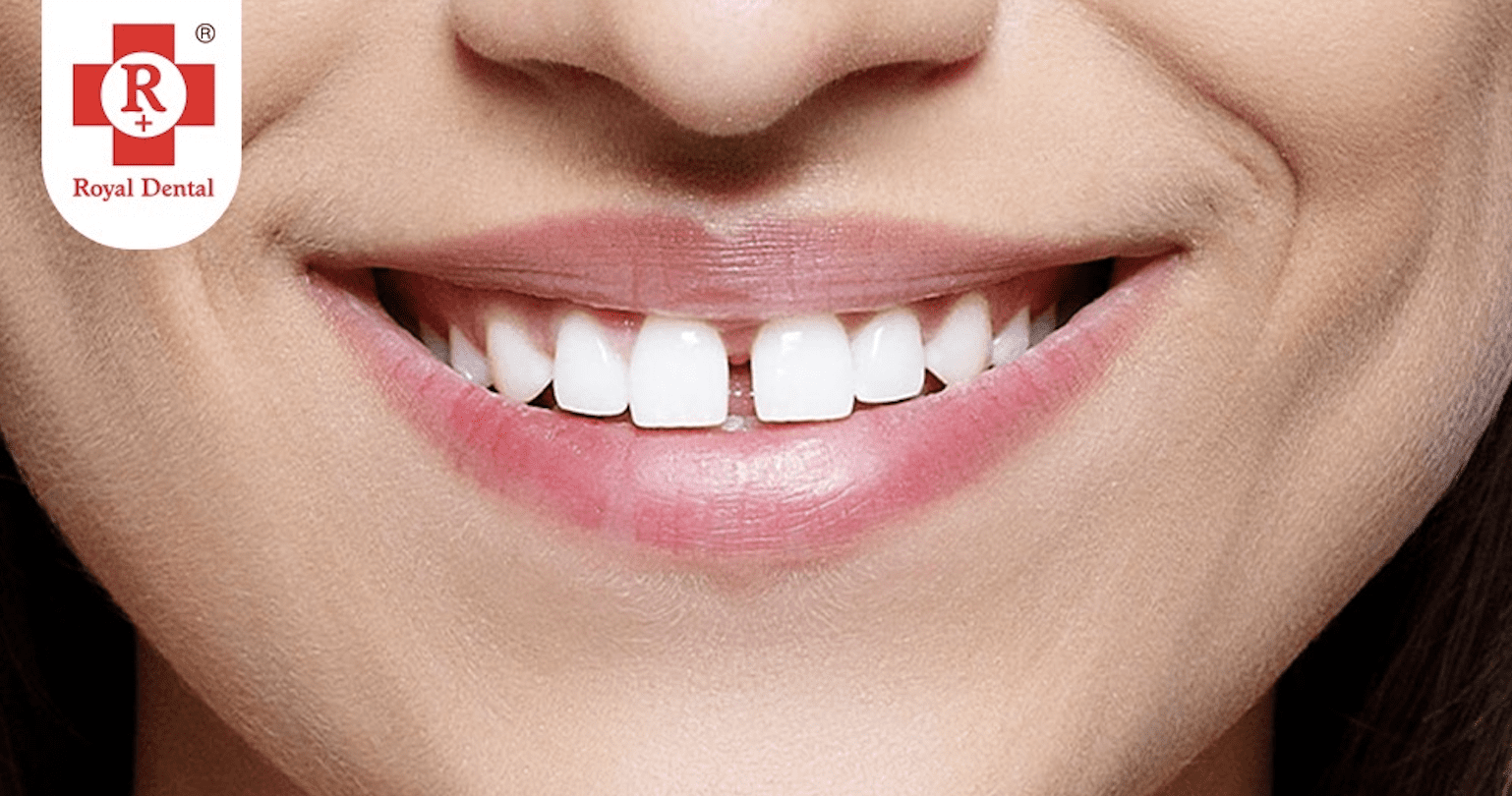
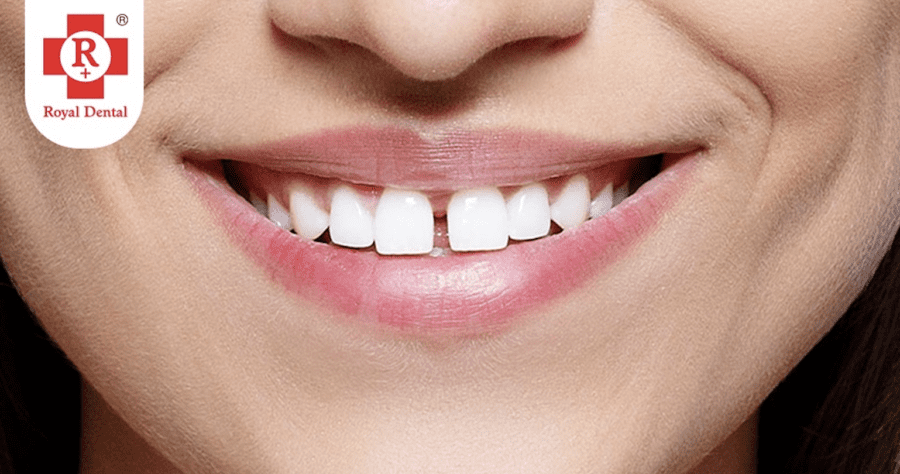
Solutions for spaces between front teeth depends on the cause of the gap, its size, and your overall oral health. A gap between the front teeth, also known as diastema, can affect both the appearance of your smile and your confidence. Depending on your condition, treatment options include braces, Invisalign, composite bonding, laminates, crowns, or dental implants. Consulting an experienced cosmetic dentist will help you choose the most suitable option for a natural-looking smile.
Who is this article for?
- People with gaps between their front teeth.
- Patients looking for cosmetic smile improvement.
- Individuals considering braces, Invisalign, or laminates.
- Patients with missing teeth creating spaces.
- Anyone seeking long-lasting diastema treatment.
What causes spaces between front teeth?
Spaces between front teeth, also called diastema, may occur due to small tooth size, large jaw size, missing teeth, gum disease, tongue thrusting, thumb sucking, high frenum attachment, tooth migration, or previous tooth loss. In adults, new or increasing gaps should be checked because gum disease or bite changes may be involved. A front tooth gap should not be closed blindly. The dentist must check gum health, bite, tooth size, frenum, tongue habits, bone support, missing teeth, and smile proportions. If gum disease or tongue thrusting is not controlled, the gap may reopen after treatment.
Options for closing spaces between front teeth?
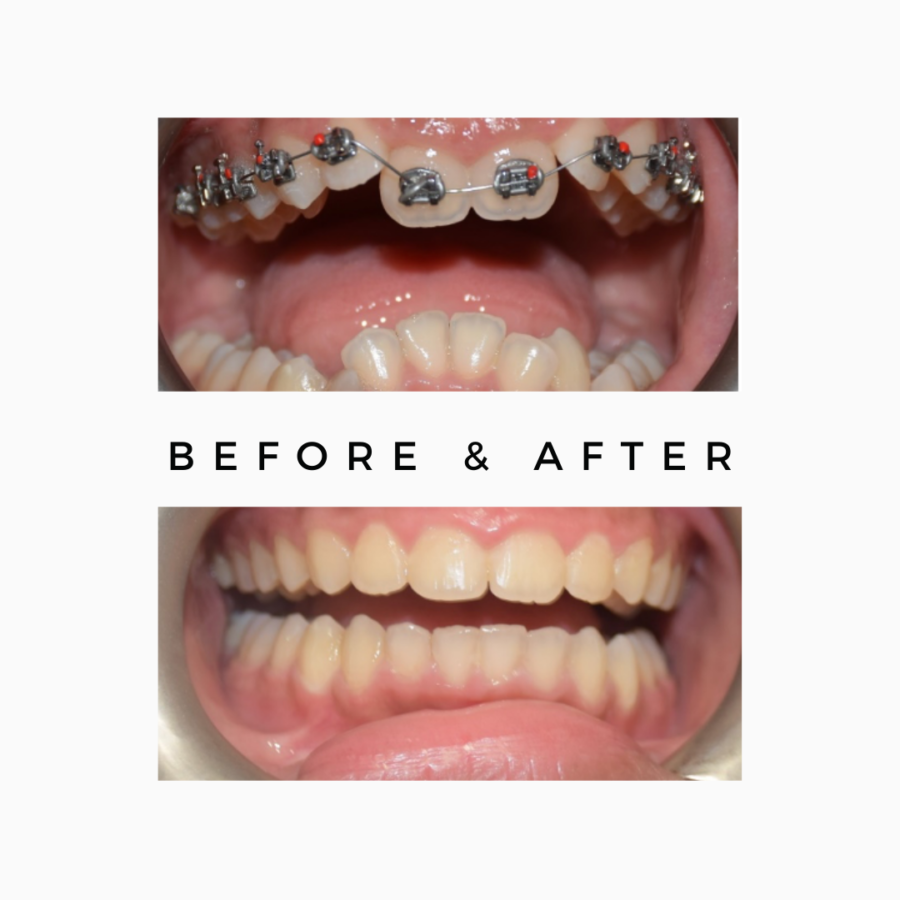
- Braces or clear aligners may be recommended when the teeth need to be moved into better positions. This is useful when spacing is due to tooth position, crowding elsewhere, bite imbalance, or multiple gaps. Orthodontic treatment takes longer but preserves natural tooth structure.
- Composite bonding can close small to moderate gaps by adding tooth-coloured material to the sides of the teeth. It is conservative, usually quick, and can improve tooth shape. However, bonding may stain, chip, or need maintenance over time depending on bite and habits.
- Veneers or laminates may be considered when the patient wants to close gaps and also improve tooth shape, size, colour, or smile proportion. They are commonly used for cosmetic smile design, but they require careful planning to avoid making teeth look too wide or artificial.
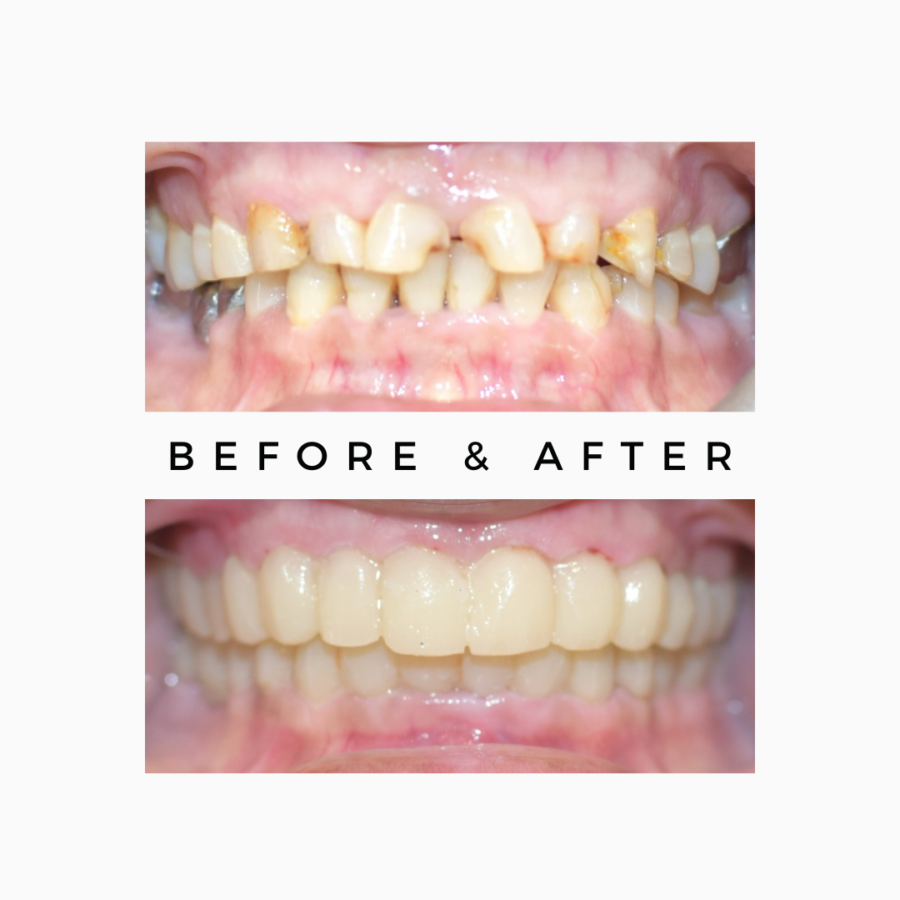
- Crowns may be advised when the teeth are already damaged, root-canal-treated, heavily filled, worn, discoloured, or structurally weak. Crowns are not usually the first option for healthy teeth with small gaps because they require more tooth preparation than bonding or veneers.
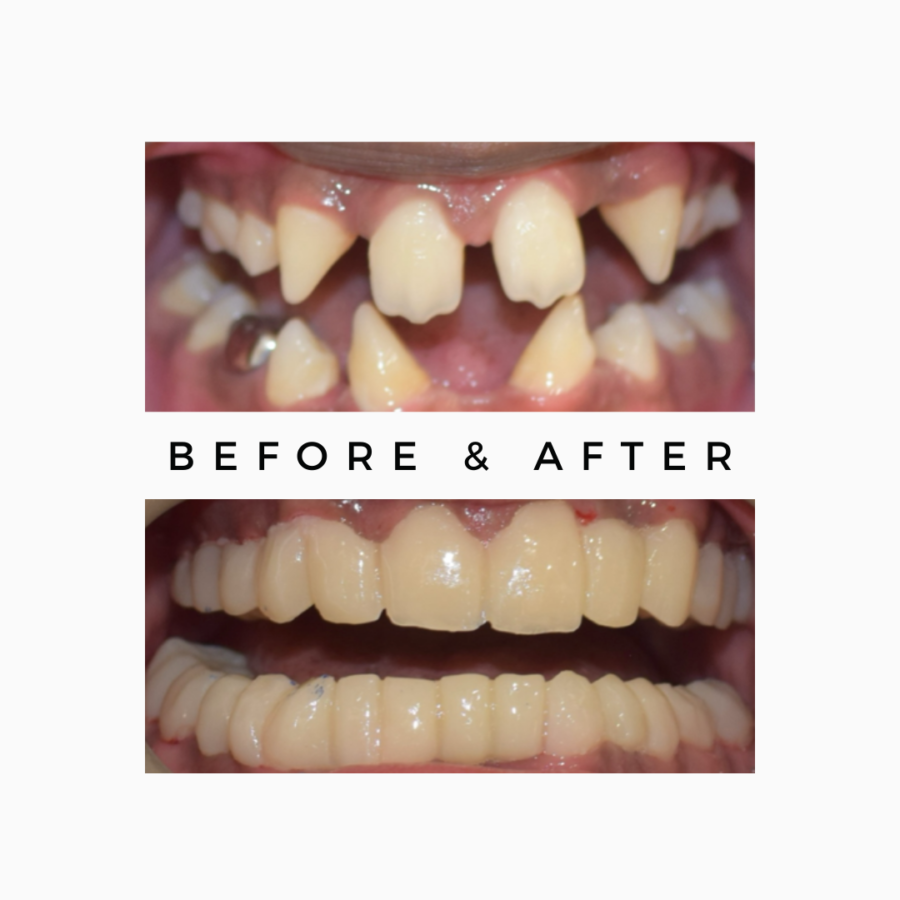
- If the front space is due to a missing tooth, treatment may involve a dental implant, bridge, or removable replacement depending on bone, gum, adjacent teeth, age, and bite. Closing the gap cosmetically without replacing a missing tooth may not be suitable in such cases.
Can gaps be closed in one day?
In selected cosmetic cases, gaps can be improved in one day with bonding, veneers, laminates, or crowns. However, one-day correction is not suitable for every gap. If the cause is gum disease, missing teeth, bite problem, or tongue habit, staged treatment may be safer. At Royal Dental Clinics, front teeth spacing is evaluated with smile analysis, gum health check, bite assessment, tooth size analysis, X-rays if needed, and discussion of patient expectations. Treatment may include orthodontics, bonding, veneers, crowns, implants, or habit correction depending on the cause.
Smile Designing for spaces in front teeth
One day closure of spacing or diastema cosmetically involves CAD-CAM technology, metal free materials such as Zirconia, Ceramic or shock absorbable High impact polymerised composite (SAPT.HIPC) to ensure precise fit and translucency. The prosthesis should act as natural teeth. The advantage of one day cosmetic gap closure is that it is a painless procedure where in the laminates or crown are permanently bonded over the teeth. Aligned teeth without spacing enhances the patient’s smile and boosts confidence. Wouldn’t you like if the space between your teeth wasn’t distracting people when they speak with you?

A smile bridges the gaps between two individuals and is enough to disarm opponents in any argument. The teeth play a vital role in creating a perfect smile; hence seeking cosmetic solutions for an attractive smile which remains no longer limited only to celebrities. Cosmetic dentistry involves professional oral care that improves overall appearance of your mouth, teeth & smile. Although cosmetic dentistry procedures are usually elective, some cases of treatment may be essential too.
Solutions for Smile Makeover: The 3 R concept
The 3 R concept: Correcting space problems usually involves one of three major choices.
- Repositioning (orthodontics)
- Restoration (bonding, laminating, or crowning)
- Removal (replacement with an implant). The least desirable alternative that, only used as a last resort.
However, if the patients need is urgent, laminating or crowning is the choice of treatment.
Gaps Between Front Teeth with Laminates!
Laminates to close front spaces: Although bonding is the quickest way to close spaces. Laminating with either laboratory-made composite resin or can be done on the chair itself. It would take only one day to complete this treatment. The technique is especially effective when spaces are not uniform. A major advantage in choosing laminates are the proportional accuracy the dentist can obtain. Because the laminates, constructed on a model in the laboratory.
Crowning to close your spaces: Compared to bonding, crowning is a longer lasting solution. The natural tooth structure must reduced, and replacement may required. Some two to nine years later depending on the treatment chosen. In some spaces, people even prefer a slight gap to intentionally left. In the crowns in order to give a more natural appearance. Use of polymer composites gives a natural long lasting and plaque resistance properties.
There may be no single best method to solve your space problem. Instead, combining bonding, and even a cantilever, conventional fixed bridge with or without implant. May the most economical and cosmetically effective approach. The proper sequence is to finish repositioning the teeth before having bonding or other restorative treatment done. Working closely with your dentist can finally lead to closed gaps or replaced teeth that are strong, comfortable, and satisfying.
Conclusion
The ideal solution for spaces between front teeth depends on the cause, size of the gap, and your smile goals. While orthodontic treatment gradually moves teeth into position, cosmetic solutions such as bonding, laminates, or crowns can provide immediate aesthetic improvements. Consulting an experienced cosmetic dentist ensures you receive a personalized treatment plan that delivers natural-looking, long-lasting results.
FAQ’s
1. What causes spaces between front teeth?
Spaces between front teeth may be caused by genetics, tongue thrusting, missing teeth, gum disease, or an enlarged frenum.
2. Can a gap between front teeth be closed without braces?
Yes. Depending on the case, cosmetic bonding, laminates, or crowns can close front tooth gaps without orthodontic treatment.
3. What is the fastest treatment for diastema?
Composite bonding and dental laminates are among the fastest cosmetic options and can often be completed in a single visit.
4. Is Invisalign effective for closing front tooth gaps?
Yes. Invisalign is effective for many mild to moderate spacing cases, although treatment duration varies.
5. Can missing teeth cause gaps between front teeth?
Yes. Missing teeth can allow surrounding teeth to shift, creating spaces that may require orthodontic treatment or dental implants.
Want to close the spaces between your front teeth and improve your smile?
Book a consultation at Royal Dental Clinics to explore the best treatment options for your smile. Whether you need bonding, laminates, Invisalign, crowns, or dental implants, our experts will create a personalized treatment plan and can also provide a second opinion.
© All rights reserved by Royal Dental Implants Pvt Ltd
Issued in public interest
FAQs
What causes gaps between front teeth?
Common causes include tooth size mismatch, jaw size, missing teeth, gum disease, tongue thrusting, habits, high frenum, or tooth migration.
Can front teeth gaps close naturally?
Some gaps in children may change as teeth erupt, but adult front tooth gaps usually do not close permanently without treatment.
Is bonding good for front teeth gaps?
Bonding is a good option for selected small to moderate gaps when teeth are healthy and the bite is favourable.
Are veneers better than braces for gaps?
Veneers are faster for cosmetic correction, while braces or aligners move the teeth. The better option depends on the cause of spacing and tooth condition.
Can a front tooth gap come back?
Yes. Gaps can reopen if the cause is tongue thrusting, gum disease, poor retention after orthodontics, or bite imbalance.
Can gaps be closed in one day?
Some cosmetic gaps can be closed in one day with bonding or veneers, but not all cases are suitable for instant correction.
Read more on solutions for spaces between Front Teeth!
When teeth malformed or missing, this results in spacing. Cosmetic treatment of spaced teeth is a method to align your teeth and beautify your smile. Its done with the help of Smile Designing. In this cosmetic treatment, SAPTeeth laminates designed and fabricated to close the gaps between the front teeth. Laminates are relatively non-invasive methods of achieving gap closure. They come in different colours, shapes, sizes.