

Sinus lift surgery for dental implant placement, also known as sinus augmentation, is a procedure that adds bone to the upper jaw in the area of the molars and premolars. It is commonly recommended when there is insufficient bone height in the upper jaw to securely support dental implants. By increasing bone volume beneath the sinus cavity, this procedure creates a strong and stable foundation, improving the long-term success of dental implant treatment.
A sinus lift or a sinus augmentation or sinus graft; is performed by Oral and Maxillofacial surgeons. It’s suitable for patients who want dental implants for missing teeth, but do not have adequate bone to secure implants. To obtain an adequate bone in the upper jaw, a sinus lift surgery is recommended for the maxillary sinus.
Sinus lift surgery for dental implant involves the augmentation or lifting of the maxillary sinus membrane to create additional space for new bone formation. The maxillary sinuses are air-filled cavities located in the back portion of the upper jaw (maxilla). By raising the sinus membrane and placing bone graft material beneath it, the procedure provides sufficient bone support for secure and successful dental implant placement.
Who Is This Article For?
- Individuals who have been advised they need a sinus lift before getting dental implants.
- Patients with insufficient bone in the upper jaw due to bone loss or prolonged tooth loss.
- People looking to understand the sinus lift procedure, benefits, risks, and recovery process.
- Anyone researching whether they are a suitable candidate for dental implant treatment.
- Patients seeking to improve the long-term success of their dental implants through proper treatment planning.
Why Is Sinus Lift Surgery for Dental Implant Necessary?
Bone loss in the upper jaw can be caused by a number of factors, including:
- Tooth loss: When a tooth is lost, the bone that supported it begins to resorb, or shrink. Over time, this can lead to a significant decrease in bone height.
- Gum disease: Gum disease can also damage the bone in the upper jaw.
- Certain medical conditions: Some medical conditions, such as osteoporosis, can also affect bone density and lead to bone loss.
Without enough bone height, dental implants may not be able to be placed securely. This can lead to problems such as implant failure, infection, and sinus pain.
Clinical Indications of Sinus Lift:
- Oro-antral Fistula: Reconstruction of palate clefts
- Inter-positional graft with Lefort-1 fractures: <10mm alveolar residual bone height
- <4mm residual bone width: No history of any pathology
Contraindications by Maxillofacial Surgeon:
While sinus lift surgery for dental implant treatment is a safe and predictable procedure, it may not be suitable for everyone. Contraindications can be broadly categorized into absolute and relative contraindications. Absolute contraindications are conditions that completely rule out the procedure, while relative contraindications increase the risk of complications or reduce the likelihood of a successful outcome.
A thorough clinical examination and diagnostic evaluation help determine whether a patient is an ideal candidate for sinus lift surgery before dental implant placement.
- Uncontrolled Systemic Disease: Patients with uncontrolled systemic diseases, such as uncontrolled diabetes, severe hypertension, or uncontrolled bleeding disorders, are at an increased risk of complications during and after surgery.
- Active infection in the sinus cavity: An active infection in the sinus cavity can increase the risk of spreading the infection to the bone graft material and bone surrounding the implant, leading to implant failure and potential bone loss.
- Previous irradiation to the maxillofacial region: Prior radiation therapy to the maxillofacial region can impair bone healing and make the procedure less successful.
- Inability to cooperate with the procedure: Patients unable to cooperate with the surgical procedure, such as those with severe mental health conditions or developmental disabilities, may pose a safety risk and may not be suitable candidates for sinus lift surgery.
Approach for Direct Maxillary Sinus Lift
Lateral Window Technique
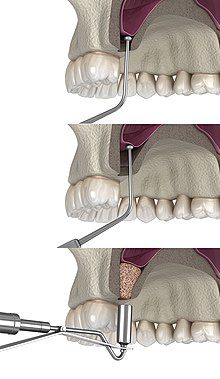
The lateral window technique is one of the most commonly used methods in sinus lift surgery for dental implant treatment. It involves creating a small window in the lateral wall of the maxillary sinus to access the sinus membrane. The membrane is then carefully lifted, and bone graft material is placed beneath it to increase bone height and provide a stable foundation for dental implants. Once the graft is in place, the window is closed using sutures or, in some cases, bone screws to support proper healing.
Osteotome Sinus Floor Elevation (OSFE) Technique
The osteotome sinus floor elevation (OSFE) technique is a less invasive approach that uses specialized instruments called osteotomes to gently elevate the sinus membrane. Osteotomes are blunt-tipped tools that gradually expand the space beneath the sinus membrane, creating a space for bone graft material to be placed. The OSFE technique is typically performed without the need for an incision in the lateral wall of the maxillary sinus.
Advantages of Direct technique for Sinus Lift:
- A Clear direct view is available
- Easy Access
- Immediate loading of implants
- Efficiently worked
Disadvantages of Direct technique for Sinus Lift:
- More pain compared to indirect technique
- More post-operative discomfort
- Time-consuming
- Skill sensitive technique
- High risk of secondary infection.
Approach for Indirect Maxillary Sinus Lift
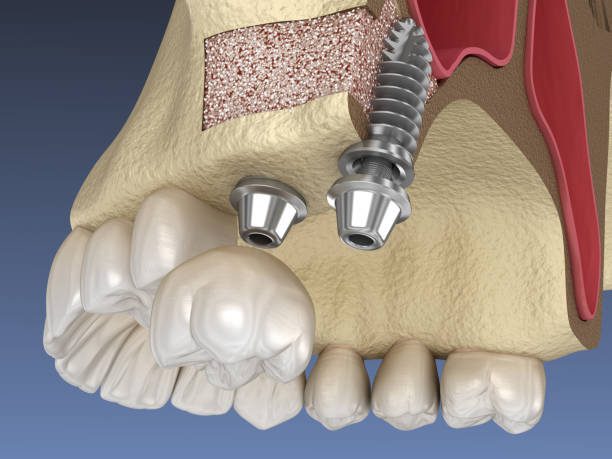
Indirect (Osteotome): This technique is performed when the bone height is 6-8mm. Above all a crestal incision is made after which a crestal ridge is exposed. A sharp osteotome is used to “Chisel” a rectangle in the crestal ridge of the maxilla, then a sinus-lift osteotome is used like a mallet to fracture the bone. Hence punch a hole through where the rectangle was created into the sinus floor after which the sinus is raised with bone grafting material and implants are placed.
Advantages of indirect technique for sinus lift:
- Minimally invasive surgical procedure
- the osteotomy is 1-3mm in width and depth
- Permits a sterile environment
- The simple procedure doesn’t require less time or expertise
Disadvantages of Indirect technique for sinus lift:
- Implant to be loaded immediately within 3 months
- Sinus is not exposed
- The probability of errors is more
Early complications such as:
- Incision line opening
- Bleeding
- Barrier membrane exposure
- Infraorbital nerve paresthesia
- Graft Loss/Failure
- Implant failure
- Oronatral Fistula
- Implant migration
- Inadequate graft lift
Conclusion by Maxillofacial Surgeon
A sinus lift can be an important procedure for patients who want dental implants in the upper back jaw but do not have enough bone height below the maxillary sinus. It helps create bone support for implants by lifting the sinus lining and placing bone graft material in the area. In selected cases, implants may be placed at the same time; in other cases, implant placement may be planned after healing.
Sinus lift treatment should not be decided without proper diagnosis. The dentist or oral surgeon must evaluate the upper jaw bone, sinus health, gum condition, medical history, implant position, and treatment goals before planning the procedure. If you have been told that you have less bone in the upper jaw, consult an implant team to understand whether sinus lift, zygomatic implants, pterygoid implants, or another treatment option is suitable for your case.
FAQs on Sinus Lift for Dental Implants
1. What is a sinus lift in dental implant treatment?
A sinus lift, also called sinus augmentation, is a bone grafting procedure done in the upper back jaw when there is not enough bone height for dental implant placement. The maxillary sinus is gently lifted upward, and bone graft material is placed below it to create more bone support for future or simultaneous implant placement.
2. Why would I need a sinus lift before dental implants?
You may need a sinus lift if the upper back jaw has lost bone after tooth loss, gum disease, infection, trauma, or long-term denture use. In some patients, the maxillary sinus naturally expands downward after upper molars are lost, leaving very little bone for implant support. A sinus lift helps create a stronger foundation for implants in selected cases.
3. Is a sinus lift painful?
A sinus lift is usually performed under local anaesthesia, and sedation may be considered for anxious patients or complex cases where appropriate. During the procedure, the area is numb, so sharp pain should not be felt. After surgery, some swelling, discomfort, mild bleeding, nasal stuffiness, or heaviness in the cheek area may be expected for a few days. Medicines and post-operative instructions help manage recovery.
4. Can implants be placed on the same day as a sinus lift?
In some cases, implants can be placed at the same time as the sinus lift if there is enough existing bone to provide primary stability. In other cases, the sinus lift is done first and implants are placed later after the grafted bone has healed. The decision depends on bone height, bone quality, sinus condition, implant stability, infection status, and the dentist or oral surgeon’s treatment plan.
5. Are there alternatives to sinus lift?
Yes, alternatives may be considered in selected cases. These may include short implants, angled implants, pterygoid implants, zygomatic implants for severe upper jaw bone loss, or a different prosthetic plan. However, not every alternative is suitable for every patient. A CBCT scan and clinical evaluation are needed to decide whether sinus lift, graftless implants, zygomatic implants, or another option is safer and more predictable.
Disclaimer: This article is for patient education. Treatment suitability, timeline, recovery, healing, comfort, and results vary from patient to patient. A clinical consultation and X-ray or CBCT evaluation are required before planning sinus lift or dental implant treatment.