
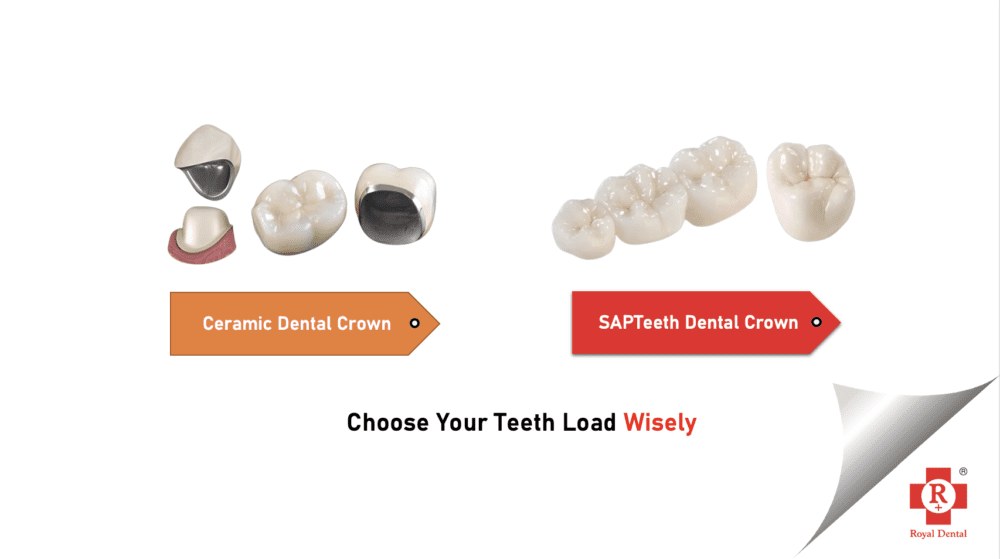
Choosing the material for fixed full-mouth implant teeth involves more than asking which option is stronger or lasts longer. Weight, rigidity, wear, repairability, available space, implant distribution, bite forces, appearance and maintenance requirements must all be considered. SAPTeeth vs zirconia are not directly equivalent categories. SAPTeeth is a branded prosthetic system available in different material variants, while zirconia is a high-strength dental ceramic. Each option has potential benefits and limitations, and neither is automatically suitable for every patient. This guide compares the two approaches for full-mouth and implant-supported restorations. A final recommendation requires examination of the implants, gums, available prosthetic space and bite.
First, What Are SAPTeeth?
SAPTeeth refers to a family of customised prosthetic teeth and restorations used in selected full-mouth, implant-supported and immediate-loading treatments. Different SAPTeeth variants may use different polymers, reinforced materials or framework designs. The exact material name, composition, indication, expected maintenance and service terms should be stated in the patient’s written treatment plan. Claims applying to one SAPTeeth variant should not automatically be applied to the entire product range. They are:
- Highly aesthetic
- Lightweight
- Comfortable to wear
- Ideal for immediate loading cases
Disclosure: SAPTeeth are an excellent short- to medium-term solution for patients seeking a fast smile transformation. SAPTeeth is a proprietary prosthetic system used by Royal Dental Clinics. This article provides general patient information and should not be interpreted as an independent product comparison. Material selection is made according to individual clinical requirements.
What Is Zirconia?
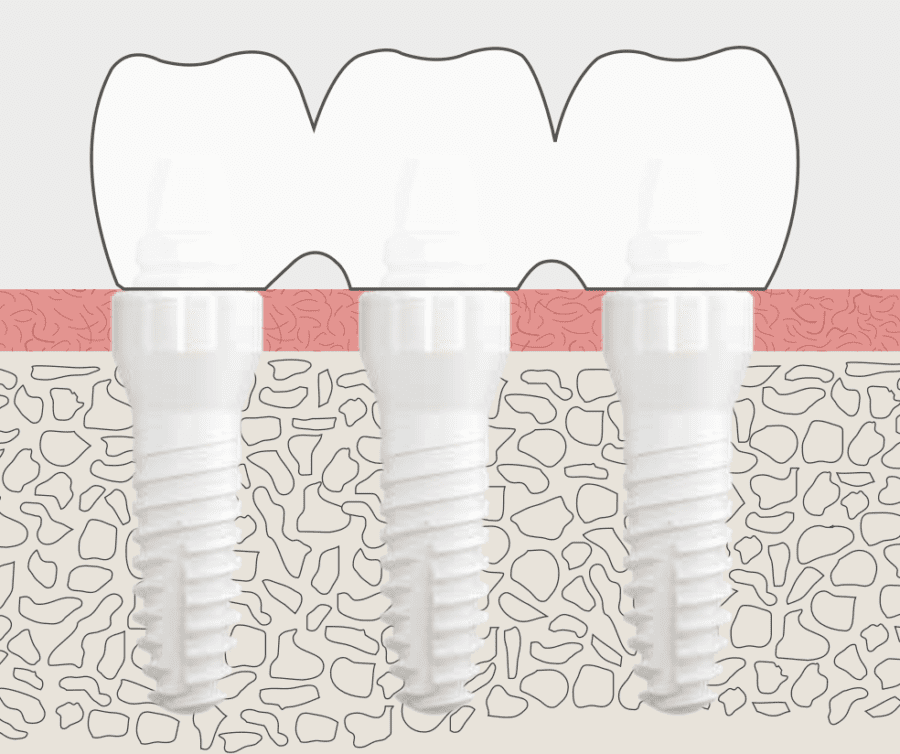
Dental zirconia is a ceramic used to manufacture crowns, bridges and complete-arch implant prostheses. Full-arch restorations may be monolithic zirconia or zirconia with layered ceramic in selected aesthetic areas. Zirconia generally offers high strength, good wear resistance and colour stability. However, outcomes depend on the zirconia formulation, prosthesis design, connector dimensions, implant positions, manufacturing, surface finishing and bite.
Zirconia restorations are:
- Extremely strong and chip-resistant
- Highly natural in appearance
- Stain-resistant
- Long-lasting and stable
Due to these qualities, Zirconia is often recommended as the final, permanent smile solution after initial healing.
SAPTeeth vs Zirconia—Key Differences
| Factor | SAPTeeth system | Zirconia |
|---|---|---|
| Material type | Depends on selected SAPTeeth variant | Dental ceramic |
| Weight | Often lighter, depending on design | Generally heavier than polymer-based restorations |
| Rigidity | Usually more resilient than zirconia | Highly rigid |
| Wear resistance | Varies by polymer and surface | Generally high when appropriately finished |
| Repair | May be easier in some variants | Repairs can be more complex |
| Polishing | May require periodic repolishing | Can retain a polished surface well |
| Staining | Depends on material and habits | Generally relatively stain-resistant |
| Fracture pattern | Wear, chipping or framework complications may occur | Chipping or framework fracture may occur |
| Opposing teeth | Depends on surface and bite | Requires careful polishing and bite management |
| Immediate loading | May be useful because of weight and reparability | Suitability depends on design and clinical conditions |
| Cost | Depends on variant and design | Often higher, but clinic-specific |
| Evidence | Product-specific evidence must be disclosed | Broader published literature is available |
Which Smile Lasts Longer?
Zirconia generally has greater hardness and wear resistance than polymer-based prosthetic materials. However, greater material strength does not automatically mean better overall treatment longevity. Full-arch prosthesis survival also depends on implant support, framework design, connector size, cantilever length, available restorative space, bite forces, hygiene and maintenance. Zirconia restorations can experience chipping, screw-related problems or framework fracture, while polymer-based restorations may experience wear, discolouration, fracture or the need for repair. Modern reviews report high survival for full-arch implant prostheses but confirm that complication patterns differ according to material and design.
Which Material Feels More Natural?
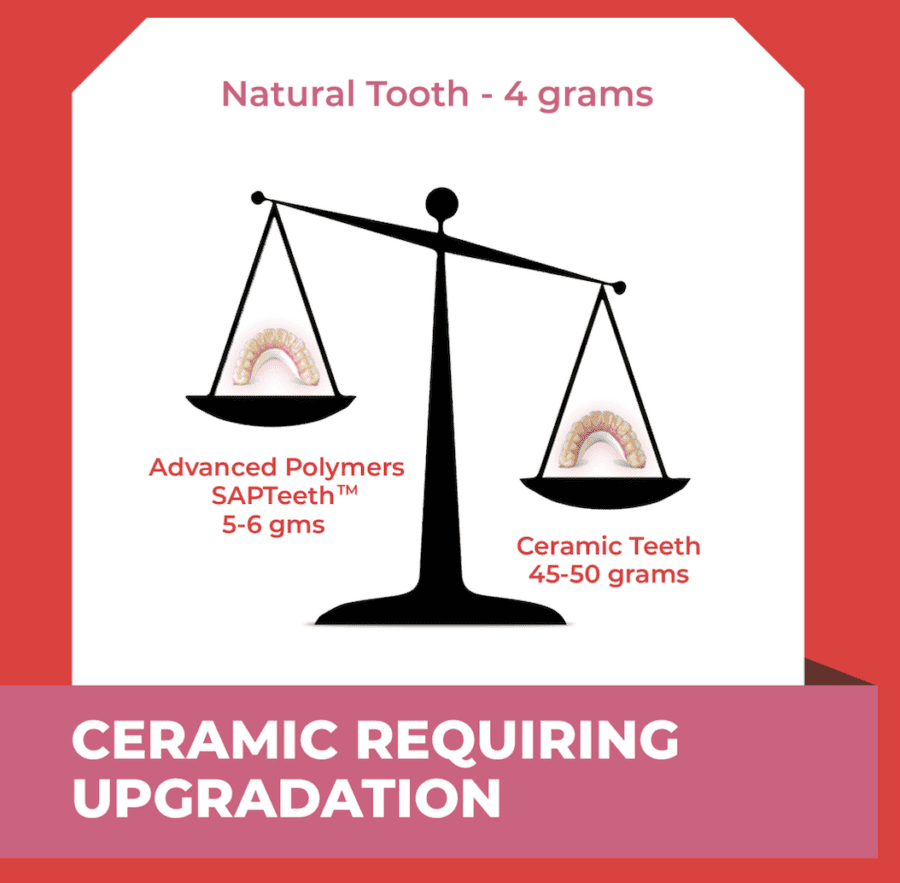
“Natural feel” is subjective. Some patients may notice differences in weight, sound during chewing, surface texture or how rigidly forces are transmitted. These experiences vary and cannot be expressed reliably as a fixed numerical improvement. Claims such as “24 times more natural” should not be used unless the measurement, testing method, comparator and published evidence are clearly provided.
Both systems can be designed to provide an aesthetic result. Zirconia offers good colour stability and can be characterised to reproduce tooth shades. Polymer-based prostheses can also achieve natural-looking tooth and gum contours. The result depends on smile design, tooth arrangement, lip support, shade selection, gum characterisation and laboratory execution—not material alone.
Which Material May Suit Different Patients?
SAPTeeth may be considered when:
- A lightweight prosthesis is preferred
- Immediate-loading treatment is clinically suitable
- Easier adjustment or repair is important
- Bite adaptation needs to be monitored
- A particular SAPTeeth material is suitable for the restoration design
Zirconia may be considered when:
- High wear resistance is a priority
- Adequate prosthetic space is available
- Implant distribution and framework design are favourable
- The patient accepts the possible cost and repair implications
- A rigid ceramic restoration is clinically appropriate
How Can Royal Dental Clinics Help You Choose Right?
Every smile is unique. Bite force, jaw structure, gum health, and lifestyle habits all play a role in deciding which material suits you best. At Royal Dental Clinic, our specialists:
- Evaluate your oral condition in detail
- Use digital smile planning
- Explain material options transparently
- Recommend the most suitable solution for your needs
- Specialise in one-day dental implants and full-mouth rehabilitation
Conclusion
SAPTeeth and zirconia offer different combinations of weight, rigidity, wear resistance, repairability and maintenance. Zirconia may provide greater wear resistance, while selected SAPTeeth materials may offer advantages involving weight, adjustment or repair. Neither material can guarantee a particular lifespan. The appropriate choice depends on the exact SAPTeeth variant, prosthesis design, implant support, available space, bite forces and the patient’s maintenance preferences.
At Royal Dental Clinics in Kandivali East, the material for implant-supported teeth is selected after evaluating implant position, available space, gum condition, bite forces, aesthetic requirements and maintenance preferences. Patients should receive the exact material specification, expected treatment stages, advantages, limitations, cost and applicable service terms in writing. In suitable immediate-loading cases, a provisional or selected polymer-based restoration may be fitted before the final long-term prosthetic decision is made.
FAQs
Is SAPTeeth better than zirconia?
Neither option is universally better. Suitability depends on the SAPTeeth variant, restoration design, implant support, bite, available space, aesthetics and maintenance requirements.
Does zirconia last longer than SAPTeeth?
Zirconia generally has greater wear resistance than many polymer materials. However, complete prosthesis longevity depends on much more than material strength, and SAPTeeth performance varies by product variant.
Is SAPTeeth a permanent material?
The term “permanent” should be avoided. Some variants may be intended for provisional use and others for longer service. Patients should request the exact material and intended use in writing.
Can zirconia implant teeth break?
Yes. Although zirconia is strong, chipping, framework fracture and screw-related complications can occur. Correct design, manufacturing, polishing and bite management are important.
Which material is better for teeth grinding?
Bruxism requires careful bite assessment regardless of material. The decision may consider rigidity, repairability, wear, prosthesis design and protection with a night guard where appropriate.
Can SAPTeeth later be changed to zirconia?
A later change may be possible when the implant positions, prosthetic space and framework design permit it. This should be planned from the beginning rather than promised automatically.