PEEK Dental frameworks have become an increasingly popular option for implant-supported restorations because of their lightweight design, biocompatibility, and favourable mechanical properties. In full-mouth implant rehabilitation, including selected zygomatic implant cases, a PEEK framework can help support the final prosthesis while improving patient comfort. This article explains what a PEEK dental framework is, its benefits, and when it may be recommended.
Who Is This Article For?
- Patients considering full-mouth dental implants
- Individuals receiving zygomatic implants
- Patients comparing framework materials
- People interested in long-term implant restorations
- Anyone researching advanced implant-supported prostheses
What is PEEK Dental framework?
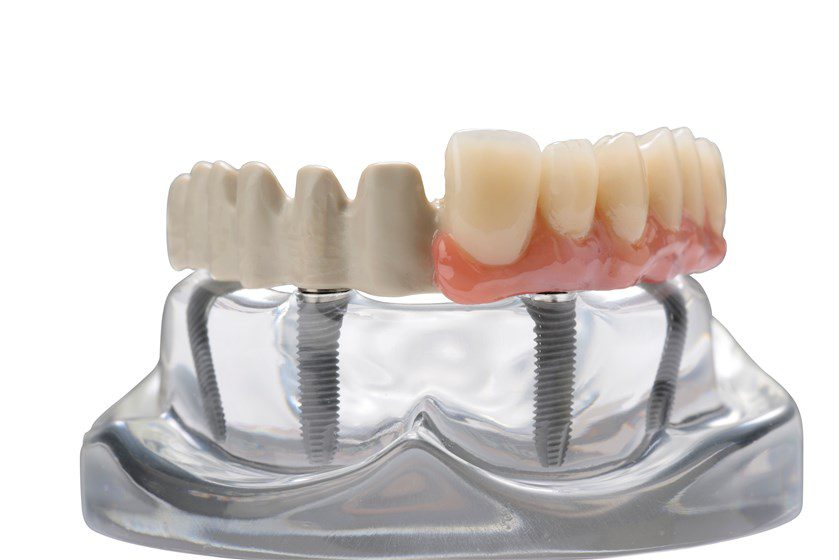
Peek frames kind of external splint made over the implants or natural tooth. This reduces the amount of load on the implant or tooth as they have a shock absorbable property. PEEK is an ideal dental framework material for dentistry! It is biocompatible properties are its core strength.
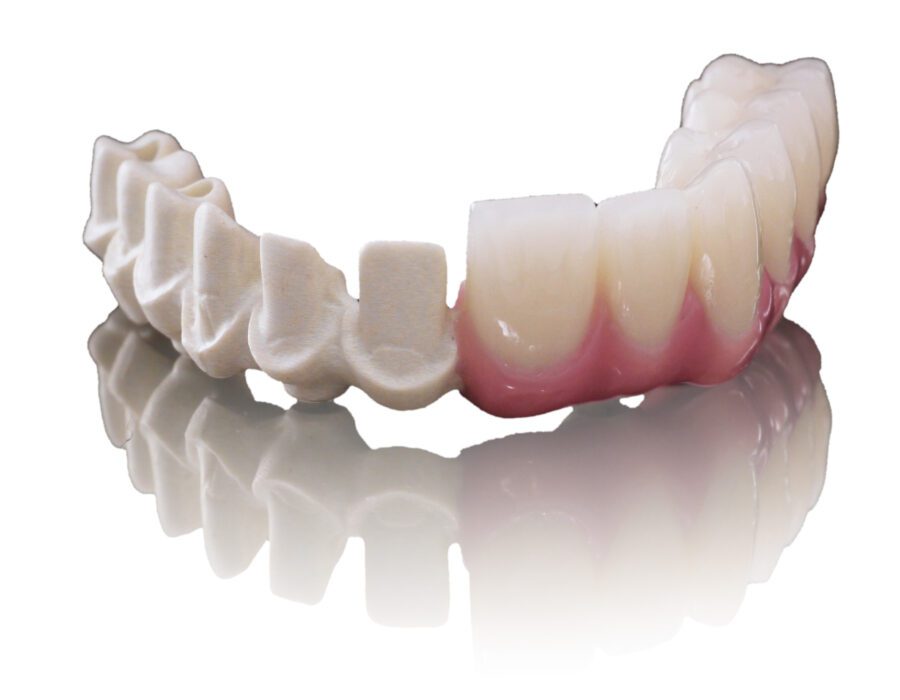
PEEK stands for polyetheretherketone. It is a high-performance, non-metallic polymer used in medical and dental applications. In implant dentistry, a PEEK framework is usually a supporting structure placed inside a fixed dental bridge. It connects the replacement teeth and helps distribute chewing forces across the supporting implants.
The framework may be designed digitally and milled using CAD-CAM technology. Tooth-coloured and gum-coloured restorative materials are then placed over or attached to it to create the visible prosthesis.
PEEK is therefore generally:
- Not the implant placed inside the jawbone
- Not always the visible tooth material
- Not a substitute for correct implant positioning
- Not suitable for every patient
- One of several available framework materials
PEEK has a lower density and lower stiffness than metals such as titanium. It is also radiolucent and produces fewer imaging artefacts than many metallic materials.
The Benefits of PEEK Dental framework
- Most bio-compatible material, which can withstand rough conditions without any cracks.
- Not affected by temperature as compared to other polymers or ceramics.
- Dental products made with PEEK are stronger than ceramics or zirconia.
- Can be made thinner and lighter than the conventional materials without putting much pressure on the bone
What Are the Potential Benefits of a PEEK Framework?
Lightweight Prosthesis
PEEK is considerably lighter than many metal and ceramic framework materials. This may make a large full-arch prosthesis feel less heavy inside the mouth. The overall comfort, however, also depends on the size, shape, surface finish and fit of the bridge.
Non-Metallic Material
PEEK is a metal-free framework option. It may be considered when a patient prefers a non-metallic restoration or when the treating team wishes to avoid a visible metallic substructure. Being metal-free does not automatically make it the best material for every patient.
Favourable Biocompatibility
PEEK has been used in medical and dental applications because of its chemical stability and generally favourable biological properties. However, biocompatibility does not mean that plaque cannot collect around a PEEK-supported prosthesis. The bridge must still be polished, cleaned and reviewed regularly.
Lower Rigidity Than Metal or Zirconia
PEEK is less rigid than titanium and zirconia. This gives the framework a degree of flexibility and may provide a less brittle prosthetic design in selected cases. It is sometimes described informally as having a cushioning or shock-moderating effect. However, it should not be marketed as a guaranteed “shock absorber.” Greater flexibility may also increase movement or stress in an inadequately designed restoration. Framework thickness, cantilever length, implant distribution and bite therefore remain critical.
Possibility of Prosthetic Repair
The tooth-coloured material placed over a PEEK framework may sometimes be repaired or replaced without remaking the entire framework. The ease of repair depends on the type of veneering material, extent of damage and condition of the underlying framework.
Is PEEK Stronger Than Zirconia or Titanium?
PEEK should not be described as universally stronger than zirconia or titanium. These materials behave differently:
- Titanium is highly rigid and has a long clinical history as a framework material.
- Zirconia is strong and tooth-coloured but comparatively rigid and ceramic in nature.
- PEEK is lightweight, non-metallic and more flexible but requires adequate dimensions and careful prosthetic design.
The best material depends on the clinical situation rather than a simple ranking of strongest to weakest.
Implants with biocompatible PEEK and SAPTeeth crowns
In fact, PEEK is so biocompatible that it can be used in the spine, close to the heart, in the oral cavity and around damaged bone. There is plenty of safety research to support this approach, with some studies dating back more than two decades. Some surgeons may recommend that you take particular supplements or medications to speed up the wound healing process, which is important since the zygomatic implants won’t be in place for long. PEEK has high stability, low density, insolubility, and a low elastic modulus. Chemical structure of polyetheretherketone. PEEK has great clinical advantages as a dental implant material compared to Titanium.
Can a PEEK Framework Be Used for Full-Mouth Dental Implants?
Yes, PEEK may be used as the internal framework for selected complete-arch implant-supported bridges. Clinical studies have reported favourable short- and medium-term outcomes, but the available evidence is smaller and less mature than the evidence for conventional metal frameworks. Systematic reviews have therefore concluded that PEEK is promising while also emphasising the need for more long-term clinical evidence.
Who May Be Suitable for a PEEK Framework?
- Selected full-mouth implant rehabilitations
- Patients seeking a lightweight prosthesis
- Patients preferring a non-metallic framework
- Selected immediate-load restorations
- Certain zygomatic implant prostheses
- Patients requiring a digitally milled implant bridge
- Cases where future repairability is important
Conclusion
A PEEK dental framework is a lightweight, non-metallic supporting structure used inside selected implant-supported bridges. It can be considered for full-mouth, immediate-load and certain zygomatic implant restorations. Its potential benefits include lower weight, digital manufacturability, favourable biocompatibility and a less rigid structure than titanium or zirconia. However, PEEK also requires adequate thickness, reliable bonding, careful bite design and regular maintenance. It should not be described as stronger than all ceramics, essential after zygomatic implants or capable of accelerating implant healing. The correct framework should be selected according to the patient’s implant position, bite, prosthetic space and long-term clinical needs.
FAQs
What is a PEEK dental framework?
A PEEK dental framework is a lightweight polymer substructure used to support certain implant-supported prostheses.
Is PEEK used for the implant itself?
Generally no. Most dental implants are made from titanium or titanium alloys. PEEK is more commonly used for prosthetic frameworks.
Is a PEEK framework suitable for every patient?
No. The most appropriate framework material depends on the clinical situation, prosthetic design, and your dentist’s recommendation.
Can PEEK be used with zygomatic implants?
Yes. In selected full-mouth rehabilitation cases, a PEEK framework may be incorporated into the prosthetic design.
Is PEEK durable?
PEEK has favourable mechanical properties and has been successfully used in medical and dental applications for many years when used appropriately.