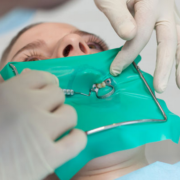
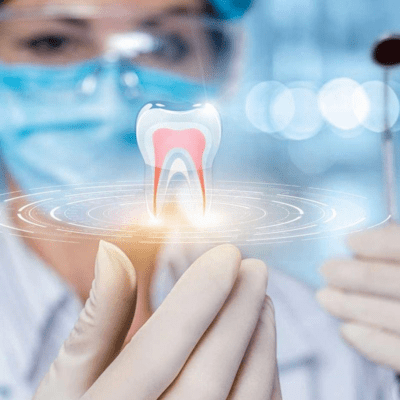
When it comes to root canal treatment, one of the most important steps is filling the tooth properly which should not lead to over or Under-Obturation. This step, called obturation, ensures that the tooth is sealed from the inside so bacteria cannot re-enter. A well-executed filling allows the tooth to heal and stay infection-free. But sometimes, the filling may not be perfect. It can extend slightly beyond the root tip (over-obturation) or stop short of the root tip (under-obturation). Both are less than ideal, but patients often wonder: if perfection is not possible, which outcome is better? Let’s explore this in detail.
Ideal Root Canal Filling
Dentists always aim for the gold standard of obturation. The ideal filling should extend up to the apical constriction, which is typically 0.5 to 1 mm short of the root tip visible on an X-ray. This ensures the root canal is completely filled, while avoiding irritation of the tissues outside the root. Characteristics of an ideal obturation include:
- Extends to the apical constriction (0.5 to 1 mm short of the apex)
- Completely fills the canal in three dimensions
- Prevents leakage of bacteria and fluids
- Is biocompatible and stable over time
Whenever the filling falls short or extends beyond this, complications may arise, impacting the long-term success of treatment.
What is Over-Obturation?
Over-obturation occurs when the filling material—usually gutta-percha along with a sealer—is pushed beyond the end of the root into the surrounding tissues. This can happen for several reasons:
Over-instrumentation or incorrect measurement of root length
- Lack of an apical stop or constriction
- Excessive pressure during filling
- Presence of an open or immature apex
- Use of highly flowable sealer materials
When this happens, the body’s tissues come into direct contact with the filling material, which can lead to certain outcomes:
- Inflammation and irritation of the surrounding tissues.
- Foreign body reaction if the material is not biocompatible
- Delayed or poor healing of pre-existing lesions
- Post-operative pain and discomfort
Studies have shown that overfilled root canals tend to heal more slowly and are more likely to show persistent signs of infection. However, modern materials such as calcium silicate-based sealers and MTA are designed to be biocompatible. In such cases, small amounts of extrusion may not interfere significantly with healing.
obturator | Over-Obturation vs Under-Obturation
What is Under-Obturation?
Under-obturation means the filling does not reach the full working length of the canal and stops 2 mm or more short of the root tip. This leaves part of the root canal space empty, which can be problematic. Causes include:
- Incorrect working length determination
- Blockage or ledging of the canal
- Incomplete cleaning and shaping
- Calcified or complex canal anatomy
- Inexperience during treatment
The biological consequences of under-obturation are more concerning because the unfilled space can harbor bacteria. Possible effects include:
- Persistence of infection inside the tooth
- Continuation of inflammation in the surrounding bone
- Higher risk of treatment failure in the long term
Research has consistently shown that under-obturation carries a worse prognosis than slight over-obturation. Because bacteria can remain in the unfilled area, the chances of healing are much lower.
Over-Obturation vs. Under-Obturation: Which is Preferable?
Both over- and under-obturation are not ideal and should be avoided whenever possible. That said, if a comparison must be made, minimal over-obturation—especially with modern, biocompatible materials—is generally considered less harmful than under-obturation. This is because periapical tissues can adapt to or even resorb a small excess of filling material, but cannot overcome the presence of untreated, bacteria-filled space inside the root canal.
Here is how the two approaches compare:
- Healing of periapical tissue: Slower with over-obturation but still possible; poor with under-obturation
- Post-operative pain: More likely with over-obturation; less common with under-obturation unless infection persists
- Long-term prognosis: Acceptable in mild over-obturation; poor in under-obturation
- Radiographic healing: Can be delayed with extrusion; often incomplete with underfills
How Do Dentists Prevent These Issues?
Dentists take several measures to avoid both over- and under-obturation. To prevent over-obturation, they use digital apex locators, confirm root length with X-rays, and avoid pushing material with excessive force. To prevent under-obturation, they make sure the canal is fully cleaned and shaped, use advanced irrigation techniques, and employ warm vertical compaction methods that adapt the filling material closely to the canal walls.
Case-by-Case Decision Making
In real-world dentistry, sometimes a careful judgment is made depending on the case. For example:
- In children or young adults with open apices, controlled over-obturation with bioactive materials like MTA may be beneficial.
- In lower molars close to the inferior alveolar nerve, dentists may deliberately avoid filling too close to prevent nerve injury.
- In cases of necrotic pulp with apical infection, neither over- nor under-obturation is acceptable—precision is critical.
- In retreatments, correcting a previously underfilled canal greatly improves the chances of healing.
Conclusion
In summary, both over- and under-obturation are suboptimal outcomes. However, under-obturation is more harmful because it leaves space for bacteria to survive and cause reinfection. A slight overfill with the right materials may still heal over time. The key to success in root canal therapy remains accurate measurement, careful cleaning, and precise three-dimensional filling of the root canal system.
Royal Dental Clinics Difference
At Royal Dental Clinics, we combine decades of expertise with the latest technology to minimize risks and deliver predictable outcomes. With tools like CBCT imaging, digital apex locators, CAD-CAM systems, and biocompatible sealing materials, we are able to achieve highly accurate obturations. What sets us apart is that we perform root canal treatments—including cleaning, filling, and crown placement—in a single day. This not only saves patients multiple appointments but also reduces the risk of reinfection between visits. Our single-day protocol means you walk in with pain or infection and walk out the same day with a fully restored, pain-free tooth.