
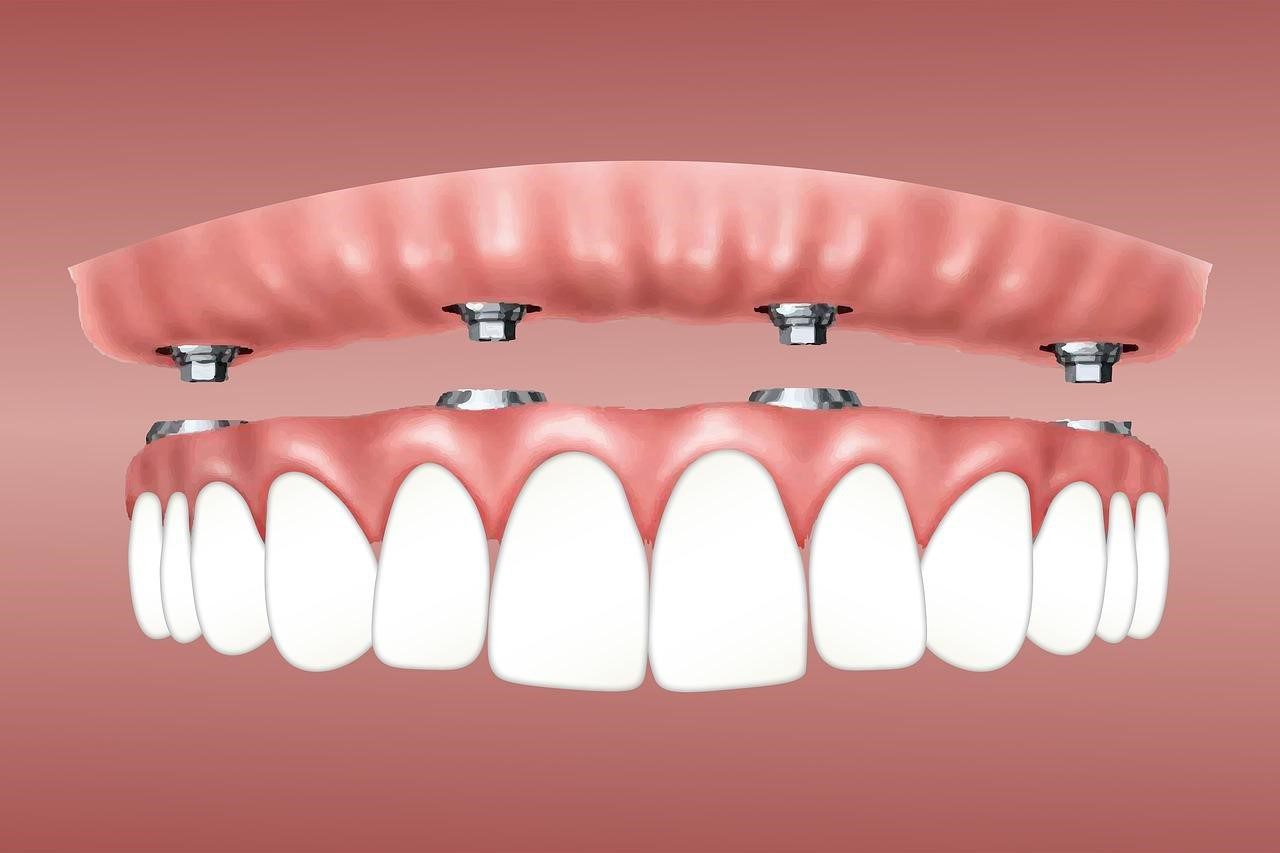
All-on-4 Dental implants have been steadily growing in popularity in recent years, with more people than ever choosing them as an alternative to traditional tooth replacement methods like dentures or bridges. But what are these implants, exactly? Simply put, artificial roots that are surgically placed into the jawbone to support replacement teeth over 4 implants. They can be used to anchor either natural or artificial teeth. Keep reading to learn more about it.
Who is This Article For?
This article is for patients who have multiple missing teeth, loose dentures, or need full-arch teeth replacement and want to understand All-on-4 dental implants before choosing treatment. This blog helps them understand how four implants can support a full set of replacement teeth, why implants may feel more stable than removable dentures, what benefits and limitations to expect, and why jawbone condition, gum health, X-rays, and consultation are important before treatment planning.
What are the 10 things about All-on-4 Dental Implants
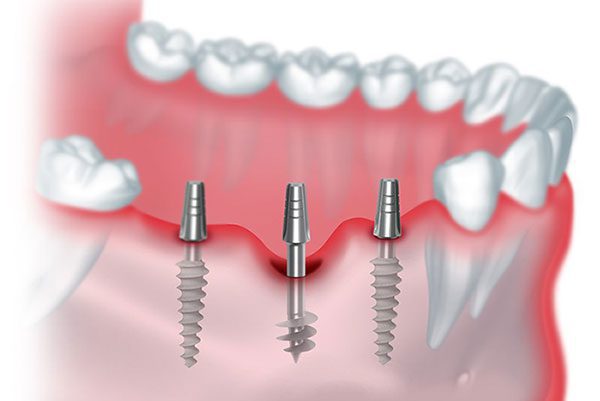
An all-on-4 dental implant is a type of dental prosthetic that is used to anchor a new set of teeth. It is a minimally invasive procedure that offers patients a more durable, long-term solution than dentures or bridges. All-on-4 implants are specially placed in the upper or lower jaw, or both, to support new teeth. They are often used to replace a full set of teeth, or to supplement a partial set of natural teeth. Dental implants are artificial roots made of titanium that are surgically placed into the jawbone to support replacement teeth. They can be used to anchor either natural or artificial teeth. The main difference between dental implants and other types of tooth replacement is that they are fixed to bone, which eliminates the need for rigorous cleaning and maintenance.
Dental Implants differ from other prosthetics
Tooth replacement options like dentures and bridges are often less costly than dental implants. They also have less of a long-term impact on your health and quality of life. But they do come with higher upfront costs, lower durability over time, and increased levels of maintenance. Implants are often a better remedy for long-term tooth loss because they’re fixed to the jawbone. This gives them a firmer, more natural fit and feeling than other types of tooth replacement.
All-on-4 Dental implants are a more involved surgical procedure than other types of tooth replacement, but they have a lower maintenance cost over time. And unlike dentures, implants have no removable parts that must be cleaned on a daily basis.
Where are All-on-4 Dental Implants installed?
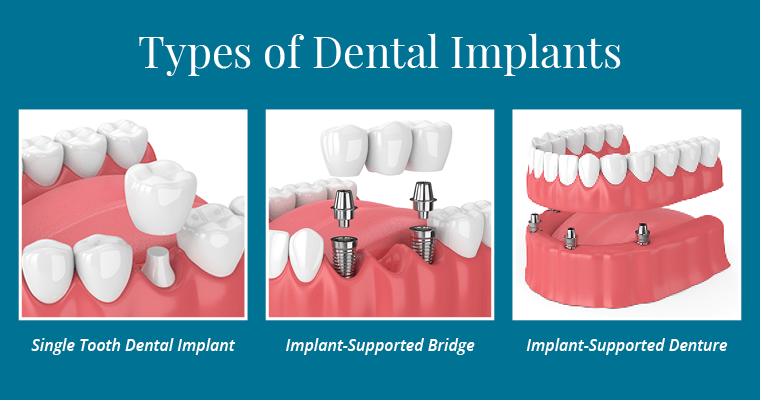
All-on-4 is a revolutionary approach to solving the problem of multiple missing teeth and reconstructing the mouth of a patient to restore full function. A dentist will decide where to place implants based on the amount of remaining bone in your jaw, the health of that bone, and the amount of space you have between existing teeth. Implants are usually placed in the upper jaw, below the gum line, because it has more available bone than the lower jaw.
The dentist will use x-rays to track the progress of the installation process, so that they can be placed in the best possible position. Generally speaking, the less bone you have in your jaw, the more challenging it will be to install dental implants. People who have missing teeth due to tooth decay, gum disease, or injury will benefit most from dental implants.
Benefits of All-on-4 Implants
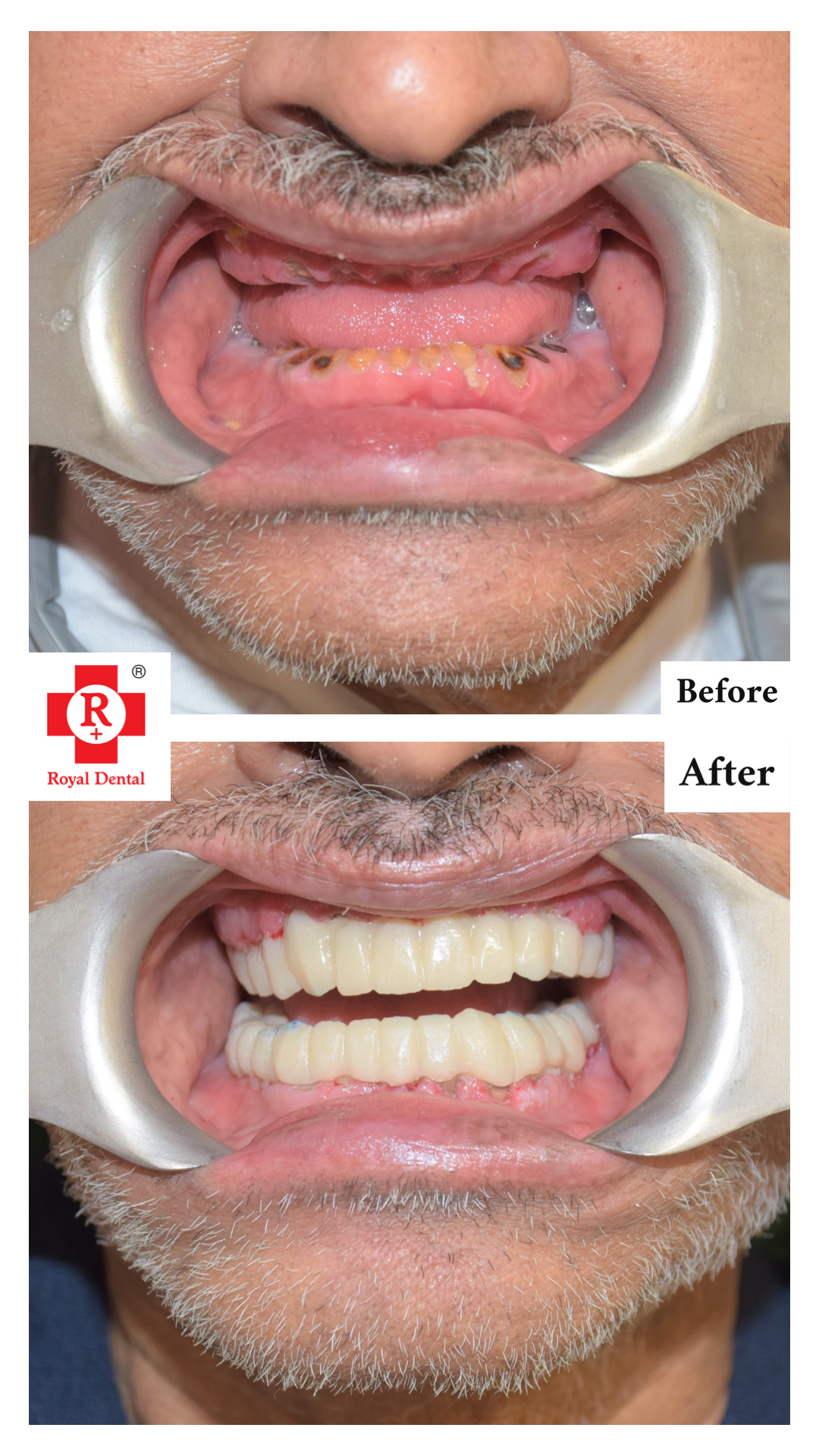
While dental implants are used for a number of tooth replacement purposes, all-on-4 implants are a specific type. The all-on-4 dental implant is a minimally invasive procedure that offers patients a more durable, long-term solution than dentures or bridges. All-on-4 implants are specially placed in the upper or lower jaw, or both, to support new teeth. They are often used to replace a full set of teeth, or to supplement a partial set of natural teeth. The benefits of all-on-4 dental implant dentures include:
- A more durable and long-term solution compared to other forms of tooth replacement
- A more natural fit and feeling than other types of tooth replacement
- Fewer maintenance requirements than other forms of tooth replacement
Downsides of All-on-4 Implant Dentures
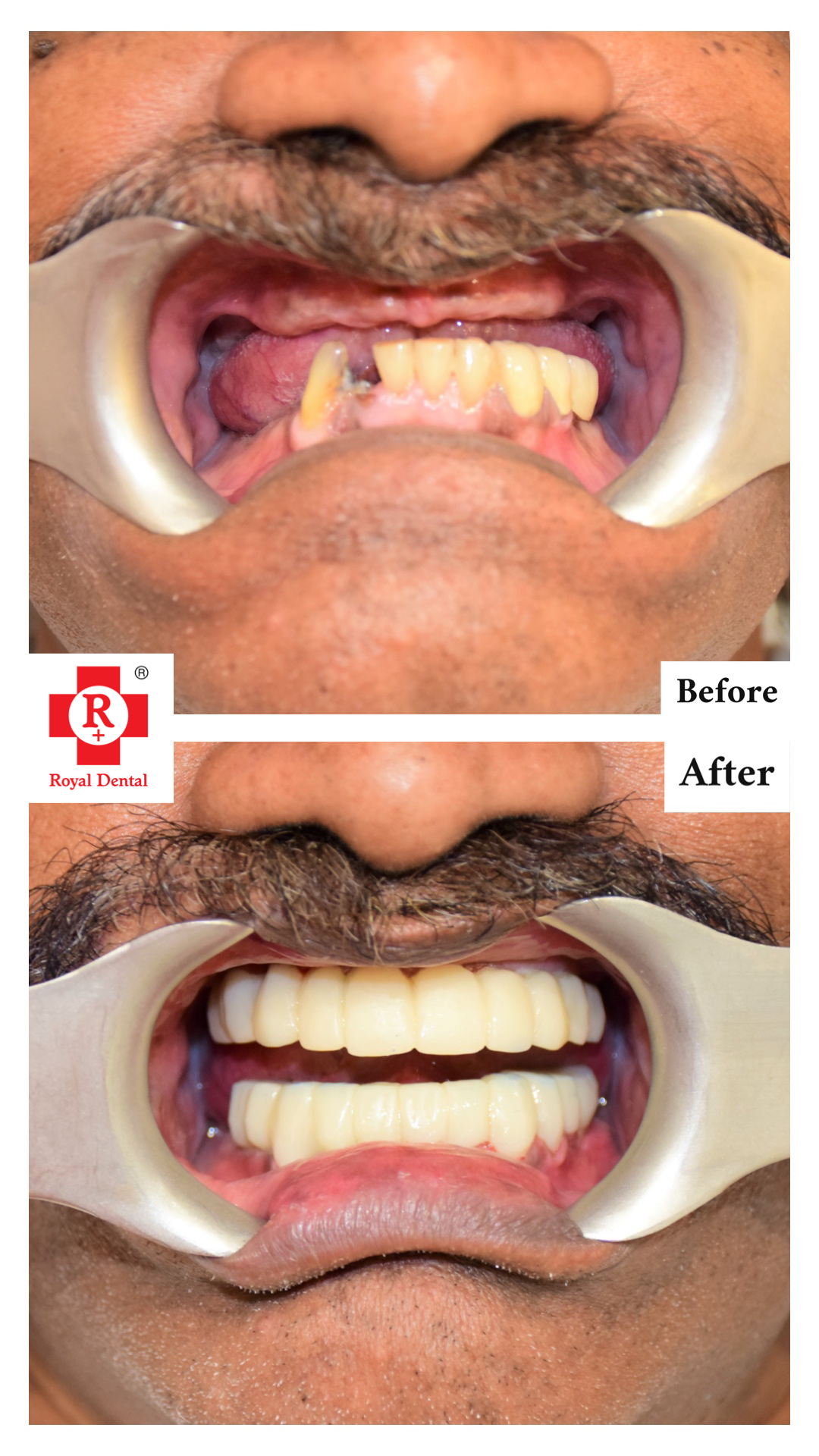
All-on-4 dental implants are a more involved surgical procedure than other types of tooth replacement. The procedure takes at least one or two visits to a dentist, followed by a healing process of several months. Implants also require a significant investment in terms of cost, especially for people with fewer remaining teeth. Because dental implants are a fixed solution, patients must consider the long-term impact that this type of denture will have on their finances. The drawbacks of all-on-4 dental implant dentures include:
- A more involved surgical procedure than other types of tooth replacement
- A higher upfront cost, compared to other types of tooth replacement
- Longer healing process, compared to other types of tooth replacement
- A higher long-term cost, compared to other types of tooth replacement
- A less removable solution, compared to other types of tooth replacement
How Much Do All-on-4 Dental Implants Cost?
The cost of dental implants varies greatly based on the type of implant, the number of teeth being implanted, and the expertise and equipment of the dentist performing the procedure. All-on-4 dental implants are a more involved procedure and are therefore more costly than single-tooth or partial dental implants. In general, the more teeth being replaced, the greater the expense will be. The cost of dental implants can range from $5,000 to $25,000 per mouth, depending on a number of factors, including the type and number of implants, the materials used, the dentist’s fees, and any applicable dental insurance coverage.
How Do All-on-4 Dental Implants Work?
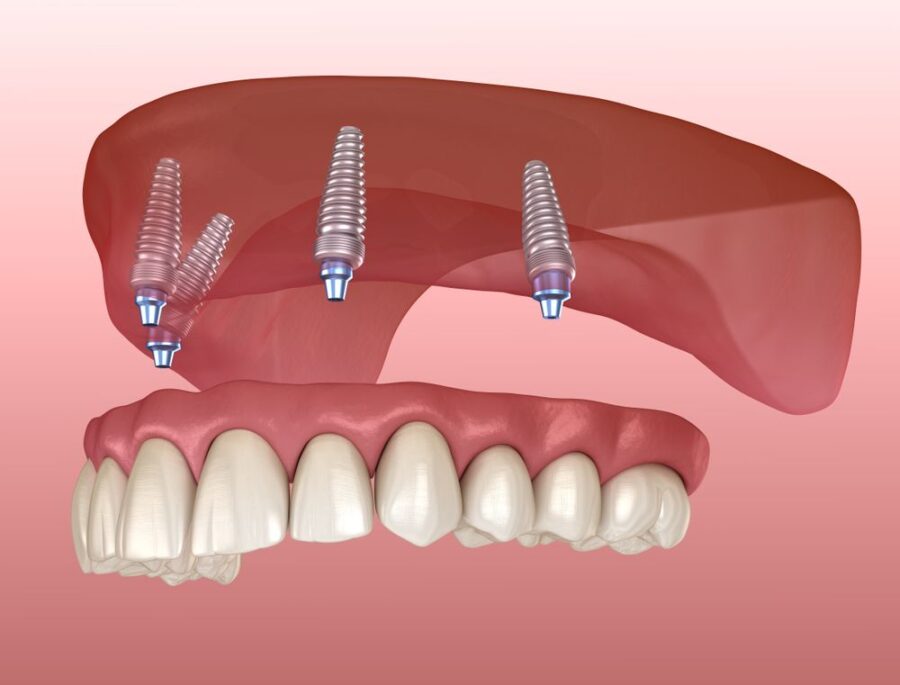
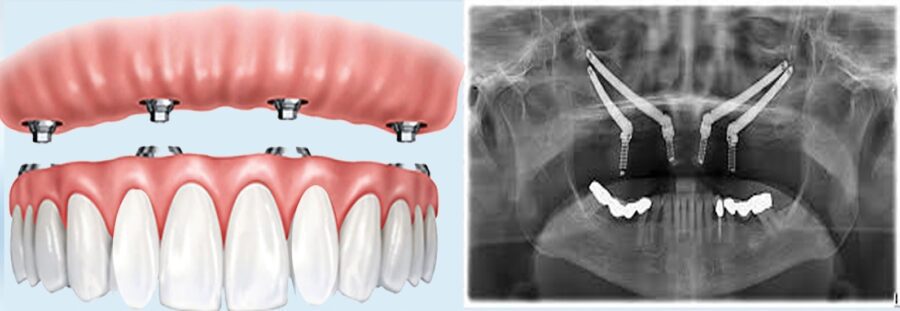
The All-on-4 concept uses four strategically positioned implants to support a complete fixed bridge in one jaw. Typically, two implants are positioned more vertically in the front and two posterior implants are tilted to make better use of the available bone and avoid certain anatomical structures. The exact implant position must be planned using clinical examination, X-rays or CBCT imaging.
Who May Be Suitable for All-on-4 Implants?
All-on-4 may be considered for patients who have lost all their teeth, have severely failing teeth or cannot manage removable dentures. Suitability depends on available bone, gum health, medical history, smoking, bite forces and whether the implants can achieve sufficient stability. Patients with uncontrolled medical conditions, untreated infection or unsuitable bone distribution may first require additional treatment or another implant approach.
Are the Same-Day Teeth Temporary or Final?
Selected patients may receive a fixed provisional bridge on the day of implant placement. These teeth help restore appearance, speech and limited chewing while the implants continue integrating with the jawbone. The provisional bridge may later be adjusted or replaced with the definitive prosthesis after healing. Patients must follow dietary and bite-control instructions during this period.
What Maintenance Is Required?
All-on-4 teeth are fixed, but they are not maintenance-free. Patients must clean beneath the bridge using appropriate brushes, flossing aids or water-flossing devices as advised. Regular reviews are required to examine the gums, implants, bite, screws and prosthetic material. Smoking, poor hygiene and uncontrolled teeth grinding may increase the risk of complications.
Conclusion
All-on-4 implants are a more involved surgical procedure than other types of tooth replacement. They are a more durable and long-term solution than other forms of tooth replacement. All-on-4 implants are specially placed in the upper or lower jaw, or both, to support new teeth. They are often used to replace a full set of teeth, or to supplement a partial set of natural teeth. All-on-4 implants come with a higher upfront cost, compared to other types of tooth replacement. They also have a longer healing process and a higher long-term cost.
FAQs
1. What are All-on-4 dental implants?
All-on-4 dental implants are a tooth replacement option where four dental implants are placed in the jaw to support a fixed set of replacement teeth. They are commonly used for patients who have lost most or all of their teeth and want a more stable option than removable dentures.
2. Who is the right candidate for All-on-4 implants?
Patients with multiple missing teeth, loose dentures, damaged teeth, or difficulty chewing may be suitable for All-on-4 implants. The dentist must first check the jawbone, gum health, bite, medical history, and X-rays or scans before planning treatment.
3. Are All-on-4 implants better than dentures?
All-on-4 implants may feel more stable and natural than removable dentures for many patients because they are fixed to the jawbone. However, the right option depends on bone support, oral health, budget, comfort, and long-term treatment goals.
4. How long does All-on-4 implant treatment take?
The treatment timeline depends on the patient’s oral condition, implant stability, healing response, and final teeth planning. Some patients may need multiple visits and a healing period before the final replacement teeth are completed.
5. What are the benefits of All-on-4 dental implants?
All-on-4 implants can help restore chewing comfort, speech, smile appearance, and confidence. They may also require less daily maintenance than removable dentures because they are fixed and designed to support replacement teeth.
6. What are the drawbacks of All-on-4 implants?
All-on-4 implants involve a surgical procedure and may have a higher upfront cost compared to dentures or bridges. Healing time, maintenance, bone condition, and long-term follow-up should be discussed with the dentist before starting treatment.