
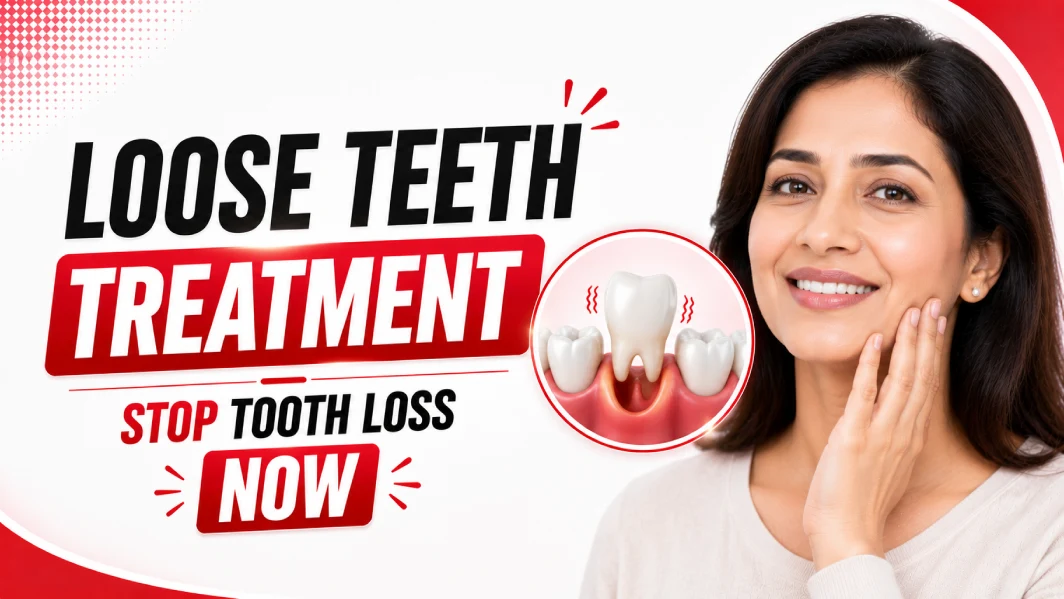
Most people notice it first when they are eating. A tooth moves slightly when they bite down. Or they feel a little wobble when they press on it with their tongue. The initial instinct is usually to wait and see if it settles on its own. It almost never does. Loose Teeth Treatment in Mumbai is the clinical response to a problem that, when left untreated, almost always gets worse. Loose teeth in adults are a warning sign that the supporting structures around the tooth, including the gum tissue and the jawbone, have been compromised. The sooner this is investigated and treated, the higher the chance of saving that tooth and preventing the problem from spreading to neighbouring teeth.
At Royal Dental Clinics, Thakur Village, Kandivali East, loose teeth treatment in Kandivali Mumbai is provided through a structured, evidence-based approach that identifies the root cause, treats it properly, and wherever possible, stabilises and saves the natural teeth. In cases where teeth cannot be saved, same-day dental implant solutions are available at the same clinic without referrals or delays.
What Is Tooth Mobility and Why Does It Happen?
Tooth mobility refers to the degree of movement a tooth has when pressure is applied to it. A tiny amount of natural flexibility is normal in healthy adult teeth because the periodontal ligament, the connective tissue anchoring each tooth to the jawbone, has some natural give to absorb bite forces. But visible movement, or movement you can feel, is not normal and is a clinical sign that something is wrong with the support around that tooth.
The supporting structures of a tooth include the gum tissue, periodontal ligament, and the alveolar bone of the jaw. When any of these are damaged or reduced, the tooth loses its anchorage and begins to move. That movement is tooth mobility.
Common Causes of Loose Teeth in Adults
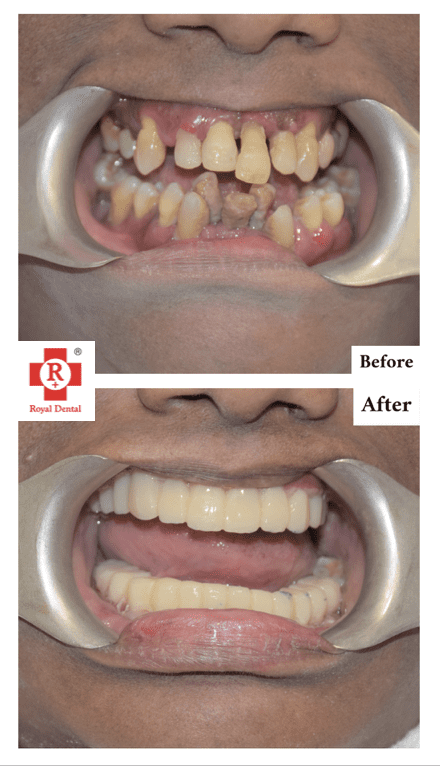
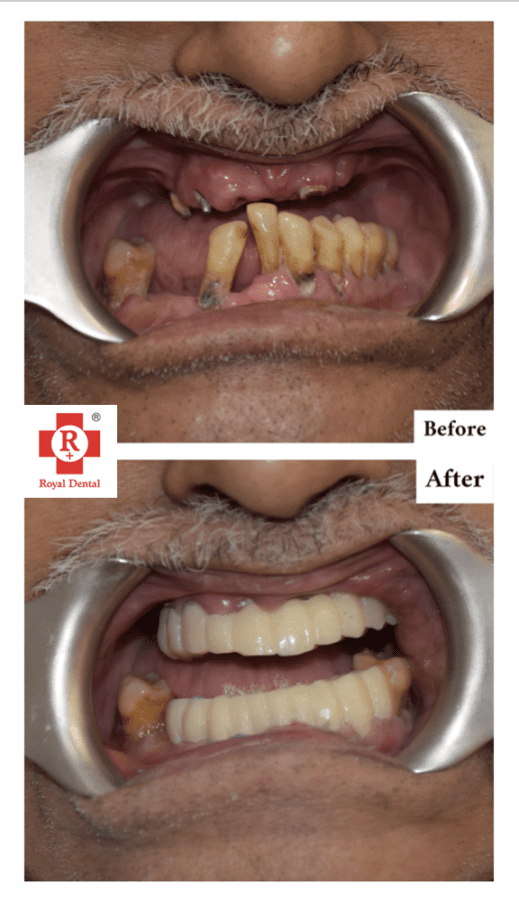
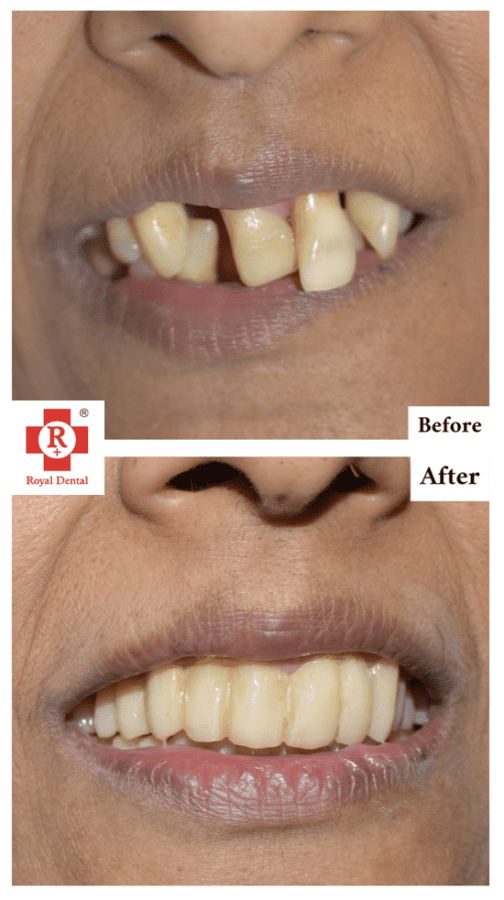
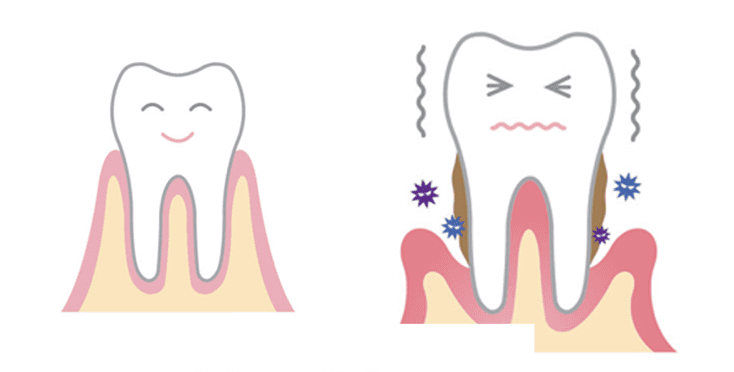
Gum disease (periodontitis). This is the most common cause of tooth mobility in India. Gum disease begins as gingivitis, where bacterial plaque causes the gums to become inflamed and bleed easily. If not treated at this stage, it progresses to periodontitis, where the infection spreads below the gumline and begins destroying the bone that holds teeth in place. As bone is lost, teeth lose their support and start to move.
Bone loss. Bone around teeth can be lost not only due to gum disease but also due to prolonged tooth loss in adjacent areas, ageing, certain systemic conditions like uncontrolled diabetes, or long-term infection. Once bone is lost, the tooth has less structure to anchor into.
Teeth grinding (bruxism). Patients who grind or clench their teeth during sleep apply forces on their teeth that far exceed normal biting loads. Over time this excessive pressure can loosen teeth, cause gum recession, and accelerate bone loss around the roots.
Trauma or injury. A direct blow to the jaw or face can loosen teeth by damaging the periodontal ligament or the surrounding bone. Even a fall or a sports impact that seems minor can cause enough disruption to create mobility.
Bite imbalance. When one or more teeth receive more bite force than they should because of a poorly placed restoration, a shifted tooth, or a natural bite discrepancy, those teeth are subjected to forces they cannot handle over time. This contributes to loosening and accelerated bone loss.
Infection from an untreated tooth. A tooth with an untreated cavity that has reached the nerve, or a failed root canal, can create an abscess that spreads infection to the surrounding bone, causing the tooth to become loose due to bone destruction around its root.
Grades of Tooth Mobility — How Serious Is Your Case?
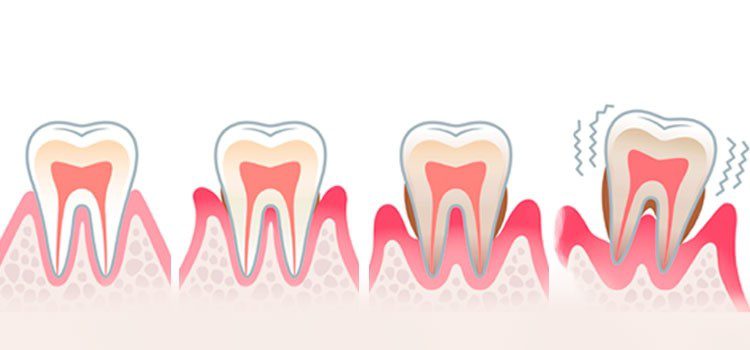
Grade 1 mobility. The tooth moves slightly more than normal but less than 1mm in any direction. This is the earliest stage and responds well to non-surgical treatment.
Grade 2 mobility. The tooth can be moved 1mm or more from side to side but does not move up and down. Bone loss is more significant at this stage and treatment is more involved but still has a good prognosis in many cases.
Grade 3 mobility. The tooth can be moved in all directions, including up and down, toward and away from the gum. This indicates severe bone loss and in many cases the tooth may not be salvageable through gum treatment alone.
The grade of mobility is determined at your consultation at Royal Dental Clinics, Kandivali, using clinical examination combined with digital X-rays and where needed a CBCT scan for a three-dimensional view of bone levels around each root.
Can Loose Teeth Be Saved? The Honest Answer
Yes, in many cases they can. The grade of mobility, the amount of bone remaining, the condition of the gum tissue, and the patient’s overall oral and systemic health all determine what is achievable.
- Grade 1 and Grade 2 mobile teeth treated promptly respond well to a combination of deep cleaning, bite correction, and splinting. Many patients who come to our tooth mobility treatment clinic in Kandivali retain their teeth for many years after proper treatment.
- Grade 3 mobile teeth are harder to save but not impossible in all cases. Bone grafting and regenerative procedures can sometimes recover lost support. However, there are cases where the bone loss is so advanced that extraction is genuinely the right decision because attempting to retain the tooth would compromise surrounding teeth as well.
The key message is this: the sooner you act, the more options remain available to you. A tooth that is Grade 1 mobile today and treated immediately has a significantly better prognosis than the same tooth left to progress to Grade 3 over six months.
Tooth Mobility Treatment Options in Kandivali, Mumbai
At Royal Dental Clinics, the treatment protocol for loose teeth in Mumbai is personalised. There is no standard package because no two cases are identical. Here are the treatments used depending on diagnosis:
Deep Cleaning and Non-Surgical Gum Therapy
Also called scaling and root planing. This is the first and most essential step for almost every case of mobility caused by gum disease. Bacteria, tartar, and calculus that have accumulated below the gumline are removed using precision instruments. This controls the active infection, reduces inflammation, and allows the gum tissue to heal and reattach more closely to the teeth.
Without this step, no other treatment will deliver lasting results because the infection continues to destroy bone regardless of what else is done.
Dental Splinting for Loose Teeth
Splinting involves bonding mobile teeth to adjacent stable teeth so that biting forces are shared across a wider group of teeth rather than concentrated on the loose one. This reduces the mobility, makes the tooth comfortable to use, and allows the gum tissue and bone to heal without constant disruption from movement.
At Royal Dental Clinics in Kandivali, splinting is often completed on the same day as deep cleaning, providing immediate stability and comfort. Splinting is particularly effective for Grade 1 and Grade 2 mobility cases where sufficient bone still surrounds the roots.
Bite Correction and Night Guard Therapy
When bruxism or bite imbalance is contributing to the mobility, addressing these forces is essential. A custom-fitted night guard reduces the impact of grinding during sleep. Bite adjustment reshapes specific teeth slightly so that biting forces are distributed evenly. Without these measures, even well-treated teeth will continue to suffer excessive loading and may continue to loosen despite other interventions.
Bone Grafting and Regenerative Procedures
Where bone loss has already occurred around the roots, regenerative procedures can help rebuild lost support. Bone grafting involves placing bone material around the affected roots to stimulate new bone growth. This is combined with membrane placement to guide the healing process.
These procedures take time to show their full result, typically several months, but can significantly improve the stability and long-term prognosis of teeth that might otherwise be lost. At Royal Dental Clinics, the need for bone grafting is determined from your CBCT scan findings and clinical assessment at consultation.
Root Canal Treatment for Infection-Related Mobility
If the mobility is caused or worsened by an infection inside the tooth itself, root canal treatment to clear that infection is part of the treatment sequence. Removing the infection source reduces pressure on surrounding bone and allows healing to proceed. This is often done alongside gum treatment rather than instead of it when both problems are contributing.
Read more: Root Canal Treatment in Kandivali Mumbai
Same-Day Dental Implants When Teeth Cannot Be Saved
Some teeth are beyond saving at the time a patient first presents. Severe Grade 3 mobility with extensive bone loss, fractured roots, or longstanding untreated infection can leave a tooth with no viable foundation for retention. In these cases, extraction followed by immediate dental implant placement is the right path forward.
At Royal Dental Clinics, this transition is seamless. The extraction, implant placement, and in many cases the crown are all completed on the same day at our Kandivali East clinic. Patients do not leave with a gap. The in-house CAD/CAM lab fabricates the crown while the implant is being placed, and the restored tooth is fitted the same day in suitable cases.
Read more: Dental Implant in Kandivali and Mumbai
Bleeding Gums and Loose Teeth — The Connection Patients Often Miss
Bleeding gums and tooth mobility are frequently found together, and for good reason. Both are consequences of active gum disease. Bleeding gums are the earlier warning sign. When the gums bleed during brushing or flossing, it means they are inflamed and infected. If that inflammation is not treated, the infection spreads deeper to the bone and the teeth begin to loosen.
Many patients who arrive at Royal Dental Clinics for tooth mobility treatment in Mumbai admit that their gums had been bleeding for months or even years before they sought treatment. Gum bleeding is easy to dismiss as a minor issue. But consistently bleeding gums are not normal and should be evaluated by a dental professional as soon as they are noticed.
Treatment for bleeding gums through deep cleaning and professional scaling, combined with home oral hygiene improvement, can stop gum disease from progressing to tooth mobility in the first place. If your gums are already bleeding regularly, acting now could prevent your teeth from becoming loose later.
Tooth Mobility Treatment Cost in Mumbai — What to Expect
The cost of loose teeth treatment in Kandivali Mumbai depends on the number of teeth affected, the severity of bone loss, and which combination of treatments is required. There is no fixed price because the clinical needs vary significantly from one patient to another.
Here is a general guide:
Non-surgical gum therapy through deep cleaning and scaling starts from Rs 2,400 per tooth surface. Dental splinting for mobile teeth starts from Rs 24,000 per tooth. Bone grafting procedures vary based on the extent of bone loss. Same-day dental implants start from Rs 30,000 depending on the type and system used.
A full written cost estimate is provided at your consultation at Royal Dental Clinics, Kandivali East, after digital X-rays and clinical examination. Every procedure and its cost are explained before any treatment begins. There are no surprises and no pressure.
The important cost comparison to keep in mind: treating mobility early is almost always far less expensive than losing the tooth and replacing it later with an implant, bridge, or denture.
Frequently Asked Questions — Tooth Mobility Treatment in Mumbai
Can a loose tooth tighten back up on its own?
In adults, no. A loose tooth will not spontaneously tighten without treatment. The cause of the mobility must be identified and addressed. With proper treatment, the supporting tissues can stabilise and the tooth can firm up significantly, but this requires clinical intervention.
How long does tooth mobility treatment take?
Non-surgical gum therapy and splinting can often be completed in a single visit at our Kandivali clinic. Bone grafting and regenerative procedures require healing time of several months before the full result is apparent. The overall timeline depends on the number of teeth involved and the severity of bone loss.
Is tooth mobility treatment painful?
Deep cleaning is performed under local anaesthesia and is not painful during the procedure. Some sensitivity and mild discomfort for a few days after are normal. Bone grafting procedures involve local anaesthesia and post-operative care with prescribed pain medication. Most patients find the experience much more manageable than they expected.
Will my teeth stay firm permanently after treatment?
With proper home oral hygiene, regular professional cleaning every six months, and follow-up at Royal Dental Clinics, stabilised teeth can remain firm for many years. Long-term success depends on controlling the original cause, whether that is gum disease, bruxism, or bite imbalance, and maintaining that control over time.
What happens if I delay treatment for loose teeth?
The bone continues to be lost, the mobility increases, and the tooth progresses from Grade 1 to Grade 2 to Grade 3. At Grade 3, extraction is often unavoidable. Acting early keeps more options available and keeps the overall treatment simpler and more affordable.
Contact Royal Dental Clinics Today:
Website: Royal Implant
Address:Mumbai | Jaipur
Contact No: +91 9820012621
Email Id: info@royaldentalclinics.com
Instagram | Youtube | Facebook | Linkedin