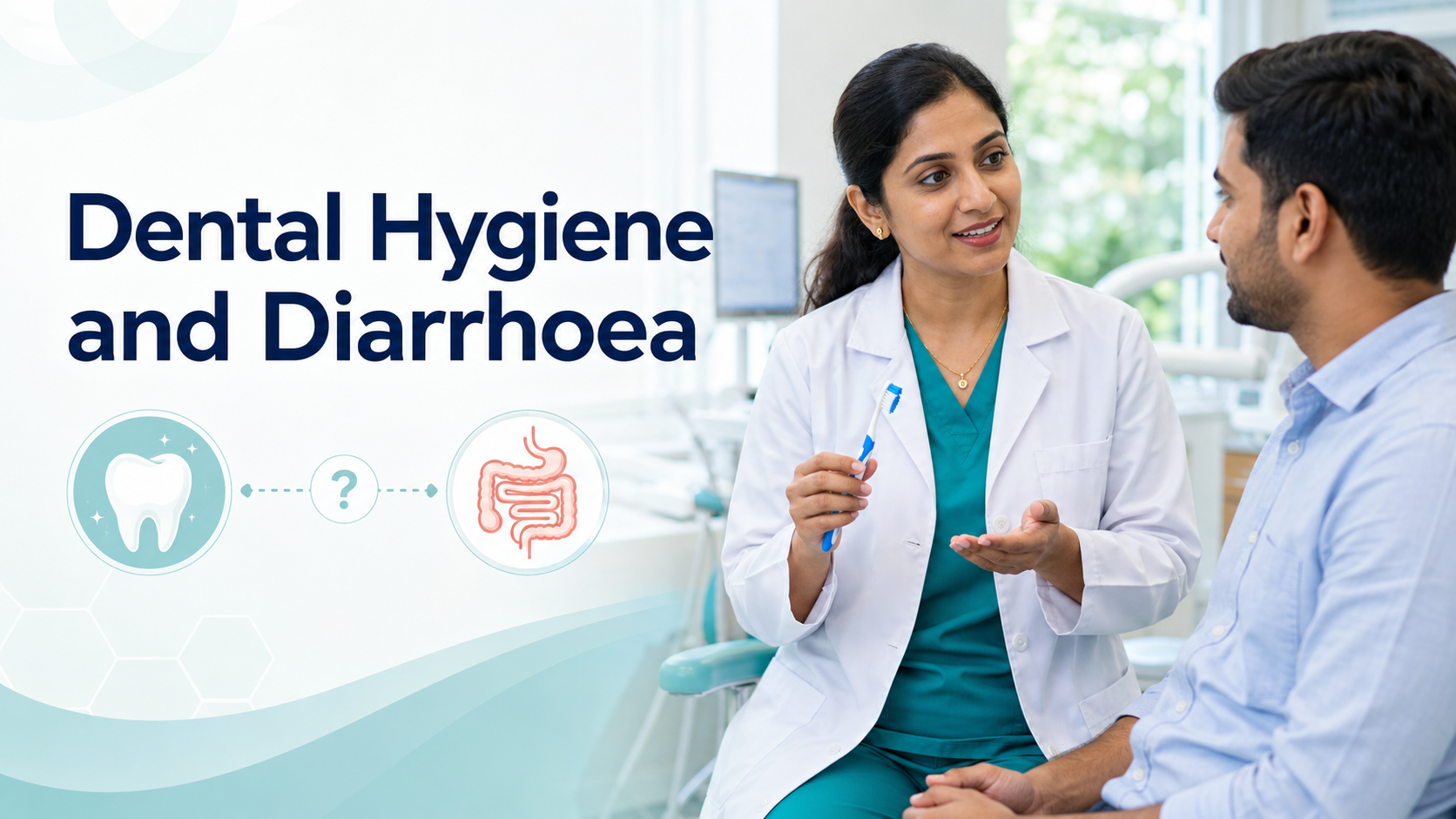
Many people think dental hygiene only affects the teeth and gums, but oral health can also influence other parts of the body. Researchers have found that the mouth and digestive system are closely connected through the oral microbiome. Poor dental hygiene may allow harmful bacteria to multiply, which can affect digestive health and contribute to certain gastrointestinal problems. While poor oral hygiene does not directly cause diarrhoea in most cases, maintaining a healthy mouth may support better overall digestive health. Let’s read more on Dental Hygiene and Diarrhoea.
Who Is This Article For?
- People experiencing frequent digestive issues
- Individuals interested in oral health
- Parents concerned about children’s hygiene
- Patients with poor dental hygiene
- Anyone wanting to improve overall health
Dental Hygiene and Diarrhoea
If you are someone with poor dental hygiene and a non-existent oral care routine, then you are susceptible to dental diseases. One of the most common dental diseases is tooth decay or cavities. You get cavities if you consume lots of sugary or starchy foods and don’t take care of your teeth. The bacteria present in your mouth feed on these foods and form plaque around your teeth that hardens and becomes sticky. This sticky plaque cannot be removed with regular brushing and requires special tools like flossing, interdental cleaners, and mouthwash.
It then creates holes in your teeth and if not treated in time can lead to toothache, tooth loss, and even infections spreading to your other organs. Cavities are a bacterial infection that causes a soft, decayed area in your teeth. While cavities don’t always cause pain, they can also lead to infections and tooth loss. Another common dental disease is gingivitis, which is a gum disease that can lead to an increased risk of heart disease and diabetes if left untreated. Untreated gingivitis can also cause tooth loss if the gums become so badly inflamed that they pull away from the teeth.
What is Diarrhoea?
Diarrhea is a condition where your large intestine (colon) experiences an abnormal increase in loose watery stools. Diarrhea is a very common condition and has no symptoms or underlying cause. It can be caused by illness, certain medications, or even eating too many prunes. It is highly important to drink plenty of water if you experience diarrhea to help minimize dehydration.
Diarrhea can be a symptom of many diseases and conditions, but most often it is a result of infection. If you are experiencing diarrhea, it is important to stay hydrated and eat small meals more frequently throughout the day. Diarrhea can be more than just a nuisance; it can be a serious health problem. In young children, it can cause dehydration and even death if not treated promptly. In older children and adults, diarrhoea is usually not serious unless it lasts more than two days or is accompanied by other symptoms.
Dental hygiene and digestive health
Can dental hygiene and diarrhea be related? In short, yes. Poor oral hygiene can negatively affect your gastrointestinal health. This is because oral bacteria and other microbes from the mouth can travel up to your stomach and cause an infection in the digestive system. This is more prominent in children who are genetically at a higher risk for having an infection in the GI tract after receiving dental treatments.

This is why it is important for parents to monitor their children for any signs of diarrhoea after visiting the dentist. Diarrhoea is a common side effect associated with dental treatments, especially when it comes to the removal of impacted teeth. Impacted teeth are those that are growing in a crooked or sideways manner and are having a hard time growing out of the gum line.
How to maintain good dental hygiene
If you are having diarrhea and are extremely worried about your oral hygiene routine, then here are some tips that you can follow to maintain good oral hygiene.
- Use a brush with soft bristles and fluoride toothpaste – This will help you reduce the amount of plaque and bacteria growing on your teeth. This is especially important if you are having diarrhoea as bacteria can get easily accumulated in your mouth.
- Use an antiseptic mouthwash after brushing -Always use a mouthwash that contains fluoride and kills bacteria because bacteria are very easy to spread from one person to another.
- Avoid eating sugary food – Sugary food can increase the acidity in your mouth and is a breeding ground for bacteria. Consuming a diet that is rich in fibre and low in fat is also very important when you have diarrhoea.
- Suck on sugar-free candies – If you cannot avoid the urge to eat something sweet. Then it is recommended to suck on sugar-free candies to reduce the acidity in your mouth.
Conclusion
Dental hygiene and digestive health are more closely connected than many people realize. While poor oral hygiene does not directly cause diarrhoea, harmful oral bacteria and untreated dental problems may influence overall gastrointestinal health. Maintaining good oral hygiene, healthy lifestyle habits, and proper personal hygiene can support both oral and digestive wellness.
FAQ
Is there a link between dental hygiene and diarrhoea?
Research suggests an association between oral health and digestive health, although poor dental hygiene is not considered a direct cause of diarrhoea.
Can oral bacteria affect the digestive system?
Yes. Oral bacteria can be swallowed and may influence the gastrointestinal environment.
Can poor oral hygiene make me sick?
Poor oral hygiene can contribute to dental infections, gum disease, and inflammation that may affect overall health.
What is the most common cause of diarrhoea?
Diarrhoea is most commonly caused by bacterial, viral, or parasitic gastrointestinal infections.
How can I improve both oral and digestive health?
Maintain good oral hygiene, eat a balanced diet, practice proper hand hygiene, drink safe water, and attend regular dental check-ups.th.
Suggested Article –
Pros and Cons of Full Mouth Dental Implants
Difference between Crowns and Dental Implants?