
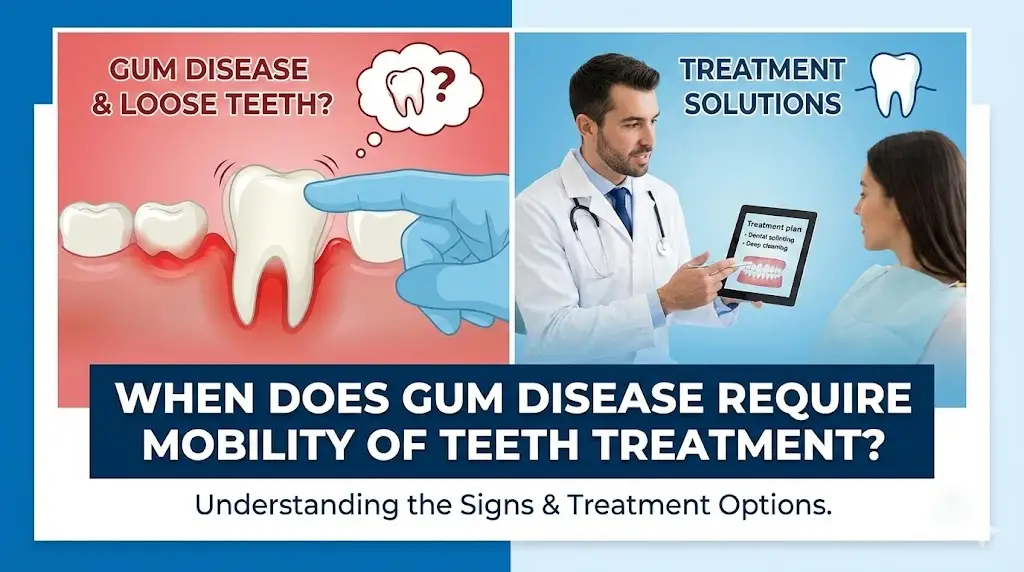
Do gum disease lead to tooth mobility?
Teeth treatment in Kandivali, Mumbai
Oral health is a lifelong process, but in many cases, we tend to overlook the signs of a problem until it becomes difficult to ignore. Gum disease, or periodontal disease, is one of the most common yet silent threats to oral health. In its advanced stages, it can cause one of the most painful conditions of the teeth: loose teeth. If you are experiencing a sensation of shifting or shaking in your teeth, it is important to understand when gum disease needs professional teeth treatment in Kandivali, Mumbai. Addressing these issues early at a specialized clinic like Royal Implant can mean the difference between saving your natural smile and permanent tooth loss.
What is Gum Disease and how does it affect stability?
Gum disease starts with the buildup of plaque, a sticky bacterial film, on the teeth. If the plaque isn’t cleaned away by regular brushing and flossing, it hardens into tartar (calculus), which can only be removed by a professional. As the bacteria grow, they lead to inflammation of the gums (gingivitis). If left untreated, gingivitis progresses to periodontitis, where the inner layer of the gum and bone pulls away from the teeth and creates pockets.
In the context of looking for teeth treatment in Kandivali, Mumbai, patients usually find that periodontitis is more than just an infection of the “flesh” in the mouth. It actively breaks down the alveolar bone and periodontal ligaments that hold your teeth in place. As the support structure breaks down, the teeth no longer have anything to anchor them, and this leads to what dentists call “mobility.” This is where treatment becomes imperative to prevent the loss of all your teeth.
Symptoms Suggesting Your Gum Disease Has Reached the Mobility Stage
Recognizing the transition from gum sensitivity to mobility is essential. Most patients visit a teeth treatment in Kandivali, Mumbai, experiencing these symptoms before being diagnosed with advanced periodontitis. You may need to see a dentist if you notice:
- Visible Movement: You notice new gaps between your teeth that were not there before.
- Sensitivity While Eating: A mobile tooth often hurts when pressure is applied because the underlying support is inflamed.
- Receding Gums: Your teeth appear “longer” because the gum line is pulling back, exposing the root.
- Persistent Bad Breath: Known as halitosis, this is a sign of deep-seated bacterial infection in the pockets around a mobile tooth.
- Changes in Bite: When you close your mouth, your teeth feel like they don’t fit together the way they used to.
When Does Gum Disease Require Specialized Mobility Treatment?
All gum diseases may not lead to loose teeth, however, when the teeth become loose, the focus of teeth treatment in Kandivali, Mumbai moves from preventive care to corrective care. When teeth become mobile, such treatment is said to have become necessary for the tooth when the “periodontium” or the tissues that support the tooth have been compromised, and the tooth cannot function properly to bite and chew food.
- When Bone Loss Exceeds 50%
This means that the stability of a tooth relies on a substantial percentage of bone encasing the tooth root. In the event of gum diseases, where considerable bone destruction exceeds the formation of greater than half of the tooth’s root, the tooth actually starts wiggling. In this case, a dentist is called for in a regenerative capacity.
- The Presence of Periodontal Pockets
When a dentist measures “pockets” deeper than 5mm or 6mm, it indicates that the attachment between the tooth and the bone is severed. These pockets harbor aggressive bacteria that continue to eat away at the support structure. Specialized tooth mobility treatment becomes necessary to clean these pockets and encourage the tissue to reattach.
- Trauma from Occlusion
Sometimes, gum disease weakens the tooth just enough that your normal bite starts to act like a “trauma.” Every time you chew, you are essentially pushing the loose tooth further out of its socket. In such cases, the treatment involves not just cleaning the gums but also adjusting the bite or splinting the teeth together.
Role of Professional Teeth Treatment in Kandivali, Mumbai
If you are residing in or near North Mumbai, accessing high-quality teeth treatment in Kandivali, Mumbai is the first step toward recovery. Modern dentistry offers several pathways to manage gum-induced mobility. The primary goal is always to eliminate the infection and then stabilize the mechanical structure of the mouth.
In a professional center, the first step is usually a deep cleaning of the teeth referred to as scaling and Root planing. In this method, tartar is removed from deep under the gum line. The roots are also made smooth, allowing for new reattachment of the gums. However, if mobility is already present, the dentist might suggest more advanced save teeth protocols that involve bone grafting or laser therapy to stimulate tissue growth.
Advanced Treatment Options for Mobile Teeth
When you seek teeth treatment at a clinic in Kandivali, Mumbai, your teeth specialist will grade your teeth mobility according to grades, i.e., grade I, grade II, or grade III, and according to the grade, the following treatments are always ensured:
- Dental Splinting: This is the most commonly used technique in which a tooth that is mobile is splinted to a tooth that is more stable. This helps to hold the weakened tooth in place as the biting force is distributed more widely across the teeth. This allows the weakened bone tissue to heal.
- Flap Surgery: When the infection is rather deep, gum tissue is folded back in order to cleanse the roots properly and repair the bone.
- Guided Tissue Regeneration (GTR): In this procedure, a small piece of mesh-like fabric is placed between the bone and the gum tissue. This will allow the slower-growing bone tissue to regrow without interference from the gum tissue.
- Bite Adjustment: There are times when modification of certain tooth areas by smoothing them may help alleviate the “jiggling” action of chewing, enabling the ligaments to tighten again naturally.
Can a Mobile Tooth Always Be Saved?
Normally, teeth treatment for patients at Kandivali, Mumbai, is meant for the preservation of teeth; however, there are cases where the bone loss is beyond repair. For example, a tooth that has “Grade III” mobility, whereby the tooth has the capacity to move vertically or spin freely, may be said to be “hopeless” from a periodontal point of view.
In these situations, attention is directed towards preventing the spread of the infection into the rest of the jaw bone. In some of these cases, tooth removal may be advised as a last resort for your own oral health. Losing a tooth is undesirable under any circumstance, but removing an unhealthy tooth may allow for a healthier, pain-free smile.
Restoring Your Smile After Gum Disease
For many patients undergoing teeth treatment in Kandivali, Mumbai, the journey doesn’t end with treating the gum disease. If teeth were lost or if the aesthetic of the smile was ruined by receding gums and shifting teeth, restorative and cosmetic dentistry options come into play.
Modern dentistry ensures that even if you have suffered from advanced gum disease, you don’t have to live with gaps or a compromised smile. Once the underlying gum infection is fully controlled and the mouth is healthy, patients can explore a dental implant as a permanent, sturdy replacement for lost teeth. Implants behave like natural roots and help maintain the density of the jawbone, which is often a concern after periodontal disease.
Why Timely Intervention Matters
The most critical factor in treating tooth mobility is time. Gum disease is a progressive condition. What starts as a slight “give” in your tooth can quickly turn into a situation where the tooth literally falls out. By seeking teeth treatment in Kandivali, Mumbai at the first sign of movement, you increase the chances of successful “re-anchoring.”
The Danger of Ignoring Mobility
- Systemic Health Links: Periodontal bacteria can enter the bloodstream, potentially contributing to heart disease, diabetes complications, and respiratory issues.
- Bone Loss Contagion: The infection causing one tooth to move can easily spread to the adjacent teeth, leading to a “domino effect” of tooth loss.
- Increased Treatment Cost: Simple scaling and splinting are far more affordable than the surgeries and implants required once a tooth is lost.
Choosing the Right Clinic for Teeth Treatment in Kandivali, Mumbai
When dealing with something as delicate as the bone and gum support of your mouth, the expertise of the clinician is paramount. You need a team that understands the intersection of periodontics (gum health) and implantology. When looking for teeth treatment in Kandivali, Mumbai, ensure the facility uses modern diagnostic tools like digital X-rays or OPGs to accurately assess the level of bone loss.
A comprehensive approach is necessary. The right clinic won’t just look at the one loose tooth; they will evaluate your entire oral ecosystem, looking for the root cause—be it poor hygiene, smoking, genetic predisposition, or systemic health factors like diabetes.
Preventive Steps to Avoid Tooth Mobility
While there are excellent options for teeth treatment in Kandivali, Mumbai, prevention remains the gold standard. You can significantly reduce your risk of gum-induced tooth mobility by following these steps:
- Bi-Annual Professional Cleanings: Even the best brushers miss spots. A professional cleaning every six months removes the tartar that leads to bone loss.
- Technique Matters: Use a soft-bristled brush and learn the “Modified Bass” technique to clean effectively under the gum line without causing recession.
- Interdental Cleaning: Floss or use interdental brushes daily. Gum disease almost always starts in the tight spaces between teeth where a toothbrush cannot reach.
- Manage Health Conditions: If you have diabetes, keep your blood sugar under control, as high sugar levels can accelerate gum infections.
Quit Smoking: Tobacco use is one of the most significant risk factors for periodontal disease and can mask the symptoms by reducing blood flow to the gums (meaning they might not bleed even when diseased).
Conclusion: Take Action for Your Dental Foundation
Tooth mobility is a dental emergency that signifies your “foundation” is under attack. Whether it is a slight wobble or a noticeable shift, it is a clear signal that gum disease has moved beyond the surface. Finding the right teeth treatment in Kandivali, Mumbai allows you to take control of the situation before it results in permanent tooth loss.
Through a combination of deep cleaning, regenerative surgeries, and possibly splinting, many “loose” teeth can be successfully stabilized and saved. And in cases where the damage is too far gone, modern replacement options ensure that your quality of life and your smile remain intact. Remember, your gums are the soil in which your teeth grow; if the soil is unhealthy, the tree cannot stand. Prioritize your periodontal health today and consult with a specialist to keep your smile firm and functional for years to come.
Contact Royal Dental Clinics Today:
Website: Royal Implant
Address: Mumbai | Jaipur
Contact No: +91 9820012621
Email Id: info@royaldentalclinics.com
Instagram | Youtube | Facebook | Linkedin
Medical Disclaimer
This article is for patient education only. Dental treatment should be planned after clinical examination, medical history review, and X-rays or scans where required. Treatment suitability, cost, timeline, healing, and results vary from patient to patient.