
Missing teeth can affect your smile, confidence, speech, and ability to chew comfortably. Fortunately, modern dentistry offers several reliable tooth replacement options, including dental implants, bridges, and dentures. Although these treatments aim to restore missing teeth, they differ significantly in durability, appearance, comfort, and maintenance. In this article, we’ll explain Dental Implants vs Bridges vs Dentures differences to help you choose the most suitable option for your oral health.
Who is this article for?
- Have one or more missing teeth
- Are deciding between implants, bridges, or dentures
- Want a long-lasting tooth replacement solution
- Want to improve chewing ability and smile aesthetics
- Are looking for dental implant treatment in Mumbai
What is Dental Implant?
Dental implants are artificial teeth that are surgically placed in the bone of the jaw to replace teeth that have been removed. Because implants are a completely modern solution, they have few limitations compared to traditional dentures. As a result, implants have become the preferred option for replacing missing teeth.
While dental implants are often mistaken for bridges, they are actually a more advanced solution in which metal implants are surgically placed inside the bone of the jaw and fused to the bone. This means that implants have virtually no movement once placed, making them extremely stable and durable. These benefits have made implants the choice for many patients who are looking for a long-term solution for replacing missing teeth.
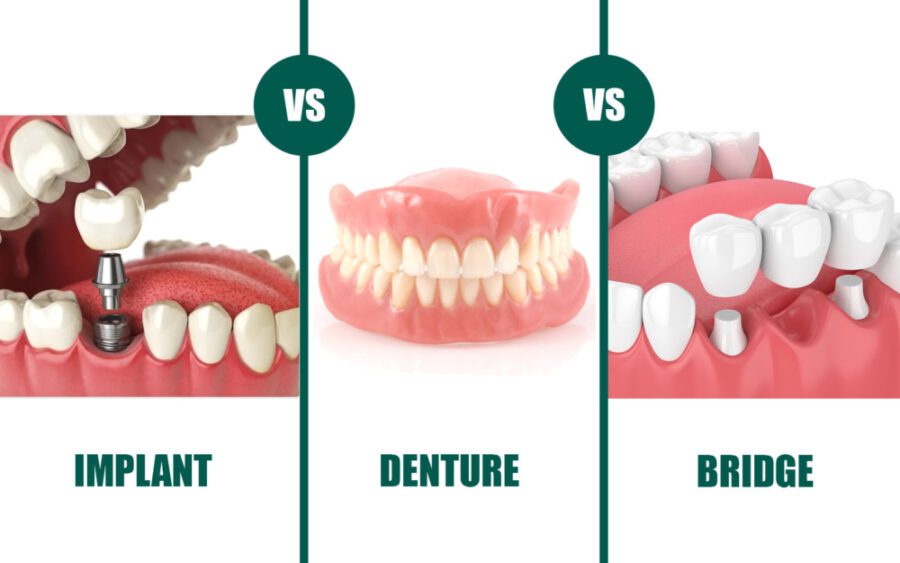
Dental Implants vs Bridges and Dentures?
If you’ve recently been asked if dental implants are the same as bridges and dentures, then you are probably wondering where the confusion lies. While the two solutions are similar in many ways, they are different. So, where does the confusion come from?
Virtually all patients who are looking for a solution for their missing teeth are likely wondering if implants are a good choice. After all, implants considered the best solution for replacing missing teeth. First of all, we should clarify that there are different types of implants.
Dental implants also help preserve the jawbone by stimulating the bone in a way similar to natural tooth roots. Unlike bridges and dentures, implants reduce the risk of bone loss that commonly occurs after tooth extraction. This helps maintain facial structure and improves long-term oral health.
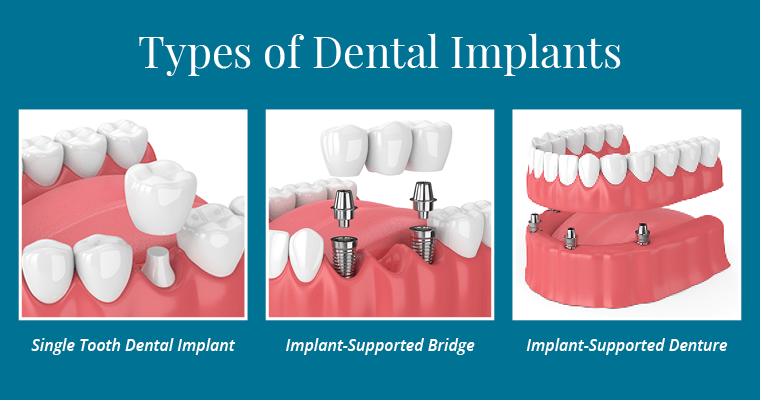
Implants Types
The two most popular types of implants are single-unit and multi-unit implants. Single-unit implants are surgically placed in the bone of the jaw and attached only to one tooth. If a person had only one tooth left, that tooth would be replaced by a single-unit implant. Multi-unit implants are surgically placed in the bone of the jaw and attached to two or more teeth. This is particularly useful for individuals with multiple teeth missing.
If a person had two teeth missing on the same side of their mouth, for example, then a single-unit implant would only be able to support one of those teeth. A multi-unit implant would be able to support the two teeth and make the smile look much more natural.
Bridge Dentistry – SAPTeethTM
Bridge dentistry is a technique in which the teeth on either side of a missing tooth are supported with a metal bridgework. As we discussed above, dental implants are often mistaken for bridges. But, the two actually have very different benefits and uses. Dental Implants are placed inside the bone and supported by the implants. This ensures that the teeth are fully supported and stable. Bridges, on the other hand, are attached to the teeth on either side of the missing tooth. This means that the bridge and the teeth on either side of the missing tooth rely on the bridgework for support. As a result, bridges are more likely to move once placed than implants are.
The most advanced material for the bridge are called as SAPTeethTM. SAPTeethTM are shock absorbable, light weight materials which provide for upto 18 years of replacement of missing teeth. SAPTeethTM are nine time lighter but stronger when compared with teir metallic, ceramic or zirconia alternatives.
Dentures in Mumbai
Denture dentistry is a treatment that is often used in addition to bridge and implant dentistry. With this type of dentistry, a removable denture is used to replace the missing teeth. As we mentioned above, dentures are often used in place of full teeth when they are missing. But, dentures are often too large to look natural when the patient has facial structure that makes certain teeth, such as a chin, look too prominent.
Dentures have a tendency to look like they are coming out of the mouth. As a result, some patients may choose to undergo a procedure called “denture repositioning.” During this procedure, a new set of dentures are placed over the existing dentures as a second set of teeth. This allows the patient to get the natural look of teeth without the “coming out” look of dentures.
Modern dentures are lighter, more comfortable, and more natural-looking than older designs. However, they may still require periodic adjustments due to changes in the jawbone over time. Patients looking for maximum stability often prefer implant-supported dentures, which combine the affordability of dentures with the improved retention provided by dental implants.
Conclusion
Dental implants, bridges, and dentures each have their own advantages depending on your oral health, budget, and treatment goals. While dental implants are often considered the gold standard for replacing missing teeth due to their durability and natural appearance, bridges and dentures remain effective solutions in many situations. A consultation with an experienced dentist can help determine the most appropriate treatment for your specific needs.
Looking for the best solution to replace missing teeth? Book a consultation with the implant specialists at Royal Dental Clinics, Mumbai. We’ll evaluate your oral health and recommend the most suitable treatment based on your needs and budget.
FAQs
Are dental implants better than bridges?
Dental implants usually last longer, preserve jawbone health, and do not require neighbouring teeth to be trimmed.
Are dentures cheaper than implants?
Yes. Dentures generally have a lower initial cost but may require replacements and adjustments over time.
How long do dental implants last?
With proper oral hygiene and regular dental check-ups, dental implants can last for 20 years or more.
Can everyone get dental implants?
Most healthy adults are suitable candidates, although adequate jawbone density and healthy gums are important. A dental consultation can determine eligibility.
Which option looks the most natural?
Dental implants generally provide the most natural appearance and feel because they closely mimic natural teeth.