
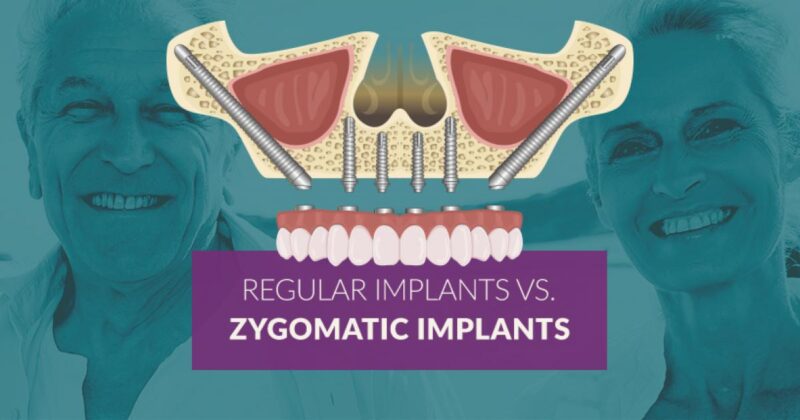
All-on-4 is one of the most popular full-mouth dental implant solutions for patients with multiple missing or severely damaged teeth. Using just four strategically placed dental implants, this technique supports a fixed full-arch prosthesis, helping restore chewing ability, speech, and confidence. However, patients with significant upper jaw bone loss may require an alternative approach, such as zygomatic implants. If you’re considering full-mouth rehabilitation, understanding the differences between All-on-4 vs zygomatic implants is essential. This guide explains how each treatment works, who is a suitable candidate, their advantages, and how your implant specialist determines the best option for your individual needs.
Who is this article for?
- Patients with multiple missing teeth
- Individuals considering full-mouth dental implants
- Patients with severe upper jaw bone loss
- Denture wearers seeking fixed teeth
- Anyone comparing All-on-4 and zygomatic implants
What is All-on-4 Dental Implant?
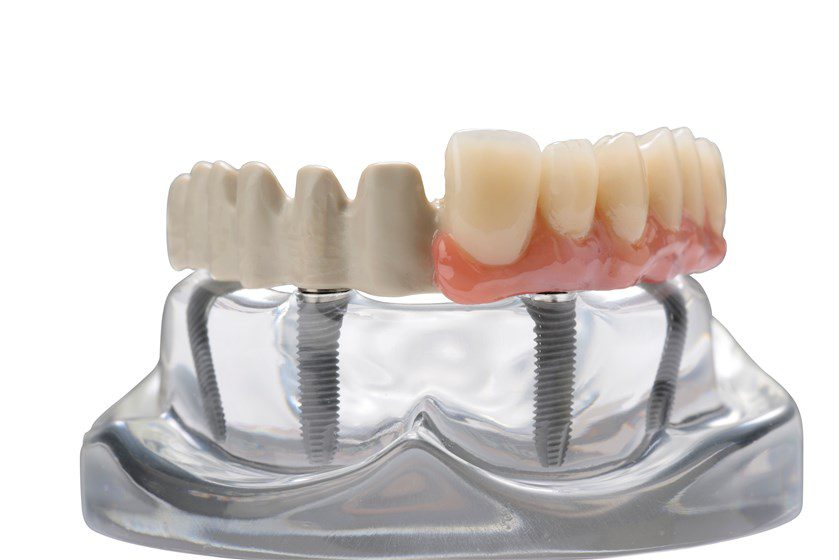
It is a recent advancement in dentistry that replaces all of your teeth, including four implants and a fixed prosthesis. This treatment replaces the front and back teeth to give you a complete set of teeth without having to resort with bone grafts. The major advantage of it is that it takes little time in the chair, just one appointment is usually enough. The treatment replaces your upper teeth in one go with an implant-supported fixed prosthesis set on 4 implants fitted into your jawbone. The other variations of the same are All-on-6 or All-on-8.
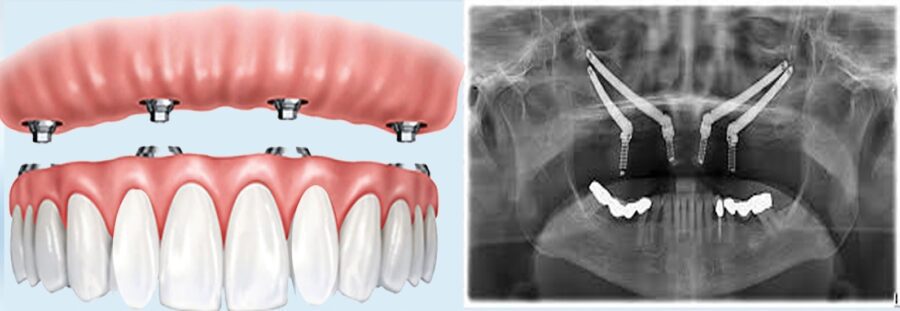
The All-On-4 dental implant solution is an innovative and effective way of immediately replacing a full set of missing or damaged teeth, on the foundation of just 4 dental implants in a jaw. For people with severely diseased teeth or gums, it is an alternative to dentures. For people who already wear dentures, it is a predictable implant replacement solution to permanently get rid of dentures.
Dental implants with the it is a popular dental treatment for missing teeth, severe gum disease, collapsed bite, and problematic dentures. Even when there is not enough bone for conventional implants, extensive bone grafting procedures can now be avoided, because the implants can still be successfully used.
How does it work?
It replaces the front teeth to give you a complete set of teeth without having to resort to removable dentures. It is an implant-supported fixed prosthesis set on 4 implants fitted into your jawbone under local anaesthesia. Each step takes about one hour and can be completed in one sitting for the procedure:
- The four implants inserted and secured into your jawbone during the appointment.
- A framework over the implant and then a final impression taken.
- It takes about 15 – 18 minutes per tooth in the laboratory for the customised teeth to be milled. So for a full mouth, about 3-4 hours.
- Finally, in the same sitting the permanent teeth in SAPTeethTM fixed.
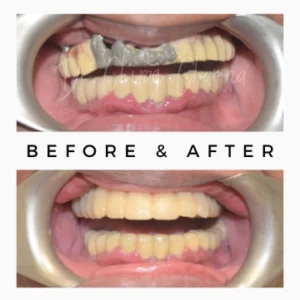
A typical treatment for full teeth replacement involves just one surgery, and one or two teeth “fitting” appointments on the days immediately after surgery. Depending on your circumstances, this means completion of the entire process (implant + teeth) within just one to two days. Your individual treatment plan discussed following your consultation with Dr Chirag Chamria.
What Are the Risks of All-on-4?
- Failure of an implant to integrate
- Gum inflammation or peri-implantitis
- Bone loss around an implant
- Loosening or fracture of prosthetic screws
- Chipping or fracture of the bridge material
- Difficulty cleaning beneath the bridge
- Speech or bite adaptation
- Need for repair, relining or replacement of the prosthesis
A successful implant does not mean that the prosthesis will never require maintenance. Full-arch bridges are exposed to considerable chewing forces and should be reviewed regularly.
What are Zygomatic Implants?
Zygomatic Implants are a popular treatment for replacing missing teeth in the lower jaw. The implant in to the bone in your upper jaw and then a crown placed over it. It is not as straightforward as it, but it may be an option if you want to get dentures at some point or change your mind. The procedure is similar to the dental implants.
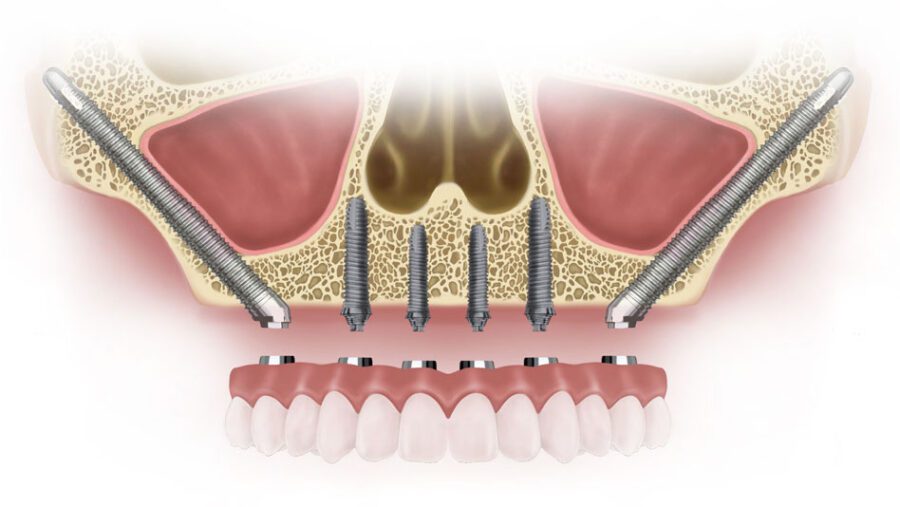
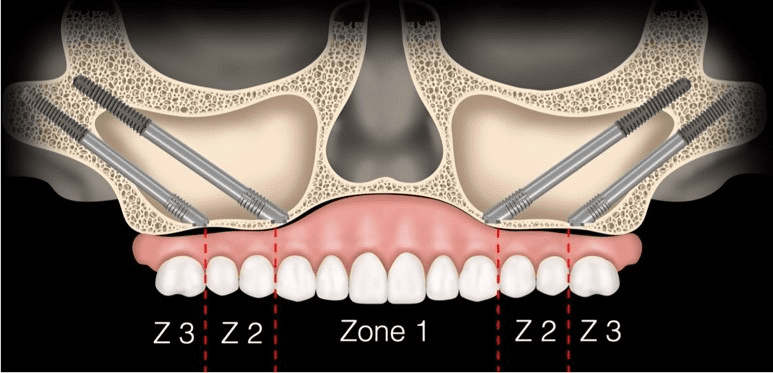
Zygomatic implants differ from other types of implants such as All-on-4, as they are anchored in the zygomatic or cheekbone. Typically, a zygomatic implant is ideal for those who may have inadequate or poor bone in their upper jaw.
How do Zygomatic Implants Work?
Zygomatic Implants are a dental surgery done to replace missing teeth with an implant supported fixed prosthesis. While the surgery is more involved than, it offers you some options for placement of the implants. You can choose to have them placed on either side of the mouth or on the same side as your other teeth. It might take more time on the chair, but Zygomatic Implants provide flexibility if you change your mind about where to place the implants. The biggest advantage of the zygomatic implant, is that it can replace the missing teeth uptill the 2nd and 3rd molar also, which would be difficult in the technique.
Who can get Zygomatic Dental Implants?
It is for people who have worn dentures for a long time, as dentures lead to significant jawbone loss and changes in facial structure. In addition, you can also opt for this surgery if you simply want to avoid the invasive procedures involved in traditional implants. Patients lose their upper jawbone due to bone tumors, trauma, or developmental anomalies are candidates. Patients whose underlying health conditions prevent them from getting traditional implants can consult a zygomatic implantologist in Mumbai for this alternative treatment.
All-on-4 vs Zygomatic Implants: Quick Comparison
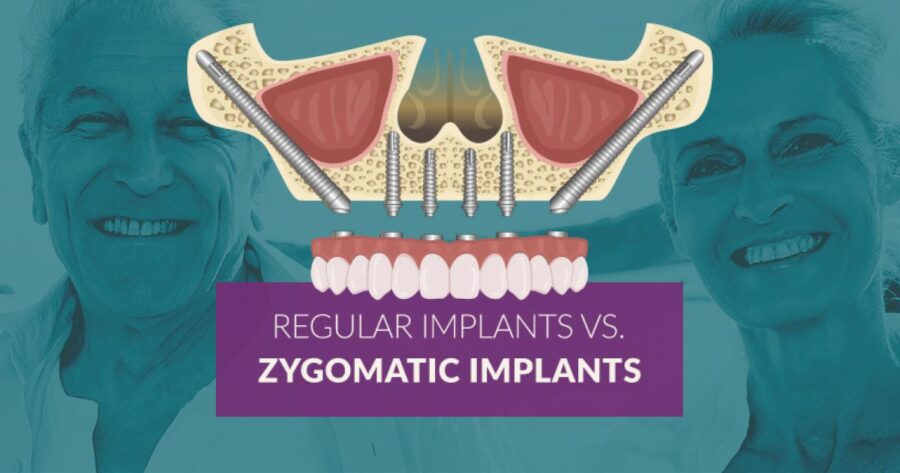
All-on-4 and zygomatic implants can both support fixed teeth, but they are intended for different anatomical situations. All-on-4 generally uses four conventional implants placed within the available upper- or lower-jaw bone. Zygomatic implants are longer implants that obtain support from the cheekbone and are primarily considered when the upper jaw has severe bone loss and cannot reliably support conventional implants.
| Comparison | All-on-4 Dental Implants | Zygomatic Dental Implants |
|---|---|---|
| Main indication | Full-arch replacement with adequate implant-supporting jawbone | Severe upper-jaw bone loss |
| Jaw treated | Upper or lower jaw | Upper jaw |
| Implant anchorage | Remaining maxillary or mandibular bone | Zygomatic or cheekbone |
| Number of implants | Commonly four, although more may be used | May involve two or four zygomatic implants, sometimes combined with conventional implants |
| Bone graft requirement | May avoid grafting in selected cases | Often used as a graftless alternative in severely deficient upper jaws |
| Surgical complexity | Advanced full-arch implant procedure | More specialised maxillofacial procedure |
| Possible in selected patients | Possible in selected patients | |
| Important risks | Implant failure, peri-implant disease and prosthetic complications | Sinusitis, soft-tissue problems, oroantral communication and implant complications |
| Suitable clinician | Implant-trained dental surgeon | Surgeon experienced in zygomatic and advanced maxillary implant rehabilitation |
Which Jaw Can Be Treated With Each Technique?
All-on-4 may be used for either the upper or lower jaw when sufficient bone is available in suitable positions. The posterior implants are frequently tilted to increase the available implant support and reduce the length of the unsupported portion of the bridge. Zygomatic implants are different. They pass through or alongside the severely resorbed upper jaw and obtain anchorage from the zygomatic bone. They are therefore not a routine treatment for missing lower teeth. A severely deficient lower jaw requires a different implant strategy based on its remaining anatomy.
Does All-on-4 Require Good Jawbone?
All-on-4 does not necessarily require ideal bone throughout the entire jaw. Tilting the posterior implants may allow the clinician to use stronger areas of available bone and avoid some anatomical structures. However, enough suitable bone must still be present to obtain secure implant anchorage. If the upper jaw has become too thin, short or resorbed to support four conventional implants predictably, All-on-4 alone may not be appropriate. The clinician may then consider zygomatic implants, pterygoid implants, bone augmentation, short implants or a combination of different implant types.
Is It Always All-on-4 or Four Zygomatic Implants?
No. Full-arch implant treatment is not limited to two fixed formulas. When adequate bone remains in the front of the upper jaw, two zygomatic implants may be combined with two or more conventional anterior implants. This is sometimes referred to as a hybrid zygomatic approach.
When there is insufficient usable bone even in the front of the upper jaw, four zygomatic implants—often called a quad-zygoma configuration—may be considered. The number, angulation and distribution of implants should be selected according to the patient’s anatomy and the planned position of the final teeth rather than applying the same implant formula to every patient.
Can Both Treatments Provide Fixed Teeth in One Day?
Immediate loading may be possible with both All-on-4 and zygomatic implants when the implants achieve adequate primary stability and can be rigidly connected through a full-arch prosthesis.
However, “same-day teeth” does not mean that every patient automatically receives the final long-term bridge on the day of surgery. Depending on the clinical protocol, a fixed provisional bridge may first be fitted while the implants and tissues heal. The definitive prosthesis may be fabricated or adjusted after healing, bite assessment and soft-tissue stabilisation.
Patients should ask whether the teeth provided on the day of surgery are provisional or definitive, what material will be used and whether future replacement or upgrading is included in the treatment estimate.
Which Procedure Is More Invasive?
All-on-4 is an advanced implant procedure, but it usually remains within the conventional jawbone. Zygomatic implant surgery involves longer implants and more complex anatomy and should therefore be performed by a team with specific training and experience in the procedure. The appropriate anaesthesia may vary according to the extent of treatment, the patient’s medical condition, anxiety level and clinical protocol. Treatment may be performed under local anaesthesia, conscious sedation or general anaesthesia in appropriately equipped settings. More complex surgery does not automatically mean that zygomatic implants are the wrong choice. For patients with extreme upper-jaw bone loss, a graftless zygomatic approach may avoid staged bone-grafting procedures and the associated waiting period.
Recovery After All-on-4 and Zygomatic Implants
Swelling, bruising, tenderness and temporary difficulty chewing can occur after either procedure. Recovery may be more involved after zygomatic implant surgery because of the greater anatomical extent of the operation. Patients may be advised to follow a soft-food diet during the early healing phase, maintain prescribed oral hygiene and avoid placing excessive biting pressure on the new teeth. Medication and postoperative instructions must be followed according to the treating surgeon’s advice. Increasing swelling, persistent bleeding, fever, worsening pain, nasal discharge, fluid passing between the mouth and nose, altered vision or movement of the bridge should be reported promptly.
What Are the Additional Risks of Zygomatic Implants?
Zygomatic implants share many of the risks associated with conventional implant treatment but also involve the maxillary sinus and adjacent facial structures. Reported complications include sinusitis, soft-tissue inflammation, oroantral communication, prosthetic difficulties and failure of implant integration. Sinusitis is one of the more frequently reported biological complications associated with zygomatic implants. Previous sinus disease should therefore be evaluated during planning, and some patients may require an ear, nose and throat assessment. The risk profile depends on the patient’s anatomy, implant pathway, surgical technique, smoking status, general health and the experience of the treatment team.
Which Treatment Has a Better Success Rate?
Both All-on-4 and zygomatic implant rehabilitation have demonstrated favourable implant survival and patient satisfaction in appropriately selected patients. However, percentages from separate studies should not be compared as though the procedures treat identical patients.
All-on-4 is generally used when conventional implant anchorage remains available, whereas zygomatic implants treat more severely compromised upper jaws. The more useful question is not which procedure has the highest advertised percentage, but which treatment is anatomically appropriate, maintainable and prosthetically suitable for the individual patient.
Will the New Teeth Look and Feel the Same?
- Position of the implants
- Amount of lost bone and gum tissue
- Smile line
- Lip and facial support
- Prosthesis design
- Tooth shape and shade
- Framework and tooth material
- Bite and speaking space
Patients with advanced bone loss may require a prosthesis that replaces both teeth and missing gum volume. This may restore lip support and facial proportions but requires careful cleaning underneath the bridge.
How Are All-on-4 and Zygomatic Teeth Cleaned?
Neither treatment is maintenance-free. Patients must clean around the implants and underneath the full-arch bridge using the methods recommended by their clinical team. These may include an implant brush, interdental brush, specialised floss or water irrigator. Professional reviews allow the team to monitor:
- Gum inflammation
- Plaque accumulation
- Implant stability
- Bone levels
- Prosthetic screws
- Bridge wear or fracture
- Bite changes
- Sinus symptoms in zygomatic cases
Maintenance intervals should be personalised according to oral hygiene, smoking, gum-disease history, medical risk and the type of prosthesis.
Which Treatment Is More Expensive?
Zygomatic rehabilitation is generally more complex and may require advanced imaging, specialised implants, surgical expertise, anaesthesia support and more extensive prosthetic planning. However, cost should be compared with the complete alternative treatment, including any bone graft, sinus lift, temporary denture, second surgery and waiting period that might otherwise be required. A written estimate should specify:
- Number and type of implants
- Anaesthesia or hospital charges
- Provisional fixed teeth
- Definitive prosthesis
- Prosthetic material
- Follow-up appointments
- Maintenance
- Repairs and replacement policy
Conclusion
Both All-on-4 and zygomatic implants are advanced solutions for full-mouth rehabilitation, but they are designed for different clinical situations. It is often recommended for patients with sufficient jawbone to support four strategically placed implants, while zygomatic implants are reserved for more complex cases involving severe upper jaw bone loss. A detailed clinical assessment and digital treatment planning help determine the most appropriate solution for restoring function, comfort, and confidence.
Considering full-mouth dental implants?
Schedule a consultation at Royal Dental Clinics to determine whether All-on-4 or zygomatic implants are the most suitable solution for your smile, bone condition, and long-term oral health goals.
FAQs
1. What is the difference between All-on-4 and zygomatic implants?
All-on-4 uses four conventional implants placed in the jawbone, whereas zygomatic implants are longer implants anchored into the cheekbone for patients with severe upper jaw bone loss.
2. Who is a good candidate for All-on-4?
Patients with multiple missing or failing teeth and adequate jawbone are often suitable candidates after clinical evaluation.
3. Can All-on-4 eliminate the need for dentures?
Yes. For many patients, it provides a fixed full-arch restoration that replaces removable dentures.
4. When are zygomatic implants preferred?
They are generally recommended for patients with severe upper jaw bone loss where conventional implants may not be possible without extensive bone grafting.
5. Which treatment lasts longer?
Both can provide long-term results when properly planned, placed, and maintained with excellent oral hygiene and regular dental visits.