
Dental implants are designed to provide long-term replacement for missing teeth, but like any surgical treatment, they can develop complications. A dental implant infection may affect the gum and tissues around the implant and, in more advanced cases, may contribute to bone loss or implant failure. Recognising symptoms early and getting a professional evaluation can help determine the cause and appropriate treatment. Dental implants are artificial replacements for natural teeth. When you lose a tooth, recovery can be slow. But with dental implants, the process of regaining your smile can be accelerated by several months. Learn what happens if infected dental implants don’t get treated in time.
A dental implant is a small post that’s surgically placed into your jawbone. Once it has integrated with the bone, an artificial tooth can be attached to the implant. If a bacteria gets inside the implant, it usually happens when there is something wrong with the healing process or due to some other external factor. If you have noticed any of these signs and feel like your dental implant might be infected, read this article until the end!
Who Is This Article For?
- Patients with a painful or swollen implant
- People noticing bleeding around an implant
- Patients with bad taste or discharge near an implant
- People worried about implant infection
- Patients who recently had implant surgery
- People whose implant feels loose
- Patients looking for an implant second opinion
What to do if you think Dental Implant is infected?
The best thing you can do if you think your implant is infected is to follow your dentist’s advice and make sure you don’t do anything to make the infection worse. If the infection is caught early enough, it should be pretty easy to treat. However, if an infection is left untreated, it can become a lot more serious and might even require the implant to be taken out. If you notice any of the following signs, it’s best to contact your dentist right away.

Symptoms of infection include:
- Swelling and/or pain around the implant site – This can be a sign that the infection has spread.
- A bad taste coming from the implant site – This could be a sign of an infection.
- Any reddening or bleeding of the gums around the implant site – This could be a sign that the implant has caused an infection in the surrounding gum tissue.
Check your Oral Hygiene Habits
If the infection has a bacterial origin, the best way to get rid of it is through a rigorous oral hygiene routine. Make sure you brush and floss regularly and make sure to use an appropriate mouthwash. If you don’t practice good oral hygiene habits, the bacteria that are responsible for an implant infection could be left to grow and spread inside your mouth. Your dentist may also prescribe antibiotics in order to calm down the infection.
Check with a dentist before taking antibiotics to make sure they don’t interact with other medications that you take. If you have a history of dental problems or if you’re in your 60s or older, you might be at a greater risk of developing an implant infection. If you have any of the risk factors below, make sure to visit your dentist more regularly to prevent any dental problems from occurring.
Check your diet if you have infected an implant
Certain foods may be contributing to your infection and you might not even be aware of it. Make sure to avoid any of the following foods if you have an infected implant:
- Coffee – This is an obvious one. Caffeine interferes with blood clotting and makes the blood flow slower. This can make an infection even worse.
- Dairy products – Dairy products are great for your body, but they can be harmful when you have an infection. Stay away from dairy products like cheese and yogurt until you get the green light from your dentist.
- Citrus fruits – Drinking orange juice while you have an infection can make it even worse. – Spicy foods – Spicy foods may taste great with your morning coffee, but they’re definitely not good for you when you have an implant.
- Carbonated beverages – Soda and other carbonated beverages are known for causing dental problems. When you have an implant, these beverages can worsen the infection and increase the risk of needing another surgery.
Talk to your Dentist if you have infected dental implants
If you think your dental implant is infected, the best thing to do is talk to your dentist about it. Infections are rare, but they still happen from time to time. The best way to treat them is by following your dentist’s instructions. Your dentist may prescribe antibiotics or other medications to help treat the infection. If the infection is serious enough, your dentist may recommend removing the implant and replacing it with a new one. This is very rare, but it can happen if the infection is left untreated.
Try infection-fighting techniques
If you’re worried that your implant is infected, there are a few things you can do to calm your fears. First, try gently cleaning the implant site with warm water. This can help you get rid of any bacteria that may be present. You can also try rinsing the implant site with hydrogen peroxide. If You can add a small amount of hydrogen peroxide to warm water or saline solution to help kill the bacteria inside the implant.
You can also try applying baking soda to the implant site with a cotton ball. Baking soda is known to have anti-inflammatory properties that can help calm down an infection. Make sure to periodically change out the cotton ball and don’t use too much baking soda. Overusing baking soda can irritate the gums even more. You can also try applying baking soda to your teeth as a toothpaste substitute.
Ask for a second opinion if you have an infected implant
If you’re worried that your implant is infected and you’ve followed your dentist’s advice and you’ve tried the infection-fighting techniques listed above, you may want to go to a different dentist for a second opinion. It’s best to get a second opinion if you’re worried about the implant site and you feel like your dentist doesn’t know what’s going on.
Sometimes, a dental implant can be tricky to diagnose and it’s best to get a second opinion from a different dentist. A different dentist may be able to spot a potential problem that your dentist has missed. It’s best to get a second opinion if you’re worried about the health of your implant.
Conclusion
Dental implants are a great way to regain your smile after you’ve lost a tooth. However, you may experience some dental issues if your implant is infected. If your implant is infected, the best thing you can do is follow your dentist’s advice and make sure you don’t do anything that could make the infection worse. Keep your oral hygiene habits up, follow your dentist’s advice, and make sure to try the infection-fighting techniques listed above to make sure your dental implant doesn’t get infected!
Frequently Asked Questions
What are the symptoms of an infected dental implant?
Symptoms can include swelling, redness, bleeding, persistent pain, pus or discharge, bad taste, gum recession or implant mobility. These symptoms require professional assessment.
Can an infected dental implant be saved?
Sometimes. Treatment depends on the severity of inflammation, bone loss, implant stability and underlying cause. Some cases can be managed without removing the implant, while severely compromised implants may need removal.
Can a dental implant infection cause bone loss?
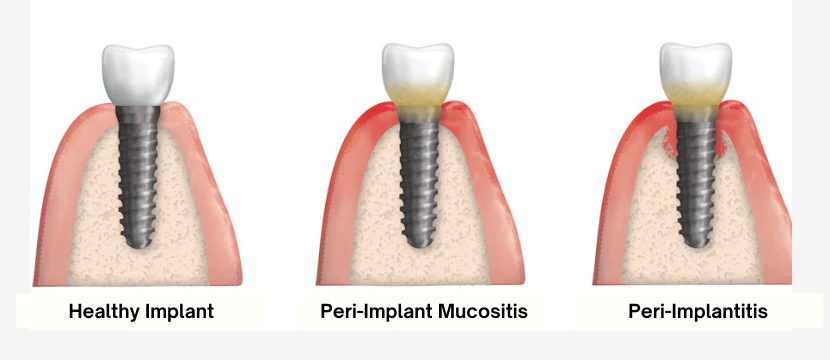
Yes. Peri-implantitis can cause progressive bone loss around an implant if the condition is not appropriately managed.
Should I take antibiotics for an infected dental implant?
Do not self-medicate. Antibiotics may be appropriate in selected situations, but treatment also needs to address the underlying dental problem.
What happens if an infected dental implant is left untreated?
The condition may worsen and can lead to increased inflammation, bone loss, implant instability and, in severe cases, implant failure.
Suggested Article –
- Pros and Cons of Full Mouth Dental Implants
- Difference between Crowns and Dental Implants?
- Who is the Best Dental Implant specialist
Medical Disclaimer
This article is for patient education only. Dental treatment should be planned after clinical examination, medical history review, and X-rays or scans where required. Treatment suitability, cost, timeline, healing, and results vary from patient to patient.