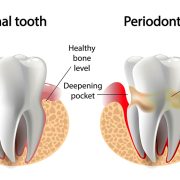


Are your natural teeth yellow, brown or grey? If you answered yes to any of these questions, then you probably have black teeth. As unpleasant as it may sound, the truth is that having black teeth is not uncommon. In fact, it’s one of the most common dental problems. Black or dark coloured teeth are usually caused by a combination of factors such as genetics and hormone imbalances that result in an excess pigment production. For some people with darker skin tones, their natural pigment combined with drinking tea and coffee may result in darkened teeth. Other factors that cause your teeth appear black are going through a stress, smoking cigarettes or taking certain medications.
Why do natural teeth appear black and how to fix them?
Black teeth are usually caused by a combination of factors such as genetics and hormone imbalances that result in an excess production of melanin pigment. The sheer amount of melanin produced in your teeth can make their surface appear black – even if they are naturally white. However, the process of turning your teeth black can be reversed by brushing your teeth regularly and avoiding certain foods and drinks that stain your teeth.

Brushing your teeth with a toothpaste that contains activated charcoal or baking soda is one of the best ways to keep your teeth clean and prevent cavities. If you want to make your teeth even whiter, try using a toothpaste with fluoride. This will help prevent the buildup of stains and make your teeth look much brighter. You can also try whitening your teeth with natural remedies, such as strawberries, coconut or coffee grounds.
How Is a Black Tooth Diagnosed and Treated?
Treatment depends entirely on why the tooth has become dark. A dentist may examine whether the colour is present on the surface, inside a cavity or throughout the entire tooth. Sensitivity testing, tapping tests and dental X-rays may be required to assess decay, infection, previous trauma and the condition of the nerve.
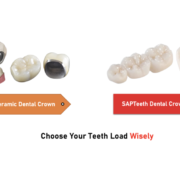
Surface stains and tartar may improve with professional cleaning and polishing. A cavity may require removal of the decayed area followed by a filling, inlay, onlay or crown. When decay or trauma has damaged the nerve, root canal treatment may be required before the tooth is restored. A tooth that cannot be predictably repaired may require extraction, but removal should not be recommended only because the tooth looks dark. Tooth-decay treatment varies from fluoride management in early cases to fillings, root canal treatment or extraction in more advanced cases.
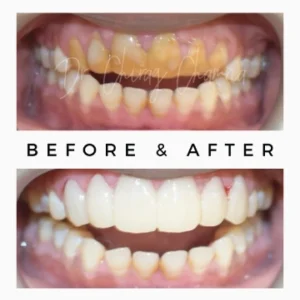
Professional whitening may improve certain external or internal stains, but it cannot remove decay, treat an infected nerve or eliminate hardened tartar. Whitening should therefore be considered only after the cause has been diagnosed. Avoid scrubbing teeth with charcoal, baking soda, coffee grounds or acidic fruit-based remedies because abrasive or acidic substances may damage the tooth surface or increase sensitivity.
When is teeth removal necessary?
Sometimes a dentist will have to remove black teeth.If the decay is in one part of the tooth, the dentist might be able to remove the affected portion and close the hole with a filling. If the decay has reached a large section of the tooth, the dentist will remove all the decay and place a crown over the top of the tooth.However, if the damage to the tooth is too severe to recover with a crown or filling, the dentist may need to remove the entire tooth instead.
Bleach your teeth with professional help
If you’re looking for a quick way to whiten your teeth, then visiting a dentist may be just what you need. Dentists can provide a quick and effective teeth whitening treatment that will make your teeth look much brighter and cleaner. For example, teeth whitening strips are one of the most popular and effective teeth whitening treatments available.
These strips contain a bleaching agent that whitens teeth by removing stains. Dentists also offer other whitening treatments such as gels, mouth guards and even laser teeth whitening. Whatever teeth whitening treatment you choose, make sure that the bleaching agent is safe for use on your teeth. Dentists use a bleaching agent that is safe for teeth, but be sure to ask before you get any teeth whitening treatment done.
Try Teeth Whitening Treatments at Dental Clinic
Teeth whitening treatments from the dentist are usually a lot more effective than brushing your teeth with a teeth whitening toothpaste. Brushing your teeth daily with a whitening toothpaste will not be able to remove the deep stains from your teeth. That’s where a whitening treatment from the dentist comes in. Teeth whitening treatments can remove stains from your teeth and make them bright and clean.
While there are many whitening products that you can buy at the store, these are not as effective as visiting the dentist. The powerful teeth whitening treatments offered at the dentist can remove stains from teeth that have been built up for years. These treatments can also make your teeth much brighter than any teeth whitening toothpaste.
When Should a Black Tooth Be Checked by a Dentist?
A black spot or dark tooth should be examined when the colour is new, increasing or limited to one tooth. Dental assessment is particularly important when the discolouration is accompanied by pain, sensitivity, a visible hole, food trapping, swelling, pus, bad taste, gum bleeding or a history of injury. Seek prompt attention when there is facial swelling, fever, severe pain, difficulty opening the mouth, difficulty swallowing or difficulty breathing. These symptoms may indicate that an infection is spreading beyond the tooth. Early diagnosis may allow the dentist to preserve more natural tooth structure. A black area does not always mean that the tooth must be removed, but it should not automatically be treated as a cosmetic stain either.
Conclusion
Teeth that appear black can make you feel self-conscious and uncomfortable. Fortunately, there are plenty of ways to lighten them up again! From using a teeth whitening toothpaste to visiting the dentist for powerful teeth whitening treatments, there are plenty of options to help you get your white teeth back. With these tips, you can get your white teeth back and be proud to show off your smile once again!
Frequently Asked Questions About Black Teeth
Does a black tooth always mean tooth decay?
No. A tooth may appear black because of surface staining, tartar, an old metal filling, tooth decay or damage to the nerve after an injury. A dental examination is required to identify the cause.
Can a black tooth become white again?
It depends on the cause. Surface stains may improve with professional cleaning, while certain internal stains may respond to whitening or restorative treatment. Decay or an infected nerve must be treated before cosmetic correction.
Can a black tooth be saved?
Yes, many black or severely discoloured teeth can be saved. Treatment may include a filling, root canal treatment, crown or internal whitening. Extraction is generally considered only when the tooth cannot be restored predictably.
Why is one tooth turning grey or black after an injury?
An injury may damage the blood vessels and nerve tissue inside the tooth, causing it to gradually darken. The tooth may require vitality testing and an X-ray even when there is no pain.
Can professional teeth cleaning remove black stains?
Professional cleaning can remove many external stains and hardened tartar. It cannot remove decay or correct discolouration arising from inside the tooth.
Are home remedies safe for treating black teeth?
Avoid using charcoal, baking soda, lemon, vinegar or other abrasive or acidic substances. These remedies may damage enamel, increase sensitivity and delay diagnosis of decay or infection.
When is a black tooth an emergency?
Seek prompt dental attention when a black tooth is associated with facial swelling, severe pain, pus, fever, difficulty swallowing or difficulty breathing.
Medical Disclaimer
This article is for patient education only. Dental treatment should be planned after clinical examination, medical history review, and X-rays or scans where required. Treatment suitability, cost, timeline, healing, and results vary from patient to patient.