


Dental fear is a most common aspect among different age groups of society. Along with fear anxiety and pain related issues observed by the dentist many years. To find a solution to because neurological factors a patient acceptable yet effective procedure invented. Scared to visit a dentist? Try looking for a dental clinic near you which can provide dental treatments by easing your comfort with sedation. Scared of dental treatment? Book a consultation at Royal Dental Clinics to understand whether conscious sedation dentistry or another comfort option is suitable for your dental procedure.
Who is this article for?
This article is for patients who feel scared, anxious, restless, or uncomfortable before dental treatment and want to understand whether conscious sedation can help them relax on the dental chair. It is especially useful for patients who avoid dental visits because of fear of pain, needles, drilling sounds, past dental experiences, gag reflex, long appointments, wisdom tooth removal, root canal treatment, dental implants, full mouth rehabilitation, or other complex dental procedures. The article helps patients understand what conscious sedation means, how it may help reduce dental fear, who may be suitable, and why medical evaluation and professional monitoring are important before sedation.
Conscious Sedation
Conscious sedation is technique in which the use of drugs and gases reduce the state of depression on the central nervous system (CNS) enabling dental treatment to be carried out. During which verbal contact with the patient is maintained throughout the period of sedation. It also retains the patient’s ability to maintain a patent airway independently and continuously. This procedure performed first time using nitrous oxide USA Horace Wells 1844. This individual was a dentist and he was successful in administrating conscious sedation to the patient.
Conscious Sedation Dentistry at Royal Dental
Sedation may be a process to establish a relaxed, easy and calm state through the utilization of sedatives. Sedative drugs often administered in a sort of way. Read more. The following are a few indications where conscious sedation can be helpful:
- Dental Phobia (dental fear) and anxiety or scared to visit a dentist
- Traumatic and long dental procedures involving more than 4 hours
- Medical conditions aggravated by stress like Angina, Asthma, Epilepsy
- Children more than one year of age
- Mentally challenged individual
- Ineffective local Anaesthesia due to any reason.

Common Drugs Used for Dental fear:
- Nitrous oxide gas
- Propofol
- Ketamine
- Ether
- Dexmedetomidine
Use Of Drug In-patient For Dental Fear:
- Oral tablet that can be swallowed containing Diazepam or Trizolam.
- Intra Muscular injection shot of Benzodiazepine such as Midazolam most likely in your upper arm or butt.
- Intra-venous shot with Benzodiazepine such as Midazolam or propofol in injected in the patient’s venous system, most commonly arm vein.
- Inhalation for patient during treatment through facial mask where he breathes nitrous oxide.
Stages of Conscious Sedation:
- Minimal: Patient feels relaxed but fully conscious and responsive.
- Moderate: Patient feels dizzy and may lose consciousness but is still somewhat responsive.
- Deep: Patient falls asleep and is mostly unresponsive.
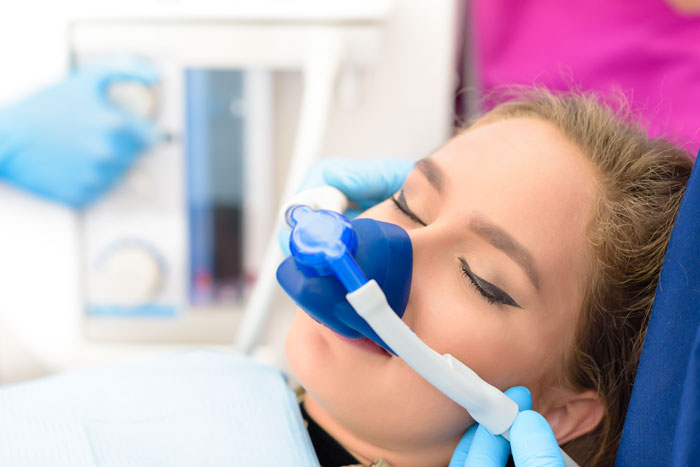
Preparation for Conscious Sedation:
Patient Preparation
- Consent for dental treatment: Valid informed written consent is necessary.
- Pre-sedation checkup: Patient detail history and examination should be done.
- A thorough detailed airway examination is necessary for paediatric patients.
Pre-Operating Setup
- Monitoring: All the equipments and instruments for monitoring to be ready.
- Resuscitation apparatus and drugs should be ready if required.
- To maintain a proper airway and adequate oxygen for patient.
- Appropriate sized airway equipments and oxygen cylinder.
Dental Procedure: (Steps may differ based on the dental procedure)
- Patient to be comfortable on the operating chair.
- Patient will be induced with sedative by either delivery methods.
- A waiting period of 15-20 minutes is kept till the time sedative acts.
- The Dentist and Anaesthetist will monitor your breathing and blood pressure.
- Once the sedative acts on the patient, your dentist will begin the procedure.
FAQs on Dental Fear and Conscious Sedation
1. What is conscious sedation in dentistry?
Conscious sedation is a technique used to help anxious patients feel calmer and more relaxed during dental treatment. The patient is not fully unconscious like in general anaesthesia. In most cases, the patient remains conscious, can breathe on their own, and can respond to instructions, but feels less anxious and more comfortable during the procedure. Local anaesthesia may still be used to numb the treatment area.
2. Can conscious sedation help with dental fear?
Yes, conscious sedation may help selected patients who experience dental fear, anxiety, gag reflex, or difficulty sitting through long dental appointments. It can make the treatment experience feel calmer and less stressful. However, it should not be presented as a complete cure for dental phobia. Some patients may also benefit from counselling, clear explanation, shorter appointments, relaxation techniques, or gradual exposure to dental care.
3. Is conscious sedation safe?
Conscious sedation is generally considered safe when planned after proper medical evaluation and performed by trained professionals with appropriate monitoring. The dental team must review medical history, allergies, current medicines, breathing problems, heart conditions, pregnancy status, previous anaesthesia reactions, and the type of dental procedure before deciding suitability. Not every patient is suitable for sedation, so consultation and consent are important.
4. Will I be asleep during conscious sedation?
No, conscious sedation is different from general anaesthesia. In conscious sedation, the patient is usually relaxed and drowsy but not fully asleep. Some patients may remember parts of the procedure, while others may remember very little depending on the sedation method and medicines used. If complete unconsciousness is required, that is a different level of anaesthesia and needs separate planning and monitoring.
5. Do I need someone with me after conscious sedation?
In many sedation cases, especially oral or IV sedation, the patient may need an adult attendant to accompany them home. The patient may be advised not to drive, drink alcohol, operate machinery, or make important decisions for a period after the appointment. The exact instructions depend on the type of sedation used and should be followed as advised by the dentist or anaesthesia team.
Conclusion
Dental fear is common, and many patients delay important dental treatment because they feel anxious about pain, injections, dental sounds, or previous bad experiences. Conscious sedation can help selected patients feel calmer and more comfortable during dental procedures while still allowing the dental team to complete the planned treatment safely and carefully.
However, conscious sedation should always be planned responsibly. It is not the same as general anaesthesia, and it may not be suitable for every patient. A proper consultation, medical history review, consent, monitoring, and post-sedation instructions are important before treatment. If fear has been stopping you from visiting the dentist, speak to your dentist about whether conscious sedation or another anxiety-management option is suitable for your case.
Disclaimer: This article is for patient education. Sedation suitability, comfort, recovery, and treatment experience vary from patient to patient. A clinical consultation and medical evaluation are required before planning dental treatment under conscious sedation.
Suggested Article –
- Pros and Cons of Full Mouth Dental Implants
- Difference between Crowns and Dental Implants?
- Who is the Best Dental Implant specialist in Delhi?
- Are dental implants better than alternates?
Medical Disclaimer
This article is for patient education only. Dental treatment should be planned after clinical examination, medical history review, and X-rays or scans where required. Treatment suitability, cost, timeline, healing, and results vary from patient to patient.