
Table of Contents
With Zygomatic implants after radiation, yes, it is now possible to eat with fixed teeth even in virtually no bone cases. Surviving oral cancer is a monumental victory, but the treatments that save your life—like surgery and radiation—often leave behind a new set of challenges. Radiation therapy can cause the soft tissues of the mouth to become thin and fibrotic, leaving the mucosa with a loss of elasticity.
Furthermore, the underlying upper jawbone may be severely compromised or entirely absent following a maxillectomy. For years, patients in this situation had to rely on uncomfortable, removable obturators (hollow plates) that made eating, speaking, and smiling a daily struggle. Traditional dental implants and bone grafting are often deemed impossible or highly dangerous in previously irradiated sites due to the lack of blood supply. Zygomatic implants after radiation may be the answer
However, advanced zygomatic dental implants offer a predictable, life-changing solution to restore fixed teeth without relying on the damaged jawbone especially after radiation.
Quick Answer: Zygomatic Implants After Radiation
- How it works: Zygomatic implants bypass the irradiated, compromised upper jawbone entirely, anchoring instead into the dense cheekbone (zygoma).
- Is radiation a contraindication? No. Radiation is not a contraindication for these implants, provided the zygomatic bone used for anchorage lies outside the high-dose irradiated field.
- Do I need bone grafting? No. Because zygomatic implants anchor in the cheekbone, they bypass the need for bone grafting, which is generally contraindicated in irradiated tissues.
- Minimally invasive: Modern flapless or micro-tunnel techniques minimize trauma to the already fragile, fibrotic tissues, promoting faster healing.
Why Traditional Bone Grafts Fail After Radiation
Rehabilitation following a maxillectomy and radiation presents one of the most complex challenges in maxillofacial surgery. When tissues are irradiated, their ability to heal and fight infection drops significantly. Performing traditional, invasive bone grafting in these areas carries a high risk of graft failure and severe complications.
By contrast, zygomatic implants eliminate the need to harvest or rebuild bone in the damaged area. They provide robust, immediate stability by utilizing the cheekbone, which is naturally dense and often spared from the direct effects of the radiation field.
The ZIP Flap: Closing the Gap and Restoring Function
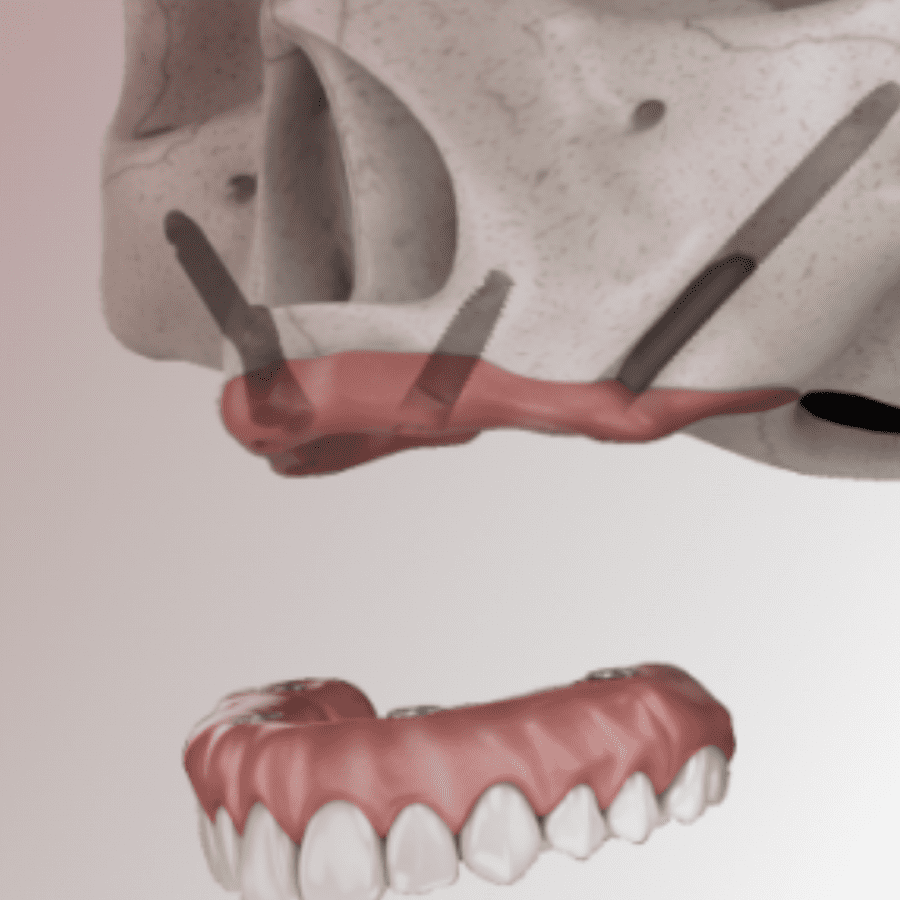
In many oral cancer survivors, surgical removal of tumors leaves an “oro-nasal communication”—an opening between the mouth and the nasal cavity. To solve this, specialized surgeons utilize the Zygomatic Implant Perforated (ZIP) flap technique. This advanced procedure involves:
- Placing zygomatic oncology implants to achieve high primary stability.
- Using a microvascular free flap (soft tissue transferred from the arm or thigh) to permanently seal the hole between the mouth and nose.
- Perforating the flap to allow the zygomatic implants to emerge, supporting a fixed, customized set of teeth.
This combination enables rapid, fixed prosthetic rehabilitation even in post-radiotherapy patients, eliminating the need for bulky, slipping removable obturators.
Protecting Compromised Tissue with Lightweight Prosthetics
Because irradiated mucosa is highly delicate and prone to ulceration, the design of the replacement teeth is critical. Heavy ceramic or zirconia teeth can place excessive stress on the implants and the surrounding tissues. Instead, modern protocols utilize lightweight, shock-absorbent PEEK-based frameworks (like SAPTeeth™). This reduces pressure and inflammation on the fragile tissues, ensuring long-term comfort and integration.
Success Rates and Clinical Evidence for Zygomatic Implants After Radiation
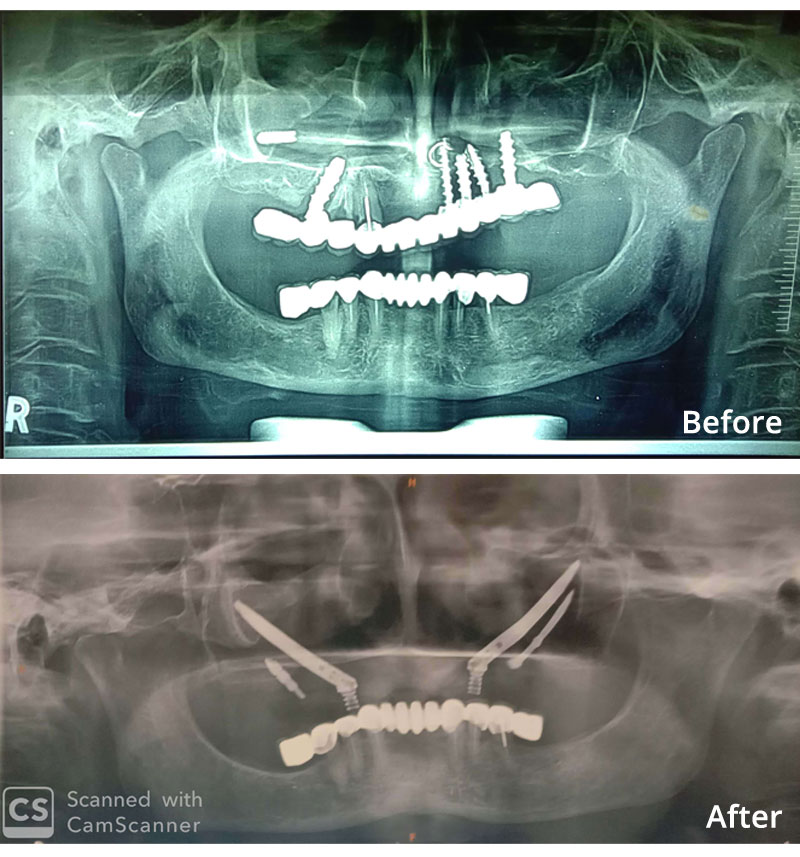
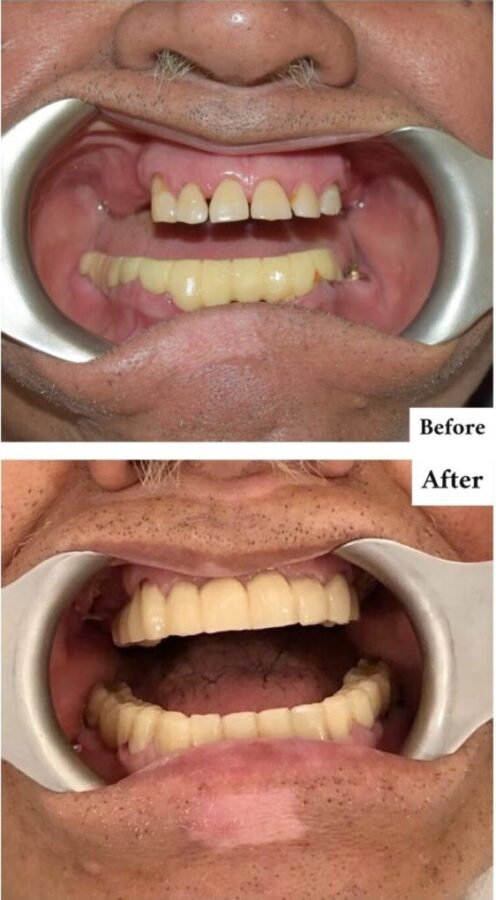
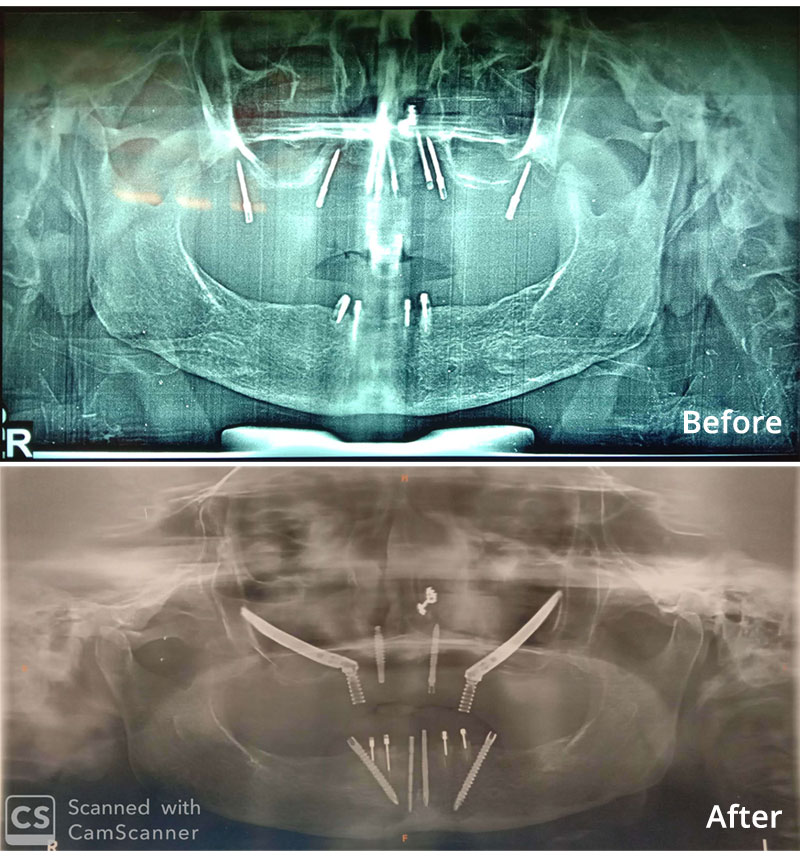
Zygomatic implants for oncology patients are not an experimental concept; they are highly validated. Clinical research, including a notable study by Butterworth et al. (2020), reported a 94% survival rate in post-oncologic patients, accompanied by dramatic improvements in speech clarity and social confidence. For cancer survivors, these implants restore far more than just the ability to chew—they restore identity, dignity, and the freedom to laugh at the dinner table without embarrassment.
Why Experience Matters in Oncology Rehabilitation
Treating patients who have undergone radiation and maxillectomy requires profound interdisciplinary expertise involving oncologists, ENT specialists, and maxillofacial prosthodontists.
At Royal Dental Clinics, every complex zygomatic implant case begins with detailed CBCT scanning and 3D virtual planning. This ensures that the implants are navigated safely away from critical structures while perfectly aligning with your new smile. Dr. Chirag Chamria‘s expertise in this specialized field is documented in his book, The Zygomatic Revolution, detailing how minimally invasive protocols bring hope to patients previously told they were untreatable.
If you or a loved one are struggling with missing teeth or a removable obturator after oral cancer treatment, do not assume fixed teeth are impossible. Call Royal Dental Clinics. A CBCT-based consultation can help confirm your options for safe, predictable rehabilitation.
Zygomatic implants are an excellent restorative option for patients with deficient or fractured zygomatic arches. The procedures may be complex, so dentists need to be confident and organized before, during and after their implementation in practice. It is important to note that the use of implants as a primary restorative measure is still relatively new in post-radiation dentistry.
What does the follow-up schedule look like after oncology rehabilitation?
Because previously irradiated mucosa needs careful, ongoing monitoring for fragility, post-cancer patients follow a strict, structured maintenance schedule. This interdisciplinary care typically includes:
- 1 week: An initial inspection to monitor soft-tissue healing and check how your prosthesis is adapting.
- 1 month: A dedicated hygiene check and torque verification of your replacement teeth.
- 3 months: A CBCT scan to confirm that the dense cheekbone has securely integrated with the implant.
- 6 months: A full clinical review, including a speech evaluation to ensure your phonetics are fully restored.
Throughout your recovery, you will also be referred for periodic ENT (Ear, Nose, and Throat) surveillance to ensure your sinus and overall maxillofacial health remains in excellent condition
Treatment Costs, Insurance, and the True Value of Rehabilitation
For oral cancer survivors who have undergone radiation therapy, measuring the cost of rehabilitation goes far beyond the financial price tag. The true value of zygomatic implants lies in the immense savings of time, physical trauma, and emotional toll.
Understanding the Financial Cost When looking at the financial investment, zygomatic implants are highly cost-effective when compared to global healthcare prices. In India, the cost of receiving zygomatic implants is approximately 16 times lower than in the United States. Typically, the procedure ranges between INR 150,000 to 250,000 per implant. This makes world-class, post-oncologic maxillofacial rehabilitation accessible for both domestic and international patients.
Health Insurance Coverage for Cancer Survivors One of the most important financial considerations for oral cancer survivors is insurance. In India, standard medical insurance policies generally do not cover routine dental implants. However, there is a crucial exception: if your missing teeth and bone loss are the direct result of a tumor, oral cancer resection, or severe facial trauma, your reconstructive rehabilitation using zygomatic implants may be eligible for coverage under your medical insurance.
Ultimately, the investment in zygomatic implants after radiation is not just about fixing teeth—it is about restoring the fundamental ability to chew, speak clearly, and smile without embarrassment. As noted by maxillofacial specialists, rehabilitation after cancer is as important as curing the cancer itself, because it restores a patient’s dignity and reason to live.
To know more about zygomatic implants check out the complete patient guide to zygomatic implants on the article “All About Zygomatic Dental Implant”
Can dental implants survive in irradiated bone?
Traditional implants struggle in irradiated bone, but zygomatic implants succeed by anchoring into the dense cheekbone, which usually sits outside the irradiated zone.
Is bone grafting safe after oral radiation?
Bone grafting is generally contraindicated after head and neck radiation due to poor blood supply, making zygomatic implants the preferred alternative.
What is a ZIP flap in dental implants?
The Zygomatic Implant Perforated (ZIP) flap uses transferred soft tissue to close gaps left by cancer surgery while allowing zygomatic implants to safely emerge to hold fixed teeth
What are the possible post-operative complications after zygomatic implant surgery?
While the success rate of zygomatic implants is exceptionally high (around 97%), any surgical procedure carries minor risks. The most commonly observed issues are temporary swelling, mild sinus congestion, or minor bleeding (hematoma) in the first few days. In the long term, minor mechanical issues like the loosening of the prosthetic screws can occasionally occur.
How are post-operative pain and swelling managed?
Swelling and mild discomfort are normal responses to surgery, usually peaking around 12 to 48 hours after the procedure. They are effectively managed with standard over-the-counter painkillers (NSAIDs), cold compresses (ice packs) for the first 6 hours, and keeping your head elevated while sleeping. Thanks to modern suture-less (pinhole) techniques, pain and swelling are dramatically lower than with traditional implant surgeries.
What happens if my cancer surgery left a gap or hole between my mouth and nasal cavity?
For patients with an “oro-nasal communication,” specialized surgeons can utilize the advanced Zygomatic Implant Perforated (ZIP) flap technique. This procedure uses healthy vascularized soft tissue transferred from another part of the body (like the arm or thigh) to permanently seal the defect. The surgeons then make small perforations in this flap to allow the zygomatic implants to safely emerge and securely hold a fixed set of teeth, eliminating the need for bulky, slipping removable obturators.
Will needing postoperative radiation prevent me from getting zygomatic implants?
No, requiring postoperative radiotherapy does not contraindicate zygomatic implants, provided the implants are placed and achieve integration with the bone before the radiation treatment begins. In many cases, receiving an early fixed prosthesis can actually be highly beneficial, as the replacement teeth can act as a protective radiotherapy stent for your delicate mouth tissues during the radiation sessions.
Can zygomatic implants be placed before starting radiation?
Yes, zygomatic implants can be placed before starting radiation therapy. Requiring postoperative radiotherapy is not a contraindication for the procedure, provided that the implants are placed and achieve osseointegration (integration with the bone) before the radiation treatment begins.
In fact, placing the implants and an early fixed prosthesis beforehand can be highly beneficial, as the replacement teeth can act as a protective radiotherapy stent for the delicate tissues in the mouth during the radiation sessions
How is the recovery process different for zygomatic implant if I have had radiation therapy?
Recovery for oral cancer survivors requires more specialized, gentle care because radiation therapy can reduce blood supply and leave the tissues in your mouth fragile and fibrotic. However, because surgeons utilize minimally invasive “pinhole” or flapless surgical techniques, trauma to these delicate tissues is heavily minimized, which promotes much faster healing. During your recovery, you will be strictly advised to use a gentle saline-chlorhexidine mouth rinse to maintain the health and integrity of your soft tissues and prevent infection.
Medical Review & Disclaimer
Medically Reviewed By: Dr. Chirag Chamria, Oral and Maxillofacial Surgeon
Last Reviewed On: July 3, 2026
Disclaimer: The information provided in this article is for educational and informational purposes only and does not constitute medical or dental advice. Every patient’s anatomy, bone density, and medical history are unique. Clinical decisions should always be made in accordance with each patient’s individual needs and under proper professional supervision. Candidacy for zygomatic implants can only be determined after a comprehensive clinical examination and a 3D CBCT scan. Please consult with a qualified maxillofacial surgeon before making any decisions regarding full-mouth rehabilitation or advanced implant procedures.
Medical Disclaimer
This article is for patient education only. Dental treatment should be planned after clinical examination, medical history review, and X-rays or scans where required. Treatment suitability, cost, timeline, healing, and results vary from patient to patient.