
If you’ve ever had a dental impression taken, you’ll remember the process: holding your mouth open, taking a bite out of a cold, gooey substance, and waiting for the material to set. For years, it was the way dentists routinely recorded the shape of your teeth, gums, and bite. While this process worked, it was not enjoyable.
However, thanks to innovations in dental technology, this awful procedure is being replaced by a much more comfortable and accurate process of digital scanning. Digital impressions are changing the dental landscape. In this blog we will explore how digital scanning works, its benefits over traditional impressions, and why both patients and dental professionals are pleased the crude process is being replaced.
What Are Dental Impressions?
Before we jump into digital scanning, it is important to understand the significance of the impression in dentistry. Dental impressions are molds or patterns that are used to create a highly accurate copy of your teeth and oral tissues. They are used for multiple procedures such as:
- Crowns and bridges
- Dental implants
- Dentures
- Orthodontic treatment (braces or clear aligners)
- Night guards and retainers
To create a traditional impression, the dentist fills a tray with material (alginate or polyvinyl siloxane (PVS)), places the tray into the mouth to capture the top and/or bottom arch, and allows it to set. The dentist and/or lab uses the impression to design a custom restoration/appliance. Although these procedures are reliable, traditional impressions can sometimes create distortion, bubbles, discomfort, and a gag reflex. This is where digital scanning is a game-changer!
What Is Digital Scanning?
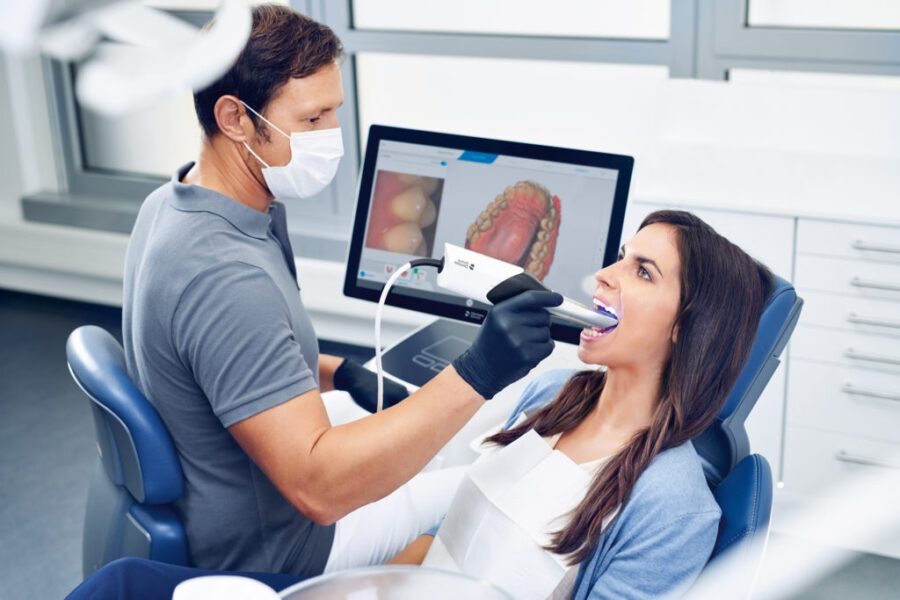
Digital dental scanning (or intraoral scanning) utilizes highly developed optical technology to acquire 3D digital data of your teeth and soft tissues. The actual scanning is undertaken with a small handheld optical wand that contains a camera and light source. The wand will be advanced around the inside of your mouth in order to acquire thousands of images per second. AI powered software stitches the images together in real time and generates a high-resolution, full-color 3D image of your mouth in the form of a digital model. This model is then able to be utilized for diagnostic purposes and plan and produce restorations or appliances.
Here are just a few examples of intraoral scanners that are widely adopted in dental practices today:
- iTero
- 3Shape TRIOS
- Planmeca Emerald
- Carestream CS 3700
- Medit i700
Why Digital Scanning Is Replacing Traditional Impressions
The conversion from conventional impressions to digital scanning comes with a number of benefits, for the dental team as well as for the patient.
1. Improved Patient Comfort
Gone are the days of taking impressions with trays that use gluey, gag-inducing material. Digital scanning is both non-invasive and comfortable during the process, as all the patient needs to do is sit back while the scanner takes care of the rest—in under 2 minutes.
2. Greater Accuracy and Precision
Digital scans are able to capture detail at a micron-level, which minimizes the chance of error, distortions, and remake possibilities, therefore producing better-fitting crowns, bridges, aligners, and dentures from the onset.
Traditional impressions can be ruined by a small movement of the patient, or simply an air bubble. Digital technology eliminates these risks.
3. Faster Turn-Around Times
As soon as the scan is finished, the scan can be sent electronically to a lab, or in-house milling unit, with little or no backstage delays. This eliminates the time to ship the physical molds, which takes days. Ultimately speeding up the patient’s care from diagnosis to final placement.
The patient will see his restorations in days and not weeks; in some CAD/CAM cases, as little as hours/days.
4. More eco-friendly and sustainable
Conventional impressions incur a lot of waste: plastic trays, impression materials, shipping containers, etc. Digital scans minimize all of this waste, and allow for a greener, more sustainable option.
5. Real-time visualization and patient education
Digital scanning allows patients to visualize a live 3D model of their mouth on-screen during the scan, allowing dental professionals to communicate more effectively, and allowing the patient to participate in their treatment decision making. The use of visual aids often leads to improved patient understanding of conditions, improved rapport and trust with the provider, and increased patient satisfaction.
6. More effective record keeping and communication
Digital scans are easily saved, retrieved, transferred and shared. If you are changing dental professionals, or a specialist, or looking back years later to assess your treatment, the digital records are just a click away with no risk of damage, changes, or degradation over time.
Digital scans also enable faster and more efficient communication between dental offices, labs and specialists.
Uses of Digital Scanning in Dentistry
Digital impressions are usable in nearly every discipline in dentistry. Here are some examples:
- Restorative Dentistry: Digital scans are used to fabricate a crown, bridge, inlay, onlay, or veneer that will fit better and require less adjustment for fitting.
- Orthodontics: Scanners are used to create digital designs for clear aligners (like Invisalign), monitor tooth movement, and less use of physical impressions during treatment.
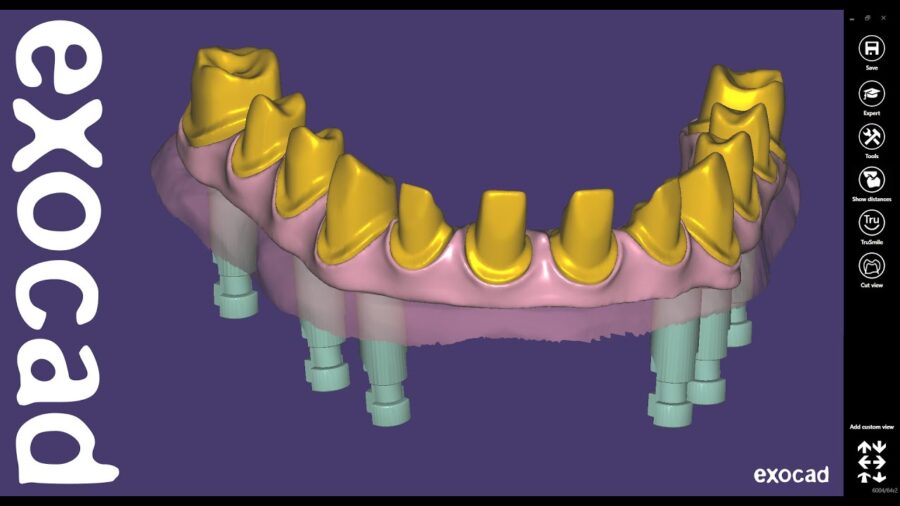
- Implant Dentistry: Digital scanning combines with 3D cone beam CT scans and virtual planning software to assure implant placement is at an ideal position. Also, custom abutments and restorations manufactured with a very precise millimeter level accurately represent tooth position.
- Prosthodontics: From full and partial dentures to implant-supported bridges, digital impressions allow dental labs to create missing teeth that look more natural and fit better.
- Night guards and Sleep Appliances: Scans are not only used for occlusal guards or TMJ splints, but also for any oral sleep apnea devices, which allow less adjustments and they are more comfortable for the patient, too.
Are There Any Drawbacks?
Although scanning digitally has many advantages, it also has its drawbacks:
- Up-front cost to dentists: Intraoral scanners are a huge investment for dentists, costing anywhere from $15,000 to $40,000 or higher.
- Learning curve: Dentists and staff have to be trained to use the scanner correctly and to interpretation the scans accurately.
- Inconsistencies in scanning certain areas: with an excessive amount of saliva present in the mouth, a deep cavity, or limited space in the mouth, some scans might be more difficult than others.
- Still early in development: While scanners are drastically improving at a quick pace in the last 5 years, they still may not completely replace methods like impressions in each and every case where they could, like full arch impressions with edentulous gum.
Nonetheless, as technology continues to improve and become cheaper, these limitations are becoming less and less problematic.
What This Means for the Future of Dentistry?
The shift towards digital scanning is not merely a trend, but a change in the way we deliver dental care. As more dental offices become digital, we can expect:
- Same day dentistry where 3D printing and milling occurs in the office.
- Remote consultations and AI analysis with shared patient scans across clinics.
- An increase in patient experience which will lead to higher satisfaction and retention.
- An increase in personal dental treatment options with better overall data and 3D representation.
Conclusion
Ultimately, digital scanning represents a smarter, faster, and more comfortable future for both patients and dental professionals. No longer will getting a dental impression mean you having to wait with a mouth full of goop. Digital scanning technology is ushering in a new era of accuracy, speed, and patient comfort. If you are having a crown, implant, aligners, or dentures, chances are it will involve a digital impression. For good reason, digital impressions are cleaner, faster, more accurate, and simply better.
So next time you visit the dentist, don’t be surprised if there is no tray and no putty. Digital is now the future of dentists and they’re not going to wait to use it.