
Dental impressions are the most important step in dental procedures. With so many materials and techniques available today, it can be challenging to choose which is right. Whether you’re a dentist or a patient, it is crucial to understand all the options before making your decision. There are various materials that dentists use to take an impression of the patient’s teeth. Each of them has its own set of pros and cons. Before choosing one, you should know about the different types of dental impression materials available and how they work in different scenarios. This article will help you make an informed decision if you’re planning on getting these done for any procedure soon
Who is this article for?
This article is for patients who have been advised a dental impression before crowns, bridges, dentures, aligners, implants, night guards, or full mouth rehabilitation. It is especially useful for patients who feel anxious about impression trays, gagging, taste, discomfort, or the difference between traditional impressions and digital scans. Dental impression materials are selected based on the treatment, accuracy needed, patient comfort, mouth opening, moisture control, and dentist’s clinical judgement.
Why different dental impression materials are used?
Not every dental treatment needs the same type of impression material. Alginate may be used for study models, basic records, dentures, or preliminary impressions. PVS or silicone-based materials are often used when more detail and stability are needed, such as crowns, bridges, implant work, or final prosthetic planning. Digital scans may be preferred when comfort, speed, storage, and repeat checking are important. The dentist chooses the material based on what the final treatment requires.
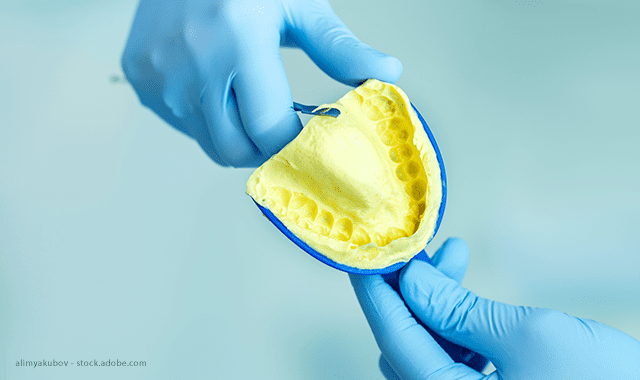
Alginate impressions: Simple and commonly used
Alginate is one of the most commonly used impression materials in dentistry. It is cost-effective, quick-setting, and useful for study models, dentures, orthodontic records, whitening trays, and preliminary impressions. Patients may feel a cold or bulky tray in the mouth for a short time, but the procedure is usually quick. Alginate is helpful for many routine cases, but it may not be the first choice when very high detail or long-term dimensional stability is needed.
PVS and silicone impressions: Used when more detail is needed
PVS and silicone-based impressions are often selected when the dentist needs a more accurate and stable record of the teeth and gums. They may be used for crowns, bridges, implant prosthesis, and detailed restorative work. These materials can record fine margins better than basic preliminary materials, but they still require good technique, moisture control, and patient cooperation. A good impression is not only about the material; it also depends on the dentist’s handling and case planning.
Digital scanning vs Impression material
Digital scanning uses an intraoral scanner to record the teeth and gums without filling a tray with impression material. For many patients, this feels more comfortable and may reduce gagging. It can also be checked immediately on screen and repeated if a small area is missing. However, conventional impressions are still useful in many cases, and the best method depends on the treatment, mouth condition, equipment availability, and dentist’s preference.
Which impression is best for crowns, bridges, dentures, implants?
For crowns and bridges, the impression must capture tooth margins and bite details accurately. For dentures, the impression must record the gums and supporting tissues properly. For implants, the position of the implant and the final teeth design are important. This is why one material cannot be called best for every patient. The safest answer is that the dentist should select the impression method according to the treatment plan, comfort, accuracy, and final prosthesis requirement.
Why is a dental impression necessary?
A dental impression is a 3D record of the teeth and the surrounding areas used for various treatments. The most common reason for taking an impression is for a dental crown. A dental impression allows the dentist to make a crown that fits perfectly. Apart from dental crowns. And bitewings for orthodontic purposes. Bite-wings for orthognathic surgery, and guided surgery. Orthodontic bracket placement, removable partial dentures, retentive mechanisms, fixed partial dentures, orthodontic diagnostics, diagnostic casts, and impression trays.
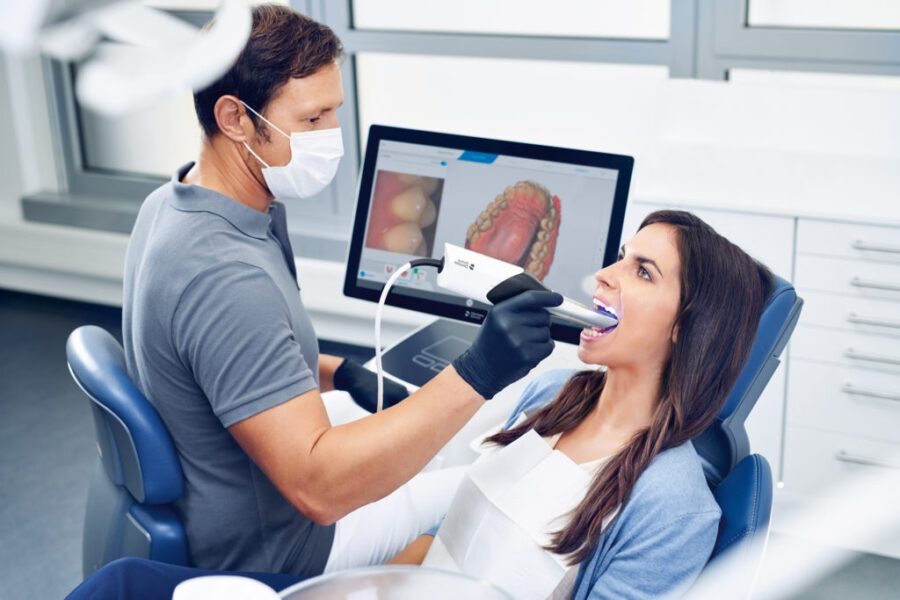
Step-by-Step process for Dental Impression
Step 1: Dentists prepare the patient’s teeth for scans by clearing the area of blood and saliva and dusting the teeth with specially formulated titanium dioxide powder (if the scanner is not powder-free)
2nd Step: They capture a series of digital images or videos using an intra-oral wand that is inserted into the patient’s mouth and moved around the affected area
Step 3: Impression software pieces the images or videos together within seconds and displays the impression image on a chair-side screen
4th Step: Dentists review the digital images and verify the accuracy of the scan
Step 5: The digital impressions are sent to the dental laboratory where the patient’s restorations such as crowns, dentures, and bridges are created
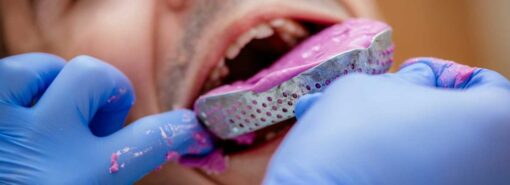
What dental impression materials is used?
Alginate is the most widely used of all impression materials it is a hydrocolloid material made from seaweed. A hydrocolloid material is a gelatinous substance dispersed in water. Alginate is an elastic, irreversible hydrocolloid impression material. Irreversible hydrocolloid impressions form an inseparable part of indirect restorations. and alginate impression is a simple, cost-effective, and indispensable part of dental practice.
Silicone-based materials – Materials in this category are a combination of dental silicone, water, and other additives such as fluorides.
Wax-based materials – People with allergies to silicone can use materials in this category.
3 Stages of Dental Impressions
Preliminary impressions are accurate reproductions of a patient’s mouth. To make a preliminary impression, dentists use a putty-like material that hardens when exposed to air.
Final impressions are used to create an exact replica of your tooth structures and surrounding tissues. This replica is then used to make casts or dyes with the precise details of your tooth structures and surrounding tissues. To make a final impression, dentists use either alginate or silicone-based materials.
Bite registration impressions are used to capture how your upper and lower teeth fit together (aka your bite). To make a bite registration impression, dentists use materials like vinyl polysiloxane or polyether impression compounds. These materials have a putty-like consistency but harden when exposed to light or heat.
Traditional Dental putty Impression
During this procedure, your dentist dispenses a putty-like dental impression material into plastic or metal trays. Next, they’ll place the trays over your teeth. After a minute or two, the dental impression material sets and hardens. Finally, your healthcare provider removes the trays (and impression material) from your mouth. Your impressions are then sent to a dental laboratory. There, a technician will pour stone into your dental impressions to create a cast of your mouth.
Digital dental impressions
Many dental offices now have the ability to take digital dental impressions. During this procedure, your healthcare provider uses a digital handheld wand to capture thousands of pictures of your teeth and gums. As your healthcare provider passes the wand over your teeth, images of your mouth will come up on a computer screen.
Next, the computer software will stitch the images together, creating a digital, 3D representation of your dental arches. There’s no need for putty when taking digital dental impressions. Your healthcare provider will then electronically deliver your photo files to a dental lab. There, a technician will begin working on your case.
How are Digital Impressions created?
A digital impression can be captured by a series of digital photographs or by a digital video. Both methods capture precise measurements in the mouth and send numerous small images that are immediately stitched together by the digital impression machine’s software to form a precise map of your mouth. Most of the time patients can view these images on a chair-side monitor.
What to look for in good impression material?
Impression material needs to be durable, accurate, and easy to manipulate. Based on these three criteria, you can identify the best impression material for yourself. If you’re a dentist looking to buy or if you’re a patient, we’ve given you a list of things to look for in a good impression material:
Durability – The impression material is often in contact with water, saliva, and chemicals, which makes it susceptible to wear and tear. It is important to choose an impression material that is long-lasting and resistant to chemicals.
Accuracy – To be an accurate and valuable material, it should be able to replicate the patient’s teeth. For example, a crown that fits perfectly will not only look good but also last longer than one that doesn’t.
Usability – An impression material should be easy to use. The more difficult it is to use, the more time-consuming it is for the dentists, which can lead to inaccurate impressions.
Silicone-Based Material for Dental Impression
Silicone-based impressions are the most commonly used materials in the dental profession. They can be used for any stage of the treatment, be it for a bitewing. A retainer, a crown, or even a diagnostic casting. Silicone-based impressions are accurate, durable, and easy to use. They can be used on patients with sensitive skin. Immune-compromised patients, and those with allergies to latex. Extraoral, and diagnostic impressions.
Wax-Based Impression Material
Bite registrations, bite-wings for orthodontic purposes, bite-wings for orthognathic surgery, and guided surgery. And orthodontic bracket placement. Removable partial dentures, retentive mechanisms, fixed partial dentures, orthodontic diagnostics, diagnostic casts, and impression trays. Wax-based impressions are accurate, durable, and easy to use. They are also easy to manipulate and clean. Wax-based impressions are an all-around good impression material.
Hand-Moulded Impression Material
They are accurate, durable, and easy to use. Hand-moulded impressions are not as commonly used as silicone-based or wax-based impressions. This is because they are difficult to manipulate and require specialized equipment.
What is the most common use for alginate?
The most common uses of the alginate impression are to get a study model, get an impression from opposing teeth, for bleach trays, preliminary impressions for partial and total dentures, orthodontic models, preliminary impressions for crowns, bridges and more.
How the Dental Impressions Made?
Physical dental impressions are still the gold standard in dentistry. It is a normally a painless procedure. It takes about 10 mins for the complete process. Here the common steps to be taken care while making physical dental impressions:
1: Choosing the right tray size
The first and the most important step is to choose the size of the impression tray. They can be metallic or also in plastic. They punched or smooth. The metallic ones sterilized in an autoclave. The impression trays should not hurt your gums. After this step the impression material loaded onto the tray.
2: Which impression material would the dentist use
Certainly there’re many types of dental materials which used not very important as a patient to know which material being used. Just beware that sometimes these impression materials can overflow into the throat. Because It may cause a gag reflex. Hence, don’t have embarrassed about the same. Your dentist trained to handle these situations.
- Use of local anesthesia numbing agent.
- Cold water gargle.
- Making impressions in a sitting position.
- Use of rubber base impression material or dental impressions
- Use of a custom made tray or a lower impression tray for upper as well.
3: The actual dental impression
The tray with the impression material then inserted into the mouth and seated over the teeth. Once they seated in place held in position for a few minutes. Once set the impression snapped out. It is a completely painless procedure. After this step the dentist will sterilize the impression and then create a cast or a model.
FAQs
Are dental impressions painful?
Dental impressions are usually not painful, but some patients may feel pressure, fullness, taste discomfort, or gagging while the tray is in the mouth. The procedure is usually short. Patients with strong gag reflex can ask the dentist about smaller trays, breathing tips, faster materials, or digital scanning where suitable.
Is digital scanning better than dental impression material?
Digital scanning is often more comfortable and faster for many patients, especially those with gag reflex. It also allows the dentist to check the scan immediately. However, traditional impression materials are still useful and accurate in many dental procedures. The better option depends on the treatment, mouth condition, material requirement, and dentist’s clinical judgement.
Summary
An impression is the most important step in dental procedures. Dental impressions are the most important step in dental procedures. There are various materials that dentists use to take an impression of the patient’s teeth. Each of them has its own set of pros and cons. If you’re a dentist looking to buy or if you’re a patient, we’ve given you a list of things to look for in a good impression material – durability, accuracy, usability, and contaminant resistance. They are easy to use, accurate, and durable.