A permanent dental crown is designed to restore and protect a damaged or weakened tooth, but it does not mean the tooth can be treated exactly like an indestructible surface. Patients often wonder whether they can eat chips, nuts and other crunchy foods after receiving a crown. In general, occasional chips may be possible once the crown has been permanently fitted and your dentist has cleared you to eat normally, but very hard or crunchy foods can place greater forces on teeth and restorations. This guide explains how chips may affect a dental crown, which foods to be cautious with and how to care for your crowned tooth.
Who Is This Article For?
- People who recently received a permanent dental crown
- Patients wondering if they can eat chips with a crown
- People concerned about damaging a dental crown
- Patients looking for foods to avoid with a dental crown
- People experiencing sensitivity after getting a crown
- Patients with a loose, chipped or damaged crown
- Anyone looking for practical dental crown care tips
Is it safe to eat chips after getting Permanent Crown?
As noted above, chips are intended to be eaten with the teeth that are visible when you smile. Therefore, they do not pose a significant risk of damaging your dental crown. If a chip breaks off of your crown, it can be swallowed or lodged in your gums. It is placed on one of your back teeth and does not have as much protection as one placed on the visible front teeth.

This means that the risk of chips breaking off of this is more significant. However, the same risk applies in both cases: if a chip breaks off of a crown, it can travel through your gums and lodge in your tongue.
Can you eat chips with a Dental Crown?
A chip is a crispy snack that goes nicely with a cold beverage on a hot day. But if you have a permanent crown in the front teeth, you should avoid it. Chips (or any other kind of snack food) can get caught in your crown and cause it to chip or even fall off.
When a crown is placed to cover a badly decayed tooth, it is usually larger than the original tooth. It has to be so that it can cover the hole left by the decayed part of the tooth. This larger crown will be more difficult to chew than a tooth with a filling. Chips, in particular, are likely to get stuck between the crown and the adjacent teeth.
Concerns about eating Chips with Permanent Crown?
Crowns both restore teeth by creating a stronger structure that is able to withstand more wear and tear than an untreated tooth. Any hard or crunchy foods should be limited when a dental crown is in place. The problem with hard foods is that they require a lot of force to bite and breakdown. Although we use strong materials to fabricate the dental crowns for our patients, they are still susceptible to damage.This means that chips are less likely to cause long-term damage than crowns.
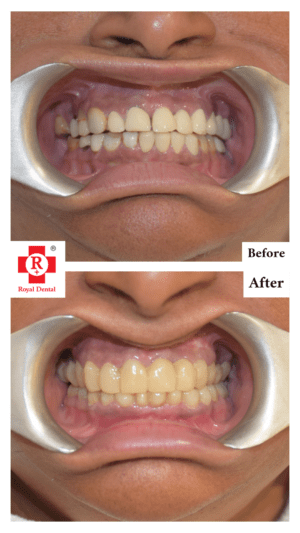
What are the dangers of breaking a crown while eating?
The real danger of consuming chips is that if the crown breaks off, it can travel through your gums and tongue. While this is not common, it is still a potential risk. Chips are not intended to be eaten with the permanent teeth on which you have a crown. You receive advice from your dentist not to chew on crunchy and sticky foods with temporary crowns because they will likely break or pull off with high force. The problem will likely encounter you if you decide to return to your regular diet after the anesthesia wears off. In addition, do not eat celery sticks, carrots, nuts, popcorn or any other hard or crunchy foods; they may chip or dislodge the dental cap. Stay away from these foods for the first 24 hours after the crown is fitted.
Conclusion
You can generally eat chips with a properly fitted permanent dental crown, but that does not mean every hard or crunchy food is risk-free. Chips should be eaten carefully, particularly if they contain very hard pieces. Sticky foods, hard candy, ice and other foods that require excessive biting force are better avoided or limited. Good crown care also involves brushing twice daily with fluoride toothpaste, cleaning between your teeth and attending regular dental check-ups. If your crown becomes loose, chipped, painful or falls out, contact your dentist rather than continuing to chew normally on the affected tooth.
Frequently Asked Questions
Can you eat chips with a permanent crown?
Yes. Once your permanent crown is properly fitted and your dentist has cleared you to eat normally, you can generally eat chips. However, chips are crunchy, so avoid unusually hard pieces and excessive biting force.
What foods should you avoid with a permanent crown?
Be cautious with extremely hard, sticky or very crunchy foods such as ice, hard candy, very hard nuts and sticky sweets.
Can chips break a dental crown?
A very hard piece of food or excessive biting force can potentially damage a dental restoration. If your crown chips, cracks or becomes loose, contact your dentist for an assessment.
Can I eat normally after getting a permanent crown?
In many cases, yes, after the crown has been permanently fitted and any anaesthetic has worn off. Your dentist may provide specific instructions based on your tooth and restoration.
What should I do if my dental crown comes off?
Avoid chewing on the affected tooth, keep the crown safe and contact your dentist. Do not rely on DIY permanent adhesives to reattach the crown. NHS guidance also recommends dental assessment after a crown is lost.