Another key aspect that frequently appears in the fragile arena of dentistry where science and art intersect is the dental impression. Think of the impression as the first stroke of a paintbrush onto a white canvas… the beginning of an amazing masterpiece. While you’re bound in the comfort of the dentist chair, and wondering whether it will hurt or what tooth issues you may have, you have no idea of the exotic gymnastics of dexterity and skill that you are about to witness. Today we will enter the extraordinary universe of dental impressions, and learn the beauty that connects the art and science of your dentist’s craft.
What is a Dental Impression?
Dental impressions are negative casts your dentist takes to help accurately capture the anatomy of your teeth and the surrounding tissues, similar to the pictures the dentist takes of your mouth. a dental impression demonstrates a negative or cast impression such as a mold for a sculpture. Inn the impression capturing process, certain materials are used to stamp your teeth in a way to replicate the individual curves, shapes, and positions for each tooth.
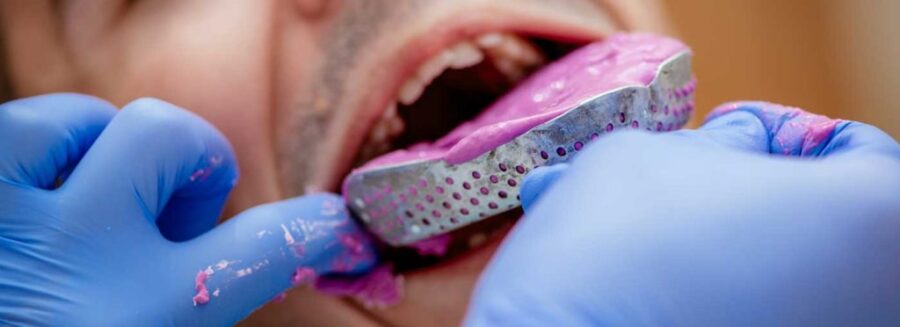
Dental impressions are used to provide the dentist with a true and physical representation of your mouth’s anatomy, Using this negative representation, dentists obtain an accurate representation of the shape of your teeth and the surrounding structures, for different types of dental treatment.
Types of Dental Impression
Conventional Impressions
Alginate: Alginate impressions for crowns and bridges are made with a combination of alginate powder and water. The materials are able to capture an initial impression of the teeth and the surrounding structures.
Putty: Putty is used for making impressions of bridges, which is a pliable material people will be familiar with in a soft, malleable state. Dentists will use this material to take detailed impressions.
Impression Compound: Impression compound is a heat activated thermoplastic material, suitable for full dentures, that softens when heated; it is designed to assist in recording a general shape of oral structures.
Zinc Oxide Eugenol Paste: Used only for the last impression, zinc oxide eugenol paste, to obtain replicate detail of a dental prosthesis; it contains zinc oxide and eugenol to ensure accuracy when replicating the oral structure.
Digital Impressions
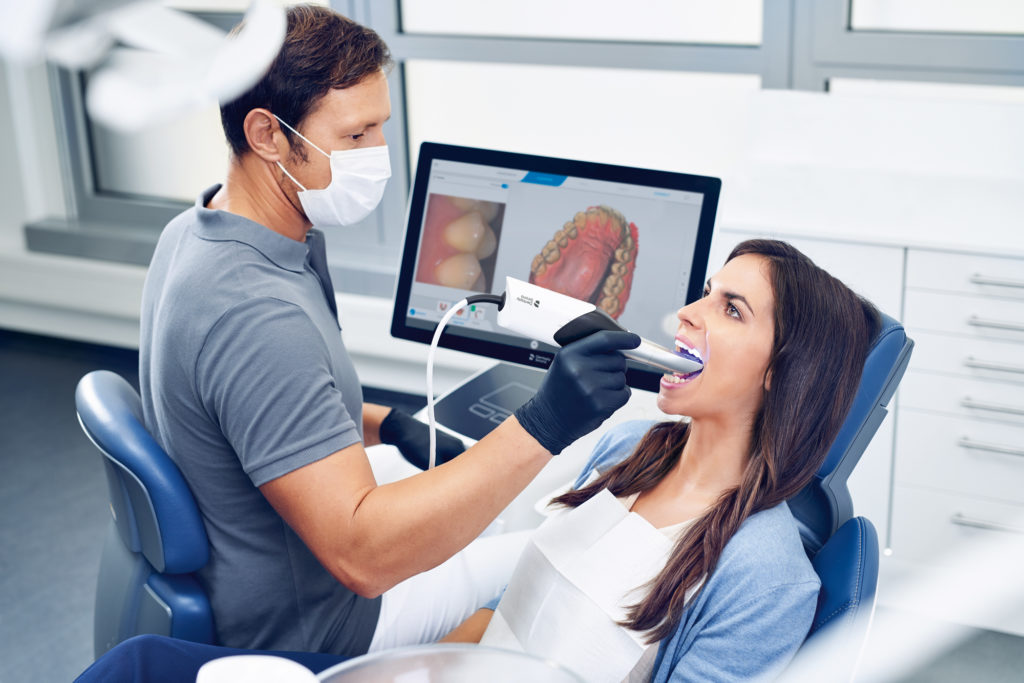
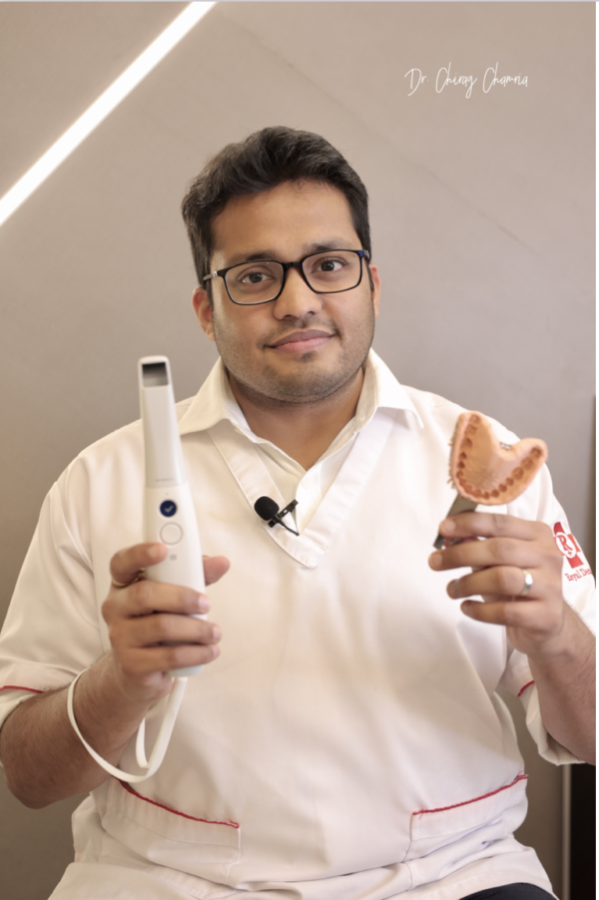
Intraoral Scanning: With the recent developments in the world of dentistry, intraoral scanning technology eliminates the need for the use of impression material. Dentists are now able to obtain a 3D picture of the oral cavity, in a manner that is much more accurate and efficient than traditional impressions using digital scanners.
Dental Impression Making
Impression Trays
In the complex world of dental impressions, proper trays are imperative to properly achieve the features of the mouth cavity. The impression trays exist in two forms that the dentists normally utilize: perforated and non-perforated.
Perforated trays: When the tray is inserted into the patient’s mouth and excess impression material is extruded out of the tray through the holes, excess deformation or distortion will be prevented. This design allows to minimize deformation or distortion of the impression material, and more importantly ensures a consistent dispersion of material.
Non-perforated trays: As the name designation implies, the trays are without holes. It is normally used when a more limited application of imprint material is needed. In circumstances where more precision is required, non-perforated trays are usually used.
Preparation of the Patient
Before the impression-taking process begins, it is essential to prepare the patient, as this lays the groundwork for an effective impression procedure. Here are some factors to consider:
-
Keeping the patient in an upright position while taking the impression will reduce the chance of gagging and discomfort. An upright position will enhance patient cooperation and reduce the irksome nature of the process.
Covering the patient not only gives the patient a sense of privacy but it will also help to create a sterile and controlled environment. This helps create a professional setting and supersedes the need for sterilizer-covered procedures.
If possible, in order to minimize the likelihood to make a perfect impression, it would help the patient to rinse out his/her mouth with water before the impression procedure. The rinse should reduce contamination of any shelves in the mouth, which will ultimately create correct and easy impressions.
Handing a tissue to the patient is a nice touch. It allows the patient to manage any excess water or saliva, and creates a favorable mood and engagement for discussion throughout the procedure.
Alginate Impression Material
Instruments Required
- Plastic Scoop
- Plastic Cylinder
- Perforated Trays
- Mixing Bowl
- Stainless Steel Spatula
Manipulation
-
Even particle distribution: Gently shake the alginate powder to achieve a uniformly even distribution of particles.
Precise volume measurement: For water and powder, use accurate, calibrated measuring tools, with accurate measure.
Wet the alginate: Place the measured water in a dry, clean bowl. Gradually pour in the powder to wet the powder evenly.
Mixing: After mixing the alginate for the allotted amount of time, use a firm spatula to ‘sweep’ the alginate mass against the sides of the bowl to help avoid trapping air into mixture.
Loading of Tray
Perforate a tray to allow for a small amount of material to escape through the holes in the tray surface. To smooth out the alginate surface, wet a finger with water, and run it across the surface of the alginate.
After Taking the Impression
Scrape any excess alginate from the mixing bowl and discard in the waste disposal bin. Sterilize all instruments used in the mixing process and cleaning process.
Disinfecting the Impression
Gently rinse the impression under running tap water to remove any material (e.g., saliva) trapped in the impression. Spray the impression with an appropriate disinfectant, and immediately wrap the impression in a paper towel soaked in disinfectant. Pass the impression onto the lab technician for processing.
Dental Impression Compound
Instruments Required
- Bowl
- Hot, Warm Water
- Gauze
- Wax Spatula
Manipulation of Impression Compound
Tray Selection: You need to select the appropriate tray based on the impression you are about to create.
Breaking the Compound: The impression compound can be purchased in sheets, so you will need to break the sheets into manageable pieces. Doing so enables you to soften the compound in the next step.
Softening: You will then need to place the broken pieces of impression compound into warm, hot water to soften. Softening the impression compound is necessary to enable it to become in a pliable and moldable state.
Hand Kneading: You should then soften and hand-knead the impression compound. The hand manipulation ensures equal consistency, which makes it easier to work with.
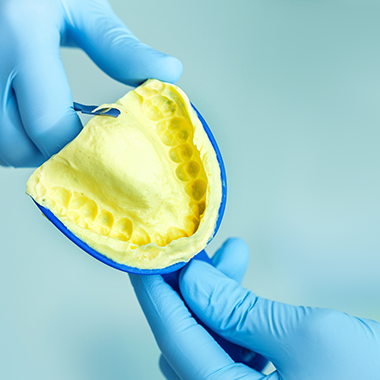
Loading: You are required to load the kneaded impression compound into the selected tray. The process of loading involves placement of the compound to record the desired oral structures.
Performing: You are then to mold the impression compound into the dental arch contours. The performance step allows for a better impression with detail.
Glazing: Once loaded and performed, you can create a smooth surface by glazing over the impression compound. This improves the quality of the final impression.
Tempering: Temper the impression compound to achieve the maximum hardness and stability. This is usually accomplished by cooling the material to retain its shape and structure.
Zinc Oxide Eugenol Impression Paste
Instruments Required
- Glass Slab
- Stainless Steel Spatula
Manipulation
Taking accurate impressions with Zinc Oxide Eugenol impression paste requires the following step-by-step approach:
Mixing Surface: As a mixing surface, preferably use a glass slab, to provide a clean and flat surface to manipulate the impression paste.
Two Separate Pastes: The Zinc Oxide Eugenol Impression Paste consists of two separate pastes. For this step, extrude two similar-length and width ropes of paste onto the mixing slab.
Mixing Tool: Use a stainless steel spatula as a mixing tool. The spatula is an essential tool for well mixing the two different pastes.
Mixing Pastes: Mix the two ropes of paste with the spatula until the colour is even. Complete mixing is essential to achieve homogeneity and consistent in the final impression material.
Putty Impression Materials
Mixing
To achieve accurate impressions with putty impression materials a specific mixing process needs to be followed based on the consistency of the materials. There are two methods of mixing that are frequently advocated.
Using a Proper Pad and Spatula (Light-Medium Consistency):
For light to medium consistency putty materials the best method for mixing entails the use of an ideal mixing pad and spatula.
Weight out or dispense the appropriate amounts of putty onto the mixing pad.
Using the spatula, mix the putty together by scraping with the spatula to achieve an even consistency by homogeneously blending the two parts to get an even distribution of material throughout the mass. This will help with the accuracy of the impression.
Hand Kneading (Heavy or Putty Consistency):
Heavy or putty consistency putty materials are mixed differently.
Place the amount of putty indicated onto a clean surface.
Knead by hand using the heat and pressure of your hands to manipulate the material into a malleable, homogeneous material by moving and stretching it.
The process is simply manual but enables you to mix and prepare the material in a homogeneous fashion.
Intraoral Scanner
Intraoral scanners provide a precision process to capture models associated with orthodontic treatment with braces, aligners, and mouthguards. An intraoral scanner is a way to take three-dimensional impressions of a patient’s mouth that can be used to create diagnostic models and treatment planning. Once developed, the three-dimensional impressions can then be sent to a dental lab to fabricate oral appliances, and orthodontic appliances.
Usage and Significance
Intraoral scanners provide an accurate means to capture models necessary for orthodontic treatments like braces, aligners, and mouth guards. The scanner enables the creation of 3D impressions of a patient’s mouth, serving as a valuable tool for diagnostic models and treatment planning. The obtained 3D impressions are seamlessly transferred to a dental lab for the fabrication of various dental appliances.
Steps to Register a Patient in Medit Link Software
- Begin by opening the Medit Link software.
- Within the software, locate the case box and initiate a new case.
- Input relevant patient details, including the patient’s name and company name. The company name, in this case, is “RDC,” representing Royal Dental Clinics.
- Complete the registration process and initiate the scanning procedure.
- Upon scanning, choose the option for intraoral scanning.
- Proceed to the arch section, and specifically select the maxilla (upper jaw).
- Within the maxilla, commence with the creation of the diagnostic model.
- Repeat the same steps for the mandibular (lower jaw).
Disinfection of Intraoral Scanner
Manual Cleaning: Start by hand cleaning the tip under running water with soap. If needed, you can use a brush for adequate cleaning.
Rinse and Dry: Rinse the tip under running water and allow it to dry adequately before proceeding.
Sterile Wrap: Place the tip inside the sterile wrap for something that will keep it clean.
Autoclave Sterilization: Last Sterilize the tip with an autoclave making sure the tip is safe for autoclave with a maximum of 150 rated limits.
Points to Remember
The intraoral scanner require special considerations when cleaning procedures are being followed. When handling the scanner please ensure that the case is properly closed and locked to avoid any damage to the intraoral scanner.
Conclusion
As we come to the conclusion of our journey through the world of dental impressions, it becomes clear that there is an art form hidden behind the coat and clinical environment afforded to healthcare, an art form created by artisans like Dr. Chirag Chamria. Your journey through oral wellbeing starts with your dental impression, which by itself is a reflection of art. So, the next time you find yourself in that chair, take one moment to visualize the craft, dexterity, skill, and artistry involved in rendering the ideal smile. Your dentist is an artist who is painting on the canvas of your oral wellbeing, not a medical doctor.