
A one-day dental treatment is a highly efficient way to receive dental care. Not only will you save time by receiving your treatment in a single day, but you will also receive high-quality care. Treatment experience, discomfort, healing and suitability vary between patients. Some procedures may be completed in one visit, while others require staged treatment because of infection, insufficient implant stability, bone augmentation, complex gum disease or medical considerations. Overall, receiving dental treatment in a single day offers many benefits. As you can see, a one-day dental treatment is a complex yet rewarding process. You must be aware of each step to ensure that you are receiving the best dental care possible. With a better understanding of the process, you can be confident that a one-day dental treatment is right for you.
Initial Consultation for One day dental treatment
The first step in a one-day dental treatment is the initial consultation. You will meet with your dentist for a consultation during which you will discuss your dental concerns and goals. Your dentist will review your medical history to make a recommendation for a treatment plan. This initial consultation can be conducted in person or over the phone if you are unable to visit your dental office. The initial consultation is an important part of the one-day dental treatment, as it is the first step towards better dental health.
Dental Treatment Procedure
Stage 1: Consultation and Medical Review
- The patient’s concerns and expectations
- Dental and medical history
- Current medicines and allergies
- Previous dental treatment
- Smoking, diabetes and other relevant risk factors
- Available treatment alternatives
- Expected benefits, limitations and costs
Stage 2: Clinical Examination and Imaging
- Teeth and existing restorations
- Gums and supporting tissues
- Bite and jaw relationship
- Available space
- Bone and soft-tissue condition
- Smile line and facial appearance
- Intraoral X-rays
- OPG
- CBCT scan
- Clinical photographs
- Bite records
- Relevant blood investigations
Stage 3: Written Treatment Plan
After reviewing the findings, the dentist explains which teeth can be preserved, which may require treatment and whether any tooth is considered non-restorable. The patient should receive treatment options, material choices, anticipated timeline, risks, limitations, maintenance requirements and estimated cost.
Stage 4: Consent and Pre-Treatment Preparation
- The agreed treatment
- Consent
- Medication instructions
- Anaesthesia or sedation requirements
- Prosthesis design and material
- Shade and tooth appearance
- Expected completion time
- Alternative plan if same-day completion is not clinically possible
Stage 5: Dental Treatment
- Treating decay or infection
- Root canal treatment
- Preparing teeth for restorations
- Extracting non-restorable teeth
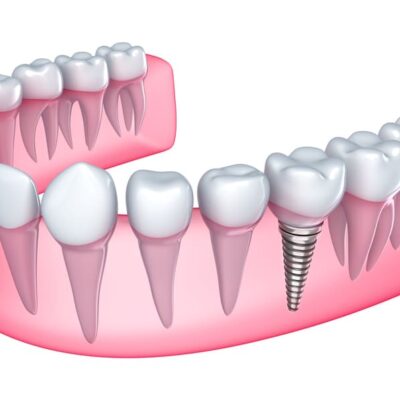
- Placing implants
- Managing gum or bone tissues when required
- Taking a final digital impression
- Recording the bite

Stage 6: Digital Design and CAD-CAM Fabrication
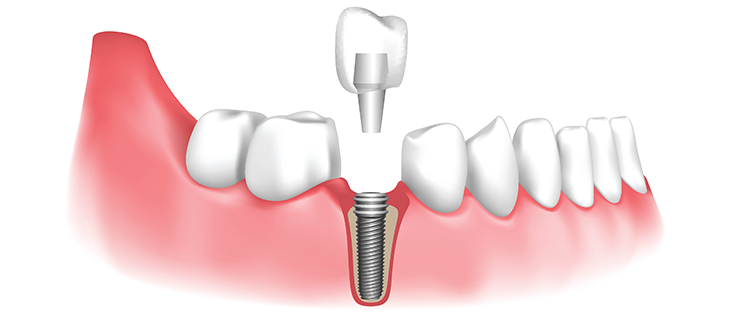
After tooth preparation or implant placement, a digital scan records the teeth, implants, gums and bite. The dental team and laboratory then design the restoration. Depending on the case, the crown, bridge or full-arch prosthesis may be milled, printed, characterised and finished within the same facility. This is where you should highlight Royal Dental Clinics’ in-house technology:
- Digital scanning
- CAD-CAM design
- In-house dental laboratory
- Milling and 3D printing
- Coordination between dentist and technician
- Ability to make same-day modifications
Stage 7: Trial, Fit and Bite Adjustment
- Fit and stability
- Tooth shape and shade
- Smile appearance
- Speech
- Comfort
- Bite contacts
- Cleansing access
- Prosthesis strength and thickness
Avoid saying that a restoration is simply attached using cement. Implant restorations may be screw-retained or cement-retained, and tooth-supported restorations require treatment-specific bonding or cementation.
Stage 8: Delivery and Aftercare Instructions
Once the clinical and technical checks are complete, the restoration is fitted. The patient receives instructions regarding diet, brushing, cleaning around implants, medicines, warning signs and follow-up visits.
Stage 9: Follow-Up and Healing
One-day treatment does not remove the need for review. Follow-up allows the dentist to monitor healing, reassess the bite, check gum health and make adjustments where necessary. Possible review intervals may include:
- An early post-treatment review
- A healing assessment
- Bite and prosthesis evaluation
- Periodic professional maintenance
Use the treating dentist’s actual protocol rather than presenting one schedule as universal.
The last pre-treatment preparation before your dental treatment is the taking of dental x-rays. The x-rays reveal the condition of your teeth, gums, and supporting structures. They also help your dentist spot areas of decay that may have gone unnoticed in the cleaning. Once these steps are completed, your dentist will discuss your treatment plan with you once more and create a dental treatment plan. This plan details the steps of your dental treatment as well as the materials that will be used.
Dental X-Ray
Dental imaging helps identify conditions that may not be visible during a clinical examination. Depending on the treatment, the dentist may recommend an intraoral X-ray, OPG or CBCT scan. Imaging is selected according to individual clinical need rather than automatically prescribed to every patient.
An intra-oral unit is placed inside your mouth and is used to take dental x-rays when treating patients with loose teeth, gum disease, or large restorations. An extra-oral x-ray unit is placed outside the mouth and is used to take dental x-rays when treating patients with periodontal disease, impacted teeth, or orthodontic patients.
What Treatments Can Be Completed in One Day?
- Dental fillings
- Selected root canal treatments
- Same-day crowns, inlays or onlays
- Selected veneers or cosmetic restorations
- Tooth extraction with immediate replacement
- Immediate implant placement in suitable cases
- Immediate restoration or loading of dental implants
- Selected full-mouth rehabilitation
- Repair or replacement of certain dental prostheses
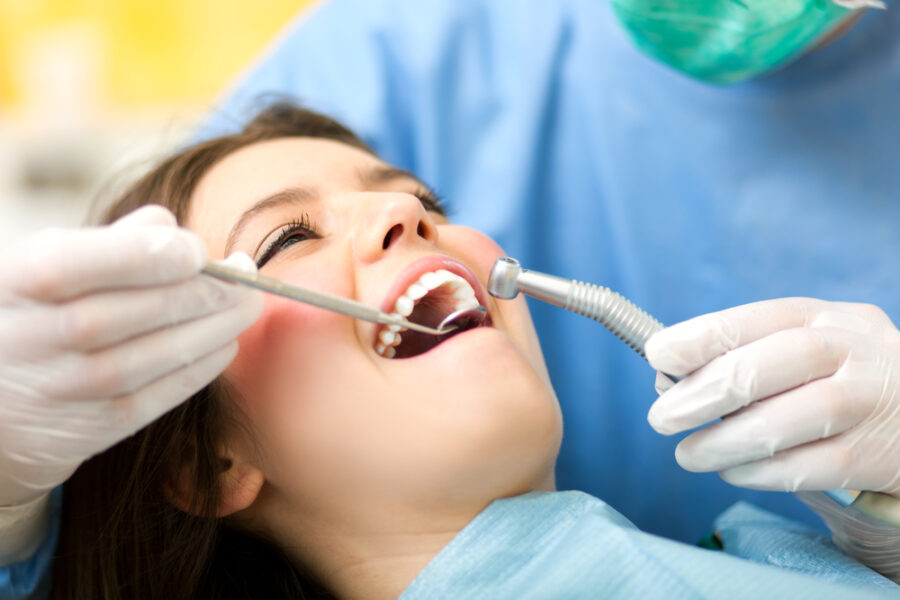
What Does “Teeth in One Day” Mean?
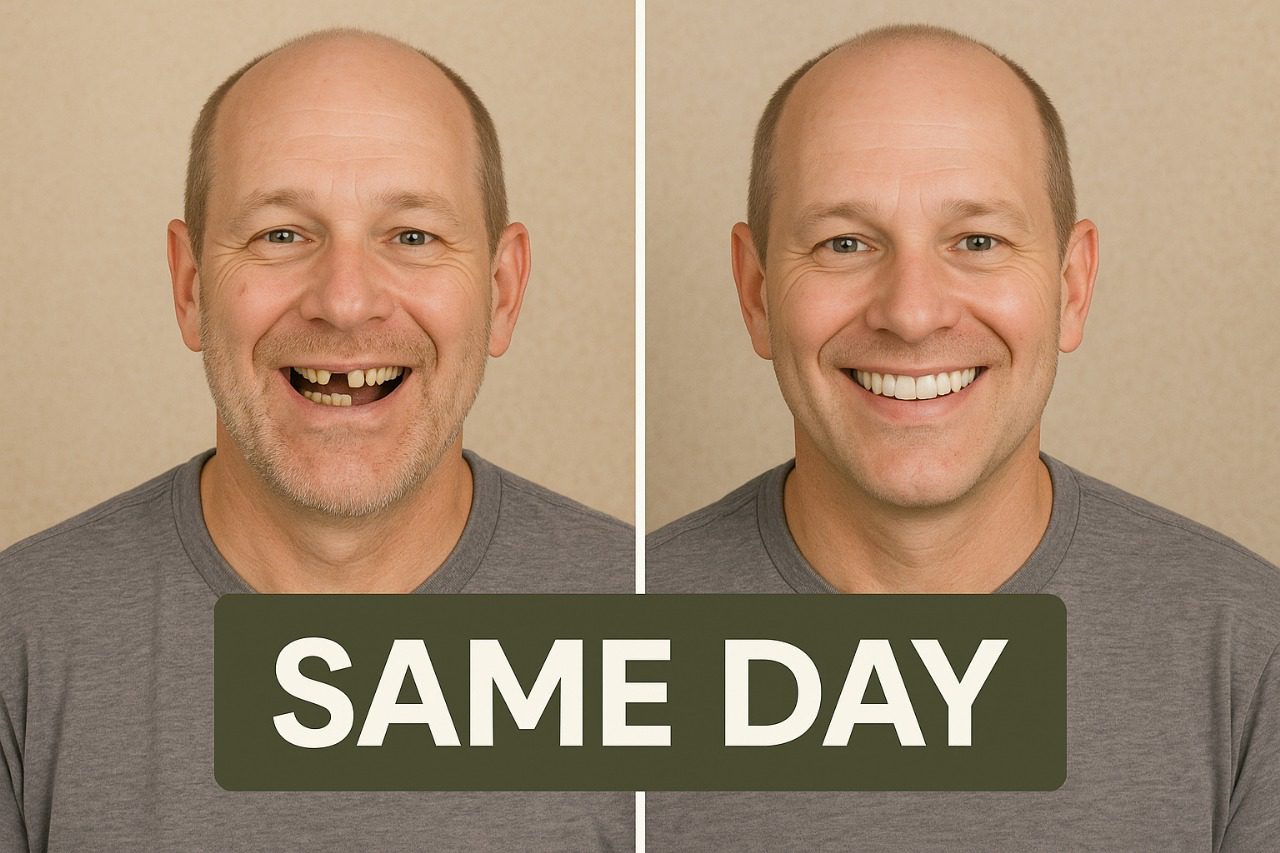
“Teeth in one day” generally means that implants and a fixed dental prosthesis are provided within the immediate treatment period. It does not mean that the implants have biologically healed in one day. Osseointegration continues over the following weeks and months. The same-day prosthesis may be provisional or definitive depending on the diagnosis, material, implant system, bite, treatment protocol and clinical judgment. Patients should ask which type of prosthesis they will receive.
Aftercare Tips
After completing your dental treatment, you will need to follow a few aftercare tips to ensure the best possible results. First, make sure to eat a healthy diet that is rich in fresh fruits and vegetables. Healthy eating habits will not only help you to feel better but will also strengthen your teeth. Next, drink plenty of water throughout the day. Water will help to keep your mouth from becoming dry and may prevent bacteria from developing.
You should also chew sugar-free gum, which can help to reduce bacteria in your mouth. When brushing your teeth, you should brush for two minutes and use a soft-bristled toothbrush. You should also replace your toothbrush every three months or after every illness.
Conclusion
A one-day dental treatment is a highly efficient way to receive dental care. Not only will you save time by receiving your treatment in a single day, but you will also receive high-quality care. Treatment experience, discomfort, healing and suitability vary between patients. Some procedures may be completed in one visit, while others require staged treatment because of infection, insufficient implant stability, bone augmentation, complex gum disease or medical considerations. Overall, receiving dental treatment in a single day offers many benefits. As you can see, a one-day dental treatment is a complex yet rewarding process. You must be aware of each step to ensure that you are receiving the best dental care possible. With a better understanding of the process, you can be confident that a one-day dental treatment is right for you.
Suggested Article:
Medical Disclaimer
This article is for patient education only. Dental treatment should be planned after clinical examination, medical history review, and X-rays or scans where required. Treatment suitability, cost, timeline, healing, and results vary from patient to patient.