
When it comes to missing teeth, the idea of bone grafts may seem like a no-brainer. After all, what else are we supposed to do when that front third molar goes kapow on us? The good news is that modern dentistry has come so far in the last few decades alone that you don’t need to go through life with a toothless smile. The even better news is that there are plenty of ways to avoid needing bone grafting for missing upper teeth. Here are 5 of them:
Ways to Avoid Grafts for Upper Missing Teeth is a common concern for patients who have missing teeth in the upper jaw and are worried about bone grafting before dental implants. In some cases, grafting may be avoided with proper implant planning, available bone support, sinus evaluation, and alternative treatment options suggested after a dental scan and consultation.
Who is This Article For?
This article is for patients who have upper missing teeth and are worried that they may need bone grafting before dental implant treatment.
This blog helps patients learn about oral hygiene, implant specialist consultation, overdentures, smaller temporary options, and why proper examination, X-rays or scans are needed before deciding whether bone grafting is actually required.
Why Is Bone Grafting Commonly Advised in the Upper Jaw?
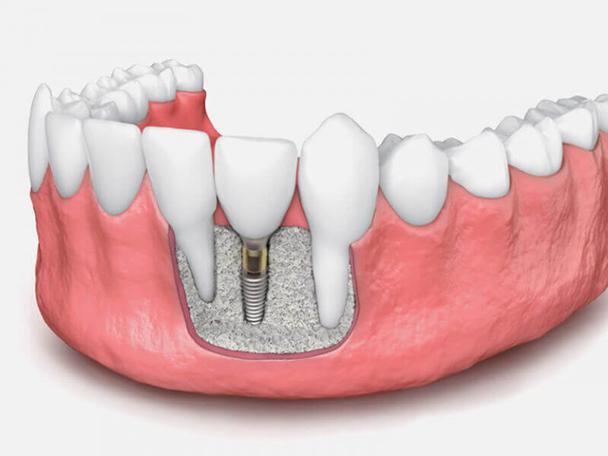
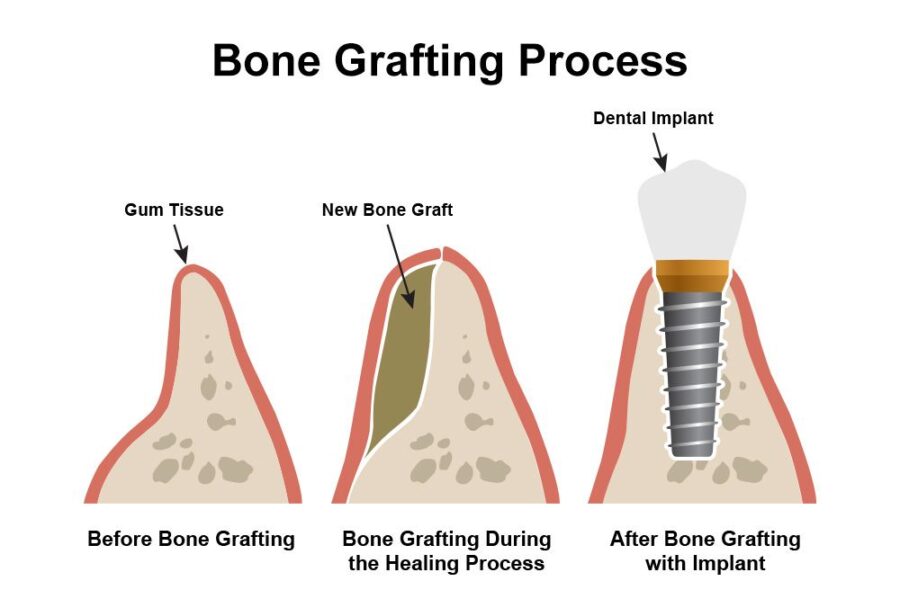
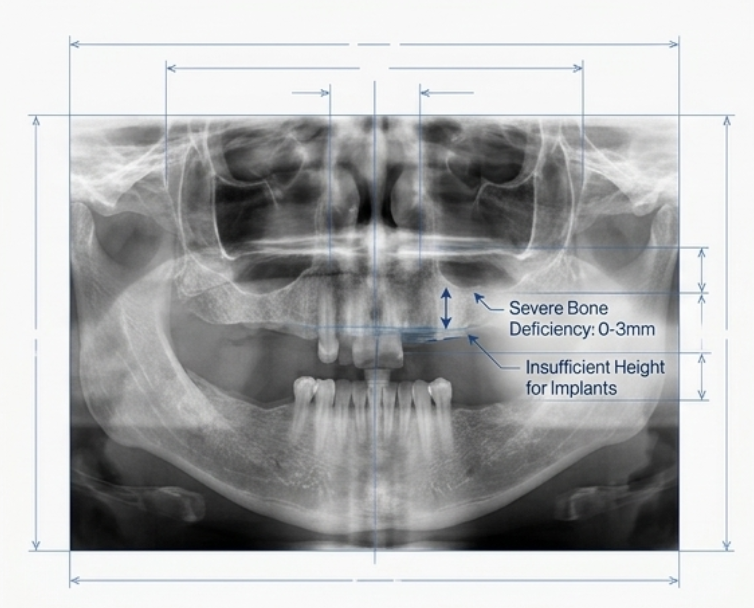
After upper teeth are lost, the supporting jawbone may gradually reduce in height and width. In the back of the upper jaw, expansion of the maxillary sinus can further limit the bone available for conventional implants. A sinus lift or bone graft may therefore be recommended to create sufficient support and allow the implants to be placed in a prosthetically favourable position. However, bone grafting is not automatically required whenever bone loss is present. The decision depends on the amount and distribution of the remaining bone, the number of missing teeth, sinus anatomy and the type of final teeth being planned.
Which Implant Options May Help Avoid Bone Grafting?
Depending on the pattern and severity of bone loss, possible graftless or reduced-graft options may include short implants, tilted implants, pterygoid implants and zygomatic implants.
Short implants may be considered in selected areas where the jaw has sufficient width but reduced height. Tilted implants may help use available anterior or posterior bone while avoiding anatomical structures. Pterygoid implants obtain anchorage in the back of the upper jaw and may reduce the need for sinus grafting in selected full-arch cases. Zygomatic implants obtain support from the cheekbone and are mainly considered for severe upper-jaw atrophy. These options have different indications and should not be treated as interchangeable.
Who May Be Suitable for a Graftless Approach?
Patients with longstanding upper missing teeth, severe bone resorption, loose dentures or a previous recommendation for sinus grafting may be assessed for alternative implant approaches. Planning usually requires a clinical examination and CBCT scan to evaluate bone distribution, sinus health, implant angulation, bite forces and the proposed prosthesis.
A graftless approach may be more relevant for complete or extensive upper-jaw rehabilitation than for every isolated missing tooth. Medical history, smoking, mouth opening and the ability to maintain the final prosthesis must also be considered.
When Is Bone Grafting Still the Better Option?
Avoiding a graft should not become the only treatment objective. Bone augmentation may still provide a better result when it is needed for ideal implant positioning, gum contour, appearance or support of an individual front tooth.
Graftless techniques can reduce additional surgery in suitable patients, but they may involve more complex implant positioning and their own biological or prosthetic complications. Zygomatic implants, for example, are established options for severe maxillary atrophy, but reported complications include sinus-related problems, soft-tissue issues and prosthetic complications.
Can Teeth Be Fixed on the Same Day?
Some graftless full-arch treatments may support fixed provisional teeth on the day of implant placement when adequate primary stability and favourable bite conditions are achieved. The first bridge may be temporary while the implants continue integrating with the supporting bone. Same-day loading is not suitable for every patient. The final decision is made during treatment based on implant stability, bone quality and the clinician’s ability to control pressure on the new teeth.
Be diligent about oral hygiene
If you have teeth that you can still brush and floss, that is reason enough to keep it up. But if you’re upper missing teeth, you’re going to want to be extra diligent about keeping your mouth clean. When you have upper missing teeth, plaque and bacteria can build up, causing your gums to recede. If this happens, your remaining teeth will be more difficult to keep clean. This can lead to more serious health problems, like a condition known as dry socket. When plaque and bacteria build up, they can cause irritation and even infection in your gums. If left untreated, this can lead to gum disease. If you have missing teeth, you’re at a higher risk for gum disease, because your gums may not receive proper cleaning from brushing and flossing.
Meet with an implant specialist
Once your oral health is under control, the next step is to find out if bone grafting is really necessary. The best and easiest way to do this is to meet with a dental implant specialist. They’ll be able to do a very thorough exam and let you know whether bone grafting (and related surgeries) are really necessary. They’ll also be able to assess whether or not you’re a good candidate for implants. If implants are viable, they’ll be able to give you an idea of how many you might need and what placement would best suit your unique bite. They’ll also be able to provide you with an estimate for the cost of the procedure.
See if a denture is a better option
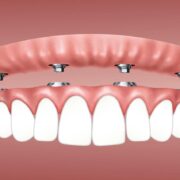
If you’re a candidate for dental implants, you’re probably wondering what the difference is between implants and an overdenture. Implants are a replacement for the tooth root. They allow for natural-looking teeth to be placed in the exact same position as the original teeth. Once in place, these teeth can be cleaned and flossed like normal. An overdenture is a removable aid that holds a partial or a bridge in place. It is secured to your gums and can be removed at any time. However, the fact that it is removable is a disadvantage as well as an advantage. It can be removed for cleaning or to be replaced with a different partial or bridge.

Talk to your dentist about other small options
There are a number of smaller options that might help to fill the gap when you’re missing teeth. These might include: – Using a retainer on your remaining teeth to help keep them in place. – Putting a bonded onlay on the tooth next to the gap. This is a small piece of porcelain that is bonded to the tooth. – Using a space maintainer on the tooth next to the gap. This is a small piece of metal that is bonded to the tooth. These options are not only less invasive but also less expensive. They can be a good way to hold off on the need for implants until your finances are in order.
Conclusion
Finally, it is important to note that you don’t have to live with missing teeth. There are many ways to replace them, including dental implants and overdentures. If you have missing teeth, it is important to schedule an appointment with your dentist to discuss your options. A dental bone graft is necessary when bone loss has occurred in the jaw. This procedure is commonly performed prior to dental implant placement or when bone loss is negatively affecting neighboring teeth.
FAQs
1. Can bone grafting be avoided for upper missing teeth?
Bone grafting may be avoided in some cases, but it depends on the patient’s remaining bone, sinus position, gum health, number of missing teeth, and implant plan. A dental scan and clinical examination are needed before confirming whether grafting is required.
2. Why are grafts sometimes needed for upper teeth implants?
Grafts may be needed when the upper jawbone has reduced height, reduced width, or when the sinus is close to the implant area. Bone grafting can help create better support for dental implants in selected cases.
3. What are the alternatives to bone grafting?
Alternatives may include short implants, angled implants, zygomatic implants, implant-supported overdentures, modified prosthetic planning, or other treatment options depending on the bone condition. The right option can only be decided after proper evaluation.
4. Can I get fixed teeth without a bone graft?
Fixed teeth may be possible without bone grafting in suitable cases. The dentist must first check bone support, implant stability, bite pressure, gum condition, and the type of final teeth required.
5. Is avoiding bone grafting safe?
Avoiding bone grafting is safe only when the alternative treatment plan gives enough implant support and long-term stability. If the bone is not suitable, avoiding a graft without proper planning can increase the risk of implant failure.
6. How do I know if I need a graft for upper missing teeth?
A consultation, dental examination, and X-rays or CBCT scan help determine whether bone grafting is needed. At Royal Dental Clinics, the dentist checks the upper jawbone, sinus location, gums, bite, and missing tooth area before suggesting the safest treatment option.
Medical Disclaimer
This article is for patient education only. Dental treatment should be planned after clinical examination, medical history review, and X-rays or scans where required. Treatment suitability, cost, timeline, healing, and results vary from patient to patient.