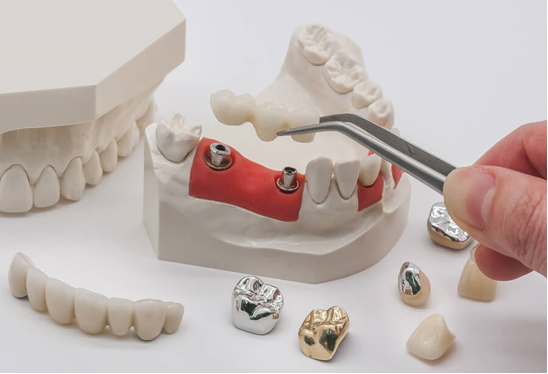
Dental implants have become more common in recent years, as patients have become more aware of their benefits. But who invented them? As with many medical discoveries, the first known reference to dental implants was made by a researcher in the 19th century. The first modern-day implant was developed in the 1960s by a dentist from New Zealand . However, we can also attribute their invention to ancient civilizations such as the Romans and Greeks. They used materials like lead, gold, and ivory for artificial teeth. Let’s read about dental implant invention.
Who Is This Article For?
This article is for patients, dental students and readers who want to understand where modern dental implants came from. It explains the difference between early attempts to replace missing teeth and the scientifically documented titanium implant treatment used today. It may also help patients considering implant treatment understand why titanium, bone integration, implant stability and long-term research are important in modern implant dentistry.
Who Invented Dental Implants?
No single person invented the entire concept of replacing a missing tooth with an object placed in the jaw. Different civilisations and clinicians experimented with tooth replacement over many centuries. However, Professor Per-Ingvar Brånemark is widely recognised as the father of modern dental implantology. His research demonstrated that titanium could form a stable and lasting connection with living bone. This biological process became known as osseointegration and created the scientific foundation for modern dental implants.
Therefore, the most accurate answer is that ancient cultures attempted early forms of implantation, several clinicians contributed to implant development, but Brånemark established the predictable titanium implant system that transformed modern dentistry.
Were Dental Implants Used in Ancient Times?
Archaeological evidence suggests that people attempted to replace missing teeth long before modern dentistry. One important discovery was a lower jaw from the Mayan civilisation dating to approximately the seventh or eighth century. Three missing lower front teeth had been replaced with pieces of shell shaped like tooth roots. Later radiographic examination showed bone formation around some of the shell pieces, suggesting that they had been inserted during the person’s lifetime and had remained in function.
These shell replacements are historically important, but they should not be presented as equivalent to modern dental implants. Ancient practitioners did not have sterile surgery, diagnostic imaging, controlled implant surfaces or a scientific understanding of bone healing.
How Did Dental Implants Develop During the Nineteenth Century?
In 1809, Italian clinician Maggiolo described placing a metal artificial root into a fresh tooth-extraction socket. The device was made from gold and was intended to support an artificial tooth after the area healed.
This is often described as one of the earliest documented attempts to use a metal implant inside the jaw to replace a lost human tooth. The treatment had limited success because knowledge of infection control, biocompatibility and bone healing was still developing.
During the nineteenth and early twentieth centuries, clinicians experimented with gold, platinum, silver, porcelain, tantalum and other materials. Many designs failed because they did not integrate predictably with the bone or caused inflammation and infection.
What Did Per-Ingvar Brånemark Discover?
During research in the 1950s, Brånemark and his team used titanium chambers to study blood circulation and bone healing. They found that the titanium components had become firmly attached to the surrounding bone and could not be removed easily.
Brånemark recognised that this stable biological connection could be used to anchor medical and dental prostheses. The process was later called osseointegration, meaning a direct and stable relationship between living bone and the implant surface.
This discovery was important because earlier implant designs frequently depended mainly on mechanical retention or the formation of fibrous tissue around the implant. Osseointegration made long-term, bone-anchored tooth replacement more predictable.
Was Brånemark a Dentist?
Per-Ingvar Brånemark was a Swedish physician, anatomist and researcher rather than a conventional practising dentist. His work involved bone biology, blood circulation, tissue healing and the interaction between titanium and living bone. His research was later developed in collaboration with dental surgeons, prosthodontists, technicians and other researchers. Modern implant dentistry therefore resulted from multidisciplinary scientific and clinical work rather than the efforts of one dentist alone.
Are All Modern Dental Implants Made of Titanium?
Titanium and titanium alloys remain widely used because of their mechanical properties and ability to achieve osseointegration. Zirconia implants are also available as a metal-free alternative for selected patients and clinical situations. Titanium and zirconia have different properties, implant designs and available treatment evidence. The choice should be based on the implant site, available bone, bite forces, prosthetic requirements and the treating clinician’s assessment rather than only on whether the material is metal-free.
Modern-day dental implants
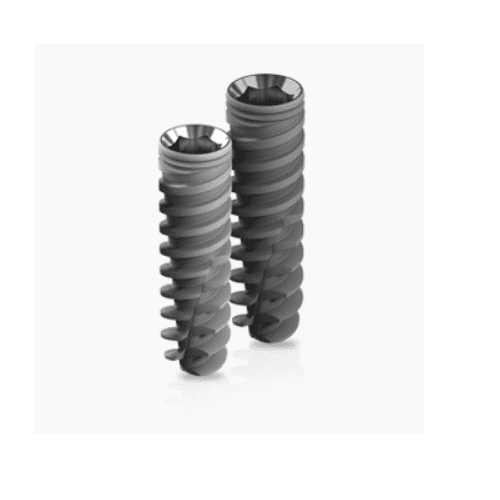
As we’ve explored above, dental implants have a long history. However, the first modern-day dental implant was developed by Murray Spence. The implant he developed is made of titanium and is shaped like a screw. In order to use it, a surgeon first needs to make an incision in the gums. The surgeon then places the implant into the bone. After that, he or she needs to wait for the bone to fuse with the implant. The implant is placed underneath the gum line. This is because if the implant were placed above the gum line, the tissue would likely reject it. If the implant were placed below the gum line, it would be more likely to become infected. After the implant is placed, the surgeon needs to wait for the bone to fuse with the implant. This process can take about 3-6 months.
Conclusion
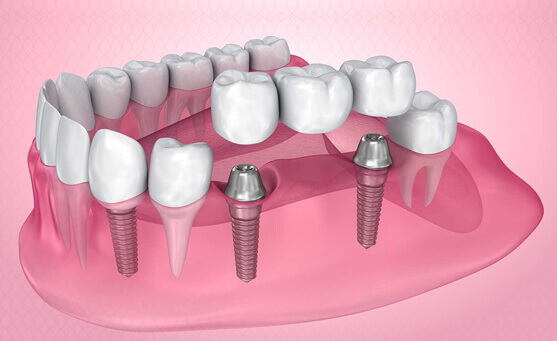
We’ve explored the history of dental implants above. Dental implants are a great option for missing teeth. They can be used for both the upper and lower teeth. Implants can also be used to hold dentures in place. They are an excellent option for people who are missing teeth because they look very natural and are long-lasting.
Medical Disclaimer
This article is for patient education only. Dental treatment should be planned after clinical examination, medical history review, and X-rays or scans where required. Treatment suitability, cost, timeline, healing, and results vary from patient to patient.