
A missing tooth is more than just a cosmetic concern. It can affect your smile, chewing ability, speech, bite alignment, and even the health of surrounding teeth and jawbone. Fortunately, modern dentistry offers several reliable treatment options, including dental implants, bridges, removable dentures, and implant-supported teeth. This guide explains each option, helping you understand which treatment may be most suitable for your needs.
Who is this article for?
This article is for patients who have one missing tooth, multiple missing teeth, or no teeth in one or both jaws and want to understand their replacement options clearly. It is especially useful for patients comparing dental implants, fixed bridges, removable dentures, complete dentures, and implant-supported fixed teeth. Missing teeth should not be seen only as a cosmetic concern because they can affect chewing, speech, bite balance, facial support, confidence, and the health of nearby teeth over time.
Why missing teeth should be replaced early?
When a tooth is missing, the nearby teeth may slowly shift into the empty space and the opposite tooth may start drifting because it no longer has a proper biting contact. This can disturb chewing, create food lodgement, cause bite imbalance, and make future treatment more complicated. Replacing missing teeth early helps maintain function, smile appearance, and stability of the remaining teeth. The right timing depends on the patient’s gum health, bone condition, medical history, age, and whether the missing tooth is in the front or back region.
Single tooth missing: Implant or Bridge?
For a single missing tooth, the two common fixed options are a dental implant with crown or a tooth-supported bridge. An implant replaces the missing tooth without cutting the neighbouring teeth, while a bridge takes support from the adjacent teeth and may be useful when those teeth already need crowns. A bridge can restore the gap faster in some cases, but it requires reshaping nearby teeth. The decision should be made after checking bone, gum health, bite, adjacent tooth condition, cost, time, and the patient’s ability to maintain hygiene. Dental bridges are used to replace missing teeth and restore chewing, appearance, and oral health, while implants support artificial teeth such as crowns, bridges, or dentures.
Multiple missing teeth: Fixed bridge, implant bridge or denture
When several teeth are missing, treatment planning becomes more customised. A removable partial denture may be economical and easy to repair, but it has to be removed and cleaned regularly. A fixed bridge may be possible if strong natural teeth are present on both sides of the gap. An implant-supported bridge can replace multiple missing teeth without depending completely on natural teeth for support. The best option depends on how many teeth are missing, where they are missing, the condition of remaining teeth, jaw bone availability, gum health, bite forces, and the patient’s comfort expectations.
Full mouth missing teeth: Removable vs fixed teeth
For patients with no teeth in one or both jaws, complete dentures, implant-supported dentures, and fixed implant teeth are common options. Complete dentures are removable and more economical, but they may feel loose over time as the jaw bone and gum shape change. Implant-supported options can improve stability, chewing confidence, and comfort in selected patients. A fixed full-mouth solution may be considered when there is enough support from implants and the patient can maintain proper cleaning. The choice should be based on diagnosis, not just budget or speed.
What patients should ask before choosing a missing tooth option
Before confirming treatment, patients should ask whether the replacement will be fixed or removable, how many teeth or implants are needed, whether nearby teeth need cutting, how long the treatment will take, what maintenance is required, and what happens if another tooth is lost later. They should also ask about cleaning methods, expected comfort, food restrictions, repair options, warranty or follow-up protocol, and whether X-rays or CBCT scans are needed. A good missing tooth plan should restore function, look natural, and be easy for the patient to maintain.
Dental Implants as an option for Missing Tooth
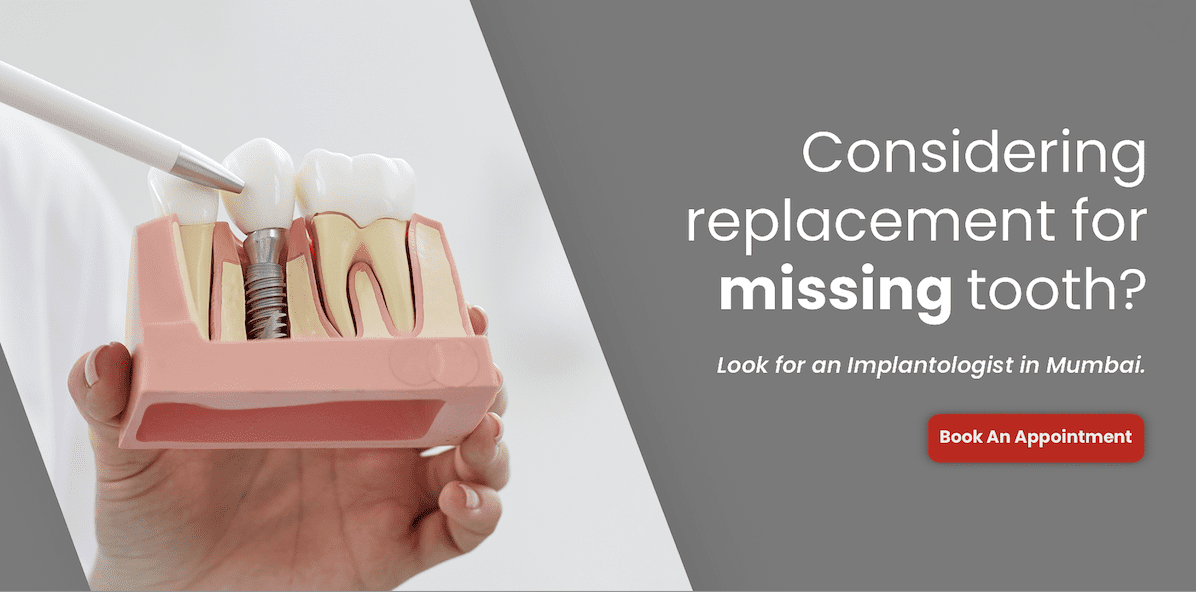
In the past, many patients have lamented losing natural teeth, as dentists were not able to provide an acceptable replacement. But now dental implants have provided a stable fit that has drastically improved the ability of patients to chew and talk. Dental implants are fixed in mouth which gives it an advantage over dental dentures. Dental implants can replace a single tooth or many teeth. It can help patients get back healthy teeth that will make them look and feel young. It is a great way to replace missing tooth and provides a permanent option for the same. A titanium screw fixed into the jaw bone around which the bone forms and the implant fused to the bone over a period of time. A crown resembling natural tooth then replaced over it.
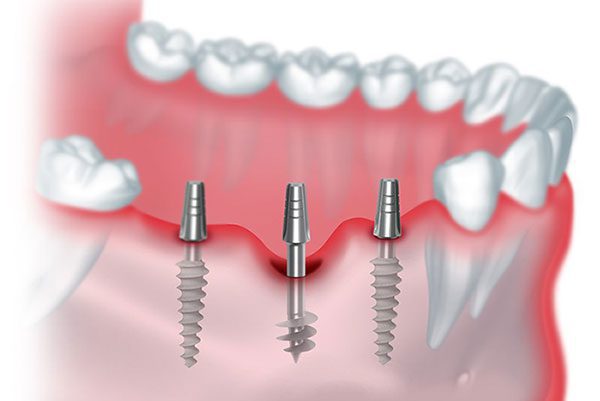
Crowns and Bridges
Crown act as a way to extend the life of an existing tooth that may harmed due to damage or erosion. Dental crowns, or bridges given on a fractured tooth or teeth can save its life. Crowns and bridges are front and back tooth supported shells or bridges. Support taken from the front and back adjacent teeth and crowns placed on the existing teeth and over the missing space.
Advantages of a crown or bridge is that the treatment is less invasive procedure as no surgery required. The treatment for replacing missing tooth in cases go crown and bridges is more economical. Disadvantages of a crown or bridge that the adjacent teeth need to be re-shaped because of which the natural tooth structure lost. Also if the bridge poorly fitted, food lodgement underneath the bridge which becomes very difficult to clean.
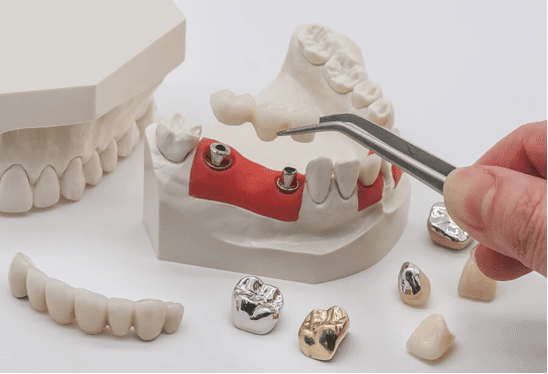
In a bridge, natural teeth used adjacent to the empty space to support a false tooth. More than one tooth, supported by natural teeth. The natural teeth usually shaved or contoured so that a cap placed on it. Such teeth usually known as the abutment teeth. The crowns that reside on each of the natural teeth support the false tooth in between them which also known as the pontic tooth. Bridges can be an excellent solution if the adjacent teeth require crowns for any other reason. Completed in one single day usually. This may require desensitization of the natural tooth.
Advantages of removable partial denture that it’s easy to repair though may take multiple sittings to get the right fit fabricated. Also, teeth added directly if any teeth lost in future. Disadvantages of partial dentures is that it needs to removed and cleaned regularly every night before sleeping. They can be uncomfortable for wearing at times as these dentures do not give a natural appearance.
Complete Dentures
Complete dentures are used for replacing full upper and lower edentulous arches. They can be removable or fixed. Its a tissue supported prosthesis. Denture consists of acrylic gum coloured base too which denture teeth attached. Any patient who doesn’t wish to undergo dental implant surgery can opt for complete denture.
Dentures only hold false teeth on a plastic or metal framework. These frameworks are easily removable. Its specifically designed to fit around the adjacent teeth. The framework usually seen to cover part of the gum tissue or the roof of the mouth. Dentures equipped with rests and hooks that assist in holding the framework. One of the disadvantages of dentures is that these dentures can be sometimes visible when smiling.
All-on-4 implant supported denture
A full arch lower denture fits on the 4 implants and upper denture may require 6 implants for support. Though the denture is removable patient gets the advantage of having fixed teeth. Patients who have significant jaw bone loss can also opt for this option. Advantages of All-on-4 implant supported dentures is that its more stable and almost like a complete fixed denture. Disadvantages of this is that attachments on the fitting surface need to maintained and must be replaced periodically.
All the options presented above, must discussed with the dentist to ensure that they work well for your missing teeth.
Advantages of dental implants over bridges and dentures:
Implants fixed in one place and cant removed every night. This gives them an advantage over denatures. Implants also very aesthetically pleasing without any visible hooks or clasps that seen while smiling. Bridges require natural healthy teeth to be shaved in order to be installed. This is very undesirable and may damage perfectly healthy teeth. If the natural teeth are lost for some reason the entire bridge may also be lost. Implants do not damage or effect surrounding teeth. They are only placed in the position of the missing teeth.
A post attached to the implant which will complete the foundation on which the new tooth placed. These days posts are also placed with the implants. In this phase, an artificial tooth is placed in the implant. With the help of modern dental technology, the new artificial tooth blended perfectly with the remaining natural teeth. The color and shape adjusted perfectly by the dentist.
It takes around 6 minutes to place one dental implant. Implant is usually placed in the position of the missing tooth. The crown is then fixed on the implant. This complete procedure for one or more implants can now be done in a single day. It is important to keep good oral hygiene to ensure the success of the entire procedure. Regular check with the dentist is required to make the implant process for missing tooth successful!
Conclusion
Replacing missing teeth promptly helps restore oral function, improve appearance, maintain jawbone health, and prevent future dental complications. Whether you choose dental implants, bridges, removable dentures, or implant-supported teeth depends on your individual clinical condition and long-term goals. A consultation with an experienced dentist can help you choose the treatment that offers the best balance of function, aesthetics, and durability.
Missing teeth should never be ignored. Whether you have lost one tooth or require full-mouth rehabilitation, the specialists at Royal Dental Clinics can recommend the most suitable treatment based on your oral health, lifestyle, and budget. Book your consultation today and restore your smile with confidence.
FAQs
Which is the best option for replacing missing teeth?
There is no single best option for every patient. Dental implants, bridges, removable dentures, complete dentures, and implant-supported teeth all have different indications. Implants may be preferred when fixed teeth are desired and bone support is suitable, while bridges may be useful when adjacent teeth already need crowns. Dentures may be suitable when a removable and economical option is preferred. A dentist should evaluate bone, gums, bite, medical history, remaining teeth, and budget before recommending the best option.
How long should I wait before replacing a missing tooth?
It is generally advisable to replace a missing tooth as soon as possible after healing to minimise bone loss and prevent neighbouring teeth from shifting.
Which option feels most like natural teeth?
Dental implants usually provide the closest feel to natural teeth because they are fixed within the jawbone and function independently.
Can missing teeth be replaced in one day?
In selected cases, missing teeth can be replaced with same-day fixed teeth or immediate temporary teeth, especially when bone support, implant stability, bite conditions, and medical health are favourable. However, not every patient is suitable for same-day replacement. Some cases may need infection control, gum treatment, bone evaluation, staged treatment, or healing time. The safest plan is decided after clinical examination, X-rays, and treatment planning.