

PRF in dentistry is also associated with Choukroun’s platelet-rich fibrin technique, one of the widely discussed protocols in dentistry. Whenever there a loss of support around the affected teeth, the periodontal ligament fibres and the bone around it also affected. Regenerative procedures need carried out in this region. Regeneration of tissues and fibre expedites the healing outcome after dentistry procedure following periodontal therapy.
PRF, or platelet-rich fibrin, is a concentrate prepared from a small sample of the patient’s own blood. It forms a fibrin matrix containing platelets, white blood cells, and growth factors that may support soft-tissue healing and bone repair after dental surgery. However, this depends on two crucial events: availability of cell types needed and presence or absence of signals necessary to recruit and stimulate the cells. The cascade of healing of any wound initiated by clot formation, followed by proliferative and maturative stage. Growth factors favor wound healing by promoting proliferation of cells (mitogenesis), migration of cells (chemotaxis), and stimulation of new blood vessel formation (angiogenesis).
Who is this article about?
This article is about patients undergoing dental implants, tooth extraction, bone grafting, sinus lift, gum surgery, wisdom tooth removal, or full-mouth rehabilitation, where the dentist may use the patient’s own blood-derived healing concentrate to support recovery.
What is PRF in dentistry?
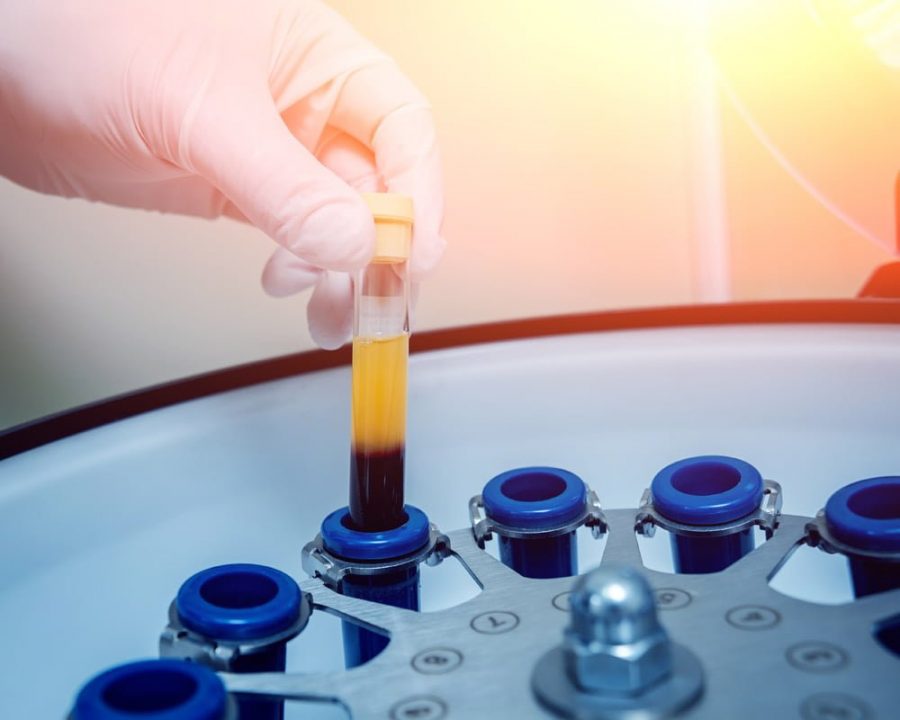
PRF stands for platelet-rich fibrin. It is prepared from a small sample of the patient’s own blood. The blood is centrifuged to separate a fibrin clot that contains platelets, white blood cells, and growth factors.
In dentistry, PRF may be used as a membrane, clot, or injectable preparation depending on the clinical need. Because it comes from the patient’s own blood, it is considered an autologous material. This means the risk of rejection is low, but it still needs proper medical screening and sterile handling.
How does PRF help after dental surgery?
After dental surgery, the body needs a stable blood clot, good blood supply, infection control, and healthy tissue response. PRF may help by acting like a natural scaffold at the surgical site. It may support soft-tissue healing, clot stability, and local tissue repair.
In extraction sockets, PRF has been studied for reducing early discomfort, improving soft-tissue healing, and supporting socket/ridge preservation. However, the result depends on the patient’s health, oral hygiene, smoking status, diabetes control, infection, bone condition, and surgical planning.
Where is PRF used in dentistry?
PRF may be used in selected cases of tooth extraction, wisdom tooth surgery, dental implant placement, bone grafting, sinus lift, socket preservation, gum recession treatment, periodontal defects, peri-implant defects, and full-mouth rehabilitation.
In implant dentistry, PRF is not a substitute for bone, implant stability, or correct implant positioning. It is an additional biological aid that may support healing when used appropriately. A 2024 review described PRF as having potential utility across many oral and maxillofacial surgery applications, while also noting that more studies are needed for some indications.
PRF vs PRP in dentistry
PRP and PRF are both platelet concentrates, but they are not the same. PRP is usually liquid and may require additives depending on the protocol. PRF is commonly prepared without anticoagulant and forms a fibrin clot or membrane.
For patient communication, keep it simple:
PRP is more liquid-based. PRF forms a natural fibrin matrix. Both are used to support healing, but the dentist decides which is suitable based on the procedure.
Who may not be suitable for PRF?
PRF may not be suitable for every patient. The dentist should review medical history, blood disorders, platelet problems, active infection, uncontrolled diabetes, anticoagulant medication, cancer treatment history, immune-related conditions, and smoking habits before deciding.
Patients should inform the dentist if they are taking blood thinners, have low platelet count, bleeding disorders, liver disease, recent fever, or any major medical condition. PRF is made from the patient’s own blood, so the quality of the final PRF can be influenced by the patient’s overall health.
How is PRF in dentistry growth factor made?
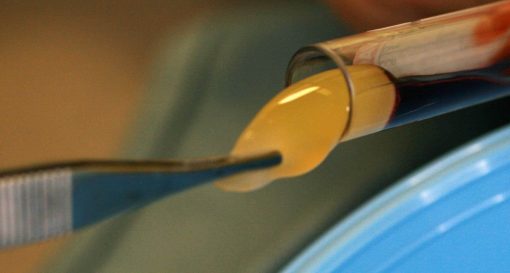
For preparation of PRF, only centrifuged blood without any addition of anticoagulant and bovine thrombin required. Blood sample taken without anticoagulant in 10-mL tubes in a glass or glass-coated plastic tube and immediately centrifuged at 3000 rpm for 10 minutes. In addition, the resultant product consists of the following three layers. Above all, top-most layer consisting of an acellular plasma, PRF clot in the middle, and a red corpuscle base at the bottom. Therefore, compression between two sterile gauzes or in a specific PRF tool, enables the clot to be transformed into a membrane.
What are the uses of PRF in dentistry?
Platelet-rich plasma (PRP) is a new approach to tissue regeneration and promotes healing in many dental and oral surgery procedures, especially in ageing patients. It used for prp tooth extraction, prp dental implants, prp bone grafts and more. Patients’ plasma contains growth factors that influence wound healing, thereby playing an important role in tissue repair. Similarly, PRF used in cases of periodontal regeneration, sinus lift, gingival recession, perio-endo lesions.
Platelet-rich fibrin (PRF) derived from the concentration of the patient’s blood platelets. A simplified chairside procedure results in the production of a fibrin membrane that can stimulate the release of many important growth factors involved during wound healing processes that take place after surgery. PRF is useful in post extraction sockets and can be used in Sinus Lifts. On the other hand PRP can be used in facial rejuvenation and also be used in case of Implantology.
Advantages of using PRF in dentistry:
- Firstly, there is a simplified preparation and efficient technique just before any dental treatment
- Secondly, there is a simplified preparation and efficient technique just before any dental treatment
- Thirdly, it is available through autologous blood sample which can be done at clinic itself
- Minimal blood manipulation required
- The natural fibrin framework that stimulates tissue regeneration effectively
- Above all, when used along with bone grafts, it is a quick as well as an economical alternative when compared with recombinant growth factors.
” We then concentrate the white blood cells or fibrin obtained from the blood plasma. These components help your tissues quickly regenerate.
We apply the PRP or PRF on the affected area (where you had a dental procedure done). Your stem cells strengthen and develop new tissue for speedy healing.”
– Dr. Chirag Chamria