
Rhinoplasty is a surgical process of correcting the nose. Many people with a prominent or crooked nose feel self-conscious about their appearance. They consider getting a rhinoplasty to correct the deviated septum, ridged or hooked nose, bump, or any unusual aspects of nose. In general, there are two types of surgeons that can perform this procedure: plastic surgeons and oral maxillofacial surgeons. The main difference is that maxillofacial surgeons have more training in specific procedures that deal with the bones, soft tissue and nerves of the face and jaw area. Here’s everything you need to know about a rhinoplasty procedure!
Who Is This Article For?
- Patients considering rhinoplasty
- Individuals with facial trauma or nasal deformities
- People researching facial surgery specialists
- Patients referred to an oral surgeon for nose surgery
- Anyone interested in rhinoplasty procedures
What is a Rhinoplasty?
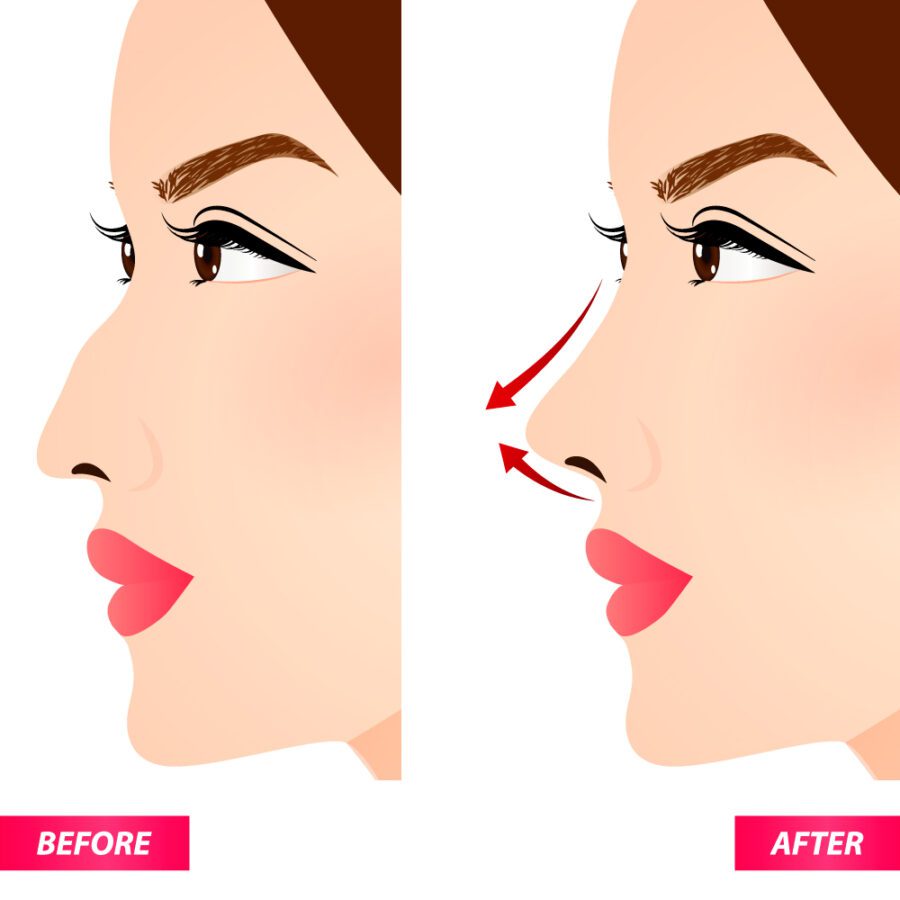
Rhinoplasty (RIE-no-plas-tee) is surgery that changes the shape of the nose. The motivation for rhinoplasty may be to change the appearance of the nose, improve breathing or both. The upper portion of the structure of the nose is bone, and the lower portion is cartilage. Rhinoplasty is commonly referred to as a “nose job.” This surgical procedure works to enhance the outward look of the nose, or its external aesthetics. That often involves reshaping a “crooked” nose or bringing a large nose into better proportion with the rest of the face.
How is a Rhinoplasty performed?
The most common procedures used to correct a crooked nose are the closed method (also known as ‘endoscopic rhinoplasty’) and the open method. The closed rhinoplasty is typically used to treat mild cases. This method involves a surgeon making incisions inside the nose and removing the excess tissue that causes a crooked or deformed nose.

The open rhinoplasty method is used in more severe cases. And also with patients that need general anesthesia. This method involves a surgeon making incisions near the bridge of the nose and inside the nostrils (where the inside of the nose meets the septum or wall inside the nose). Or through a small external cut (incision). At the base of your nose, between your nostrils. Your surgeon will likely readjust the bone and cartilage underneath your skin.
Why might an Oral Maxillofacial Surgeon perform Nose Surgery?
A maxillofacial surgeon is a specialist that performs surgeries on the bones. Nerves and soft tissue that make up the head and face. This includes the nose, upper lip, lower jaw and the surrounding structures. When a patient has a severe case of a crooked nose. A plastic surgeon may recommend a maxillofacial surgeon to perform the rhinoplasty.
This is because maxillofacial surgeons have more experience in dealing with the complex structures of the nose, upper lip and lower jaw region. Depending on the patient, a maxillofacial surgeon may be the better choice to repair a badly broken nose caused by trauma or other injuries.

Benefits to having an Oral surgeon perform Rhinoplasty
If a plastic surgeon recommends you see a maxillofacial surgeon for your rhinoplasty, it’s important to know why. While there’s nothing inherently wrong with having a plastic surgeon perform your rhinoplasty. There are reasons to consider having a maxillofacial surgeon instead.
More experience with serious nose deformities – Maxillofacial surgeons have more experience working with serious deformities. This includes facial injuries, infections, trauma and other conditions that may require more complex repairs.
More experience fixing complex nose deformities – Some complex deformities, such as scarring. Nerve damage and infections can be difficult for plastic surgeons to deal with. If your nose has a very complicated deformity, a maxillofacial surgeon may be the better choice to repair it. Better knowledge of facial anatomy
They trained in facial anatomy and how each structure affects the others. Having a doctor that understands these connections is important when dealing with complex deformities.
Conclusion
Oral and maxillofacial surgeons can perform rhinoplasty when they have appropriate training and experience in facial cosmetic or reconstructive surgery. Their extensive knowledge of facial anatomy, bone structures, and reconstructive procedures makes them highly qualified for many nasal surgery cases. Patients considering rhinoplasty should focus on selecting an experienced surgeon who regularly performs the procedure and understands their individual treatment goals.
Book Your Consultation
If you are considering facial surgery, corrective jaw surgery, rhinoplasty, or other oral and maxillofacial procedures, the team at Royal Dental Clinics can help guide you through your treatment options. Our specialists provide comprehensive evaluations and personalized treatment planning. Book your consultation today.
Frequently Asked Questions
Can an oral surgeon perform rhinoplasty?
Yes. Oral and maxillofacial surgeons with appropriate facial cosmetic or reconstructive surgery training can perform rhinoplasty.
Is a plastic surgeon better than an oral surgeon for rhinoplasty?
Not necessarily. The surgeon’s training, experience, and expertise in rhinoplasty are often more important than the specialty title.
What is the difference between an oral surgeon and a maxillofacial surgeon?
Oral and maxillofacial surgeon is the full specialty title. These specialists are trained in surgical procedures involving the mouth, jaws, face, and related structures.
Can oral surgeons perform cosmetic facial procedures?
Yes. Many oral and maxillofacial surgeons perform cosmetic procedures involving the face, including rhinoplasty, chin surgery, and facial rejuvenation treatments.
When is rhinoplasty medically necessary?
Rhinoplasty may be medically necessary to improve breathing, repair facial trauma, correct congenital deformities, or restore nasal function after injury.