If you think braces smiles are just for teenagers? Think again. More adults than ever are choosing orthodontic treatment, and results are transforming more than just smiles.
Introduction
Although a great number of adults in India are having crooked teeth and bite issues, only a minimal fraction seeks orthodontic or teeth correction. Research indicates that approximately two-thirds to three-fourths of adults possess some degree of malocclusion, but only fifteen percent pursue treatment.
Lack of knowledge is one major hindrance—what many fail to realize is that orthodontic care is an option, even during adulthood. Some are hesitant due to concerns about pain, discomfort, or how they will look during treatment. Others are apprehensive about how they will be perceived by others while in social or professional settings.
As more people become concerned with oral health as much as physical appearance, there is a need to promote information and provide comfort regarding orthodontic treatment available for adults.
Expected results of Braces Smiles in adults
For adults, their main concern revolves around aesthetics and how they look when they smile. Aesthetics matter much more than functional issues to them. A confident, well-aligned smile can improve self-esteem, which is what adult patients look forward to.
It is very important to understand what each patient desires or expects from the outcome of the treatment. Their main concerns include the duration of the treatment, the amount of pain that they’ll have to bear, and the risk factors involved depending on the age. They’re more sensitive to discomfort from braces or appliances but also more cooperative and responsible during treatment.
Adult vs Child
The main difference between any adult and a child is that an adult has achieved their growth completion, whereas a child is yet to undergo those changes. Hence, the duration of treatment varies. This doesn’t affect how successful the treatment can be, but it may take a little longer because adult bones are denser and more mature.
The other factors that are to be considered include old fillings, missing or worn-down teeth, and gum problems. Certain habits like smoking, teeth grinding, or mouth breathing and tongue thrusting as well as some medications, can also affect the treatment results.
Just like with children, orthodontists often work closely with a general dentist. In more complex cases, they may involve other dental specialists—like oral surgeons or gum and root specialists—to make sure the adult patient gets the best overall care.
Factors to consider: treatment of Braces Smiles in adults
Adult bone doesn’t respond to orthodontic forces as easily as in younger patients. This means there’s a higher risk of gum and bone problems in adults because of less response of the bone to the orthodontic forces. In people above 40, they already have some bone loss or gum recession or gum infection present, which can make treatment more complex.
In some cases, poor bite function in adults can cause weakening or thinning of the bone that supports the teeth. When there’s loss of attachment around the tooth, the way forces act during treatment changes. This can lead to unwanted tilting of the tooth, which requires careful control with special techniques to avoid further damage.
One important risk in treating adult patients is root resorption—where the roots of the teeth start to shorten. At Royal Dental Clinics, we inform each and every patient about the risk factors and the issues that can arise in the future before the start of the treatment. Orthodontists here check for any signs of root resorption before starting the treatment and take steps to manage or prevent it during the process.
Another risk factor is the development of TMJ in adult patients— which includes jaw pain, clicking sounds, difficulty in opening or closing the mouth, and headaches. Before starting the treatment, the Orthodontist checks for any signs of TMJ and takes utmost care to avoid worsening the condition.
The most important and common risk factor is relapse— the rate of relapse in adults is much higher as compared to in children. Relapse of treatment is very common to all age groups. It also depends on the severity of the case and how fast the movement of teeth is achieved. In cases where strong orthodontic forces are applied and significant tooth movement occurs over a short period, the chances of relapse are also higher.

Duration of Braces Smiles treatment in adult patients
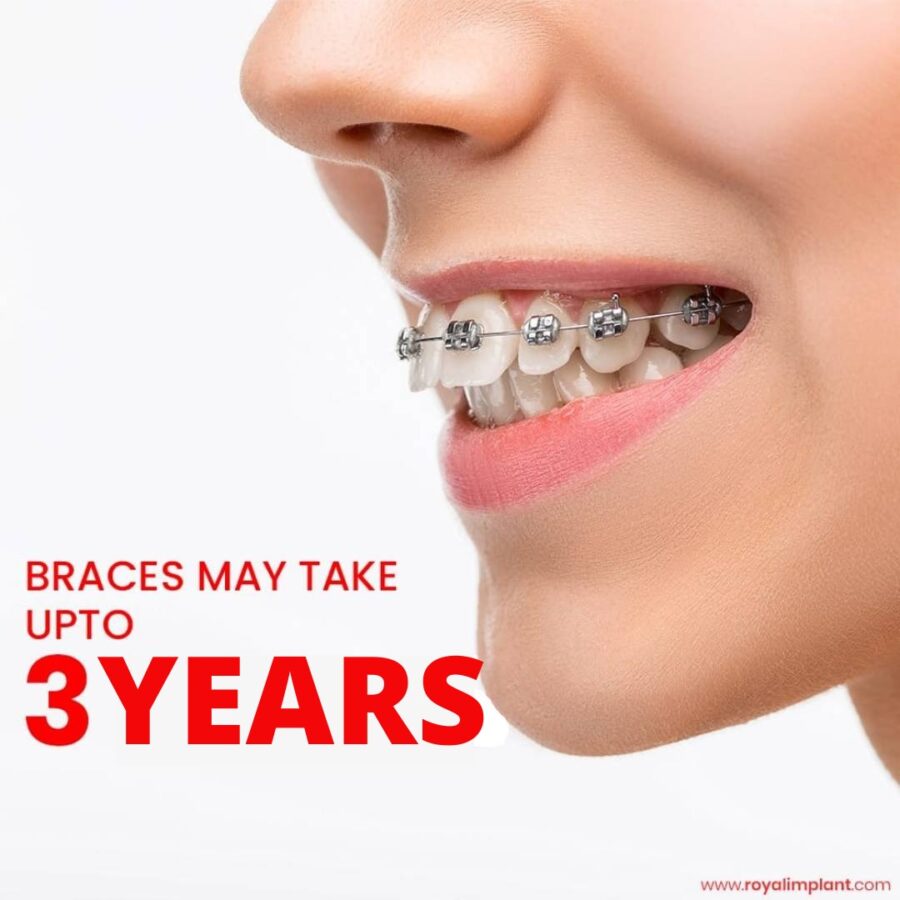
The duration of orthodontic treatment should not be more than 2-3 years for any individual, or it may lead to the risk factors associated with it.
In adults, tooth movement happens very slowly because the tissues take a longer time to adjust. This means treatment may take more time compared to children. The duration of the treatment depends on the seriousness of the dental issues in each person. Every adult patient gets a personalized plan at our clinic. At your first visit, your orthodontist will give you a clearer idea of the timeline. Though it takes time, the results are worth it—better dental health, improved bite, easier chewing, cleaner teeth, and a more confident smile.
It’s never too late to get the smile you’ve always wanted. Age doesn’t stop you from starting orthodontic treatment—it just begins with the right consultation.
Conclusion
An individualized treatment plan for an adult patient should be developed based on thorough evaluation of the complex interplay among biological, psychological, and social factors.
Though each case depends on the severity of the dental issues each patient carries, you can work with our orthodontist at Royal Dental Clinic to achieve a healthy, beautiful and aesthetic smile at any age.