Dentistry often feels like an ever-expanding collection of jargon, tools, and so-called “must-haves.” Among these, the rubber dam is frequently presented as indispensable. But here’s the question: is it really always necessary?
Our perspective: not every dental procedure requires it. Let’s unpack why that’s a reasonable stance, while still acknowledging where the rubber dam genuinely shines.
What exactly is a Rubber Dam?
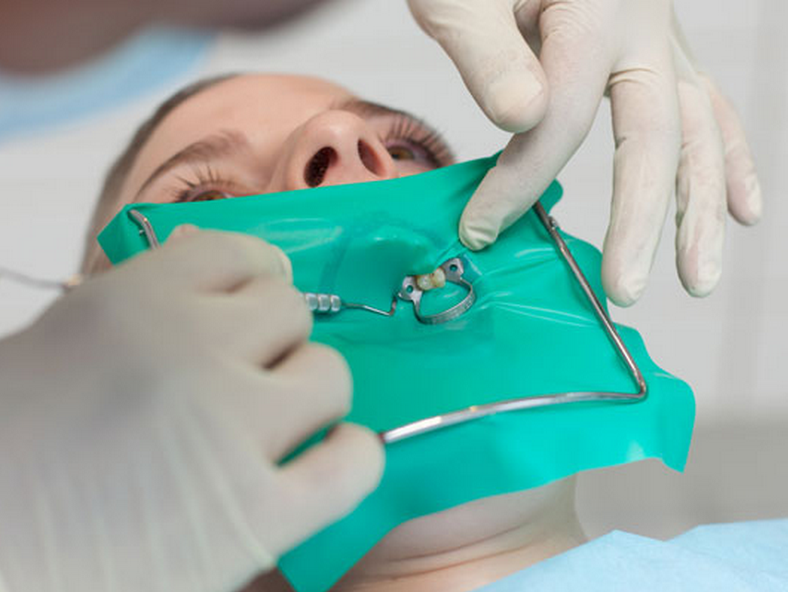
A rubber dam (also called a dental dam) is a thin sheet—typically made of latex or nitrile—stretched over teeth to isolate them during treatment. It keeps the field free from saliva and blood, prevents accidental swallowing of instruments or materials, and creates a clean, dry environment for precise work.
It is widely considered standard practice, particularly in procedures like root canal therapy. But in reality? Many dentists adapt and sometimes work without it.
Why Skipping the Rubber Dam Isn’t Always a Problem
-
Placement Takes Time
Although dentists are trained to place rubber dams efficiently, it can still be a time-intensive step, especially in full-mouth rehabilitations or cases with missing teeth where placement is practically impossible. In such scenarios, the time spent may outweigh the benefit, so many clinicians turn to cotton rolls, high-volume suction, or similar isolation methods. Cases involving partially erupted teeth, awkwardly angled teeth, or patients with a pronounced gag reflex also complicate dam placement.
-
Patient Discomfort and Barriers to Communication
For patients, the dam often feels restrictive. Covering much of the mouth—including lips and cheeks—can trigger claustrophobic feelings. It’s particularly challenging for children, patients with special needs, or those prone to gagging and dental anxiety. Additionally, the clamp can cause pressure, discomfort, or even difficulty breathing, especially in patients with nasal congestion. While dentists may work efficiently with practice, comfort for the patient is not always guaranteed.
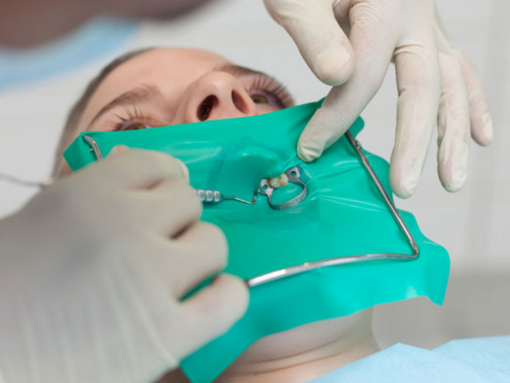
Rubber dam root canal treatment
-
Reduced Access and Visibility
In some procedures, the dam becomes an obstacle rather than an aid. When visibility across multiple quadrants is necessary, or when working close to the gumline, the dam material or clamp may obstruct the field. For certain anatomical variations or malpositioned teeth, proper isolation simply isn’t feasible. It’s not uncommon for some clinicians to even initiate root canal access before placing the dam to avoid disorientation.
-
Soft Tissue Injury Risk
If applied incorrectly, rubber dam clamps can injure gingiva or periodontal tissues. Patients may experience bleeding, pinching, or soft tissue trauma when too much force is used, or when the wrong clamp size is chosen.
-
Alternative Isolation Methods Exist
Dentists routinely employ alternatives like cotton rolls, suction devices, throat packs, or advanced systems such as DryShield or Isolite. These may not always be perfect but can provide adequate isolation in many cases.
-
Not Ideal for All Procedures
Rubber dams have little to no application in certain treatments—such as oral surgery, periodontal therapy, or some prosthodontic work—where they obstruct rather than assist. In such cases, alternate moisture control techniques are essential.
Some dentists even suggest that the dam’s role is often more about liability protection than clinical necessity, especially for short restorative procedures where cotton roll isolation or devices like Isodry are more than sufficient. Others maintain that while rubber dams are useful, they’re not always practical, especially for patients with severe gag reflexes, latex allergies, post-nasal drip, or claustrophobia.
Case For Rubber Dam: Why Many Dentist Still Use
- Superior Moisture Control and Bonding: They provide a perfectly dry field, improving adhesion for composites and ensuring longer restoration life. Studies even show lower failure rates compared to cotton roll isolation. Still, these advantages can often be matched by eight-hand dentistry, to provide continuous retraction and moisture control.
- Infection Control and Contamination Prevention: The dam reduces microbial spread and aerosol contamination, protecting both the patient and the clinical team. Yet, with modern suction devices and careful teamwork, infection control can also be managed effectively without a dam.
- Airway Safety and Protection: By covering the oral cavity, it lowers the risk of patients swallowing or inhaling instruments, debris, or chemical irrigants such as sodium hypochlorite.
So, Do We Really Need It?
The answer is more balanced than a simple “yes” or “no.” Rubber dams are valuable tools, but they aren’t the only tools. Their use depends on the case, the patient, and the dentist’s judgment.
- Use them when the procedure demands perfect isolation.
- Skip them when patient comfort, access, or the nature of the treatment makes alternatives more practical.
- Most importantly, communicate openly with patients about what’s being used and why.
The Royal Dental Difference: A Smarter, More Flexible Approach
At Royal Dental Clinic, we don’t believe in rigid, one-size-fits-all dentistry. Instead, we use the isolation method that best serves the patient and the procedure:
- Six- or Eight-Handed Dentistry for Seamless Workflow: Our team-based approach—where the dentist works in perfect coordination with multiple trained assistants—ensures efficiency, precision, and comfort. This reduces strain, speeds up treatment, and provides isolation without unnecessary gadgets.
- Personalized Patient-Centered Protocols: Every patient is unique. Before beginning, we assess whether a rubber dam would genuinely improve treatment or if a more comfortable alternative is better. Considerations like gag reflex, anxiety, and anatomical challenges guide our decisions.
- Technology-Driven Alternatives: When absolute dryness is essential, such as in adhesive and endodontic procedures, we use advanced suction and isolation systems that offer the same level of moisture control as a dam—but with faster setup and less discomfort.
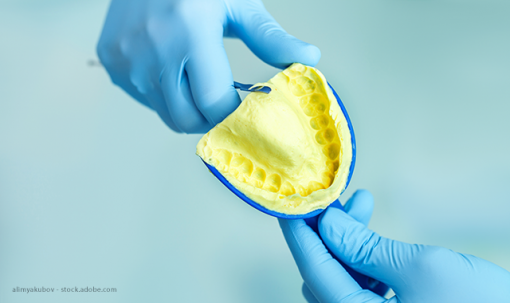
dental material for teeth impression
By pairing these systems with ergonomic workflows, we ensure that quality and patient well-being go hand in hand. Rubber dams have undeniable strengths—moisture control, infection prevention, and procedural efficiency. But they also carry disadvantages in terms of patient comfort, time, and clinical practicality.
At Royal Dental Clinic, we weigh every factor carefully. We use the rubber dam when it truly benefits the patient, and we confidently employ advanced alternatives when it doesn’t. The goal is always the same: safe, efficient, and comfortable dentistry tailored to the individual.