The dental implant process can take anywhere from a few weeks to several months, depending on your oral health, bone condition, the number of implants required and the type of treatment planned. While the surgical placement of an implant may be completed in a relatively short appointment, the complete treatment involves consultation, planning, implant placement, healing and placement of the final restoration. Some patients may also qualify for immediate or same-day teeth, while others require additional healing time before their final teeth are placed.
Who Is This Article For?
- Patients considering dental implants
- People wondering how many months implant treatment takes
- Patients comparing conventional and same-day implants
- People preparing for implant surgery
- Patients who need bone grafting or tooth extraction
- Anyone wanting to understand the different stages of implant treatment
What happens during the preparation phase?
You will discuss your specific dental needs with your dentist before the procedure. They will assess the condition and health of your jawbone and gums and determine what type of implant is best for you and where it should be placed. During this discussion, you and your dentist will also explore treatment options for any teeth that remain and any other dental issues you may have. This will help them determine the specifics of your treatment plan and ensure you get everything you need from your implant surgery.
You will also need to have a blood test to check for any blood-borne diseases, such as hepatitis or HIV. If you smoke, you will also be asked to quit at least two weeks before your surgery to reduce the risk of complications. Your dentist or oral surgeon will instruct you on what foods and beverages to avoid and provide you with a list of prescription medications that you must stop taking. You should also arrange to have someone drive you home after your procedure.
What happens during the dental implant process?
After the jawbone has had enough time to heal, your dentist will place the implants. This may happen either through a one-stage or two-stage procedure. In a one-stage procedure, both the implants and the crowns are implanted during the same visit. In a two-stage procedure, the implants are placed first, and then several months later the crowns are affixed to the implants. Each placement method has its own associated risks and rewards. Royal Dental specialises in single sitting procedure for dental implants.
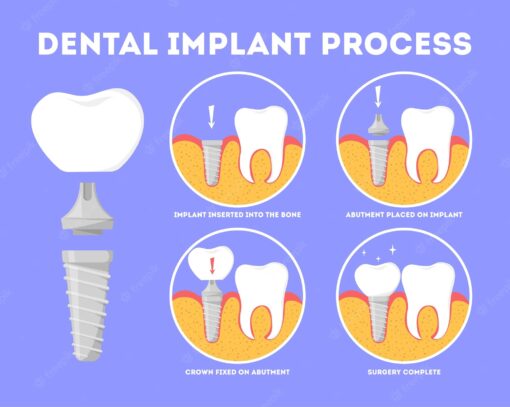
A one-stage placement is generally the simplest and most straightforward placement method. The patient endures only one surgery, and there is less risk of complications for the patient. A two-stage procedure, however, requires two separate surgeries, increasing the risk of complications for the patient. But this may be necessary if the jawbone needs additional healing time between the two procedures.
What happens during the healing phase?
Implant surgery takes significant time to heal, but the healing process varies according to the type of implant used. With dental implant surgery, the healing process begins with the initial incision and continues until the implants are completely healed. For the first 12 to 18 months, you will have to take special care of your mouth and follow your dentist’s instructions to the letter.
You must brush and floss carefully and keep your mouth as clean as possible to reduce the risk of infection. Try to avoid any activities that could potentially cause harm to your healing implants, such as sports or extreme physical activity. If you experience any pain or unusual discomfort, let your dentist know.
What happens during the finalization phase?
Over the course of several months, your gums and jawbone will fuse with your implants, creating a solid foundation for your new teeth. Once your dentist is satisfied that the implants are bonded to your jawbone, they will be able to place the crowns on the implants. You will likely have to wait six months or more before you can have your final crowns placed on the implants. This will allow enough time for your gums to heal completely so that your dentist can place the crowns without damaging your tissue.
During this phase, you must continue to take good care of your mouth. You should schedule regular dental appointments to monitor your progress and ensure the implants are healing properly. Your dentist will fit the crowns on the implants once your gums have healed completely and your implants are securely in place.
How much does dental implant surgery cost?
The cost of dental implant surgery varies greatly from person to person. Factors that affect the cost include the type of implant surgery performed, the number of implants used, and the number and type of teeth repaired. Costs can range anywhere from $8,000 to $30,000 or more depending on these and other factors.
Conclusion
Dental implant surgery can be a long and complicated process, but the end result is well worth the wait. It is an excellent way to replace missing teeth, and it is highly effective, durable, and long-lasting. If you choose a qualified, experienced dental specialist, the procedure will be simple and successful. All things considered, dental implant surgery is an excellent way to replace missing teeth. It is highly effective, durable, and long-lasting. When you choose a qualified, experienced dental specialist, the procedure will be simple and successful. It may take some time to complete, but the end result will be well worth the wait.
Frequently Asked Questions
How long does the dental implant process take?
The complete process can range from several weeks to several months depending on the patient’s bone condition, healing, number of implants and treatment approach.
How long does dental implant surgery take?
The surgical appointment varies according to the number of implants and complexity of the case. It should not be confused with the total treatment timeline.
Can I get dental implants in one day?
Some carefully selected patients may receive immediate implants and temporary teeth in a short treatment period. However, biological healing and osseointegration still take time.
How long after an implant can I get a crown?
The timing varies. Your dentist will place the final crown when the implant has adequately healed and is ready to support the restoration.
Does bone grafting make dental implants take longer?
Yes. If bone grafting is required, additional healing time may be necessary before or around implant placement.
Can dental implants be placed immediately after tooth extraction?
In selected cases, yes. Immediate implant placement is not appropriate for every patient and depends on factors such as the condition of the extraction site and available bone.
Medical Disclaimer
This article is for patient education only. Dental treatment should be planned after clinical examination, medical history review, and X-rays or scans where required. Treatment suitability, cost, timeline, healing, and results vary from patient to patient.