
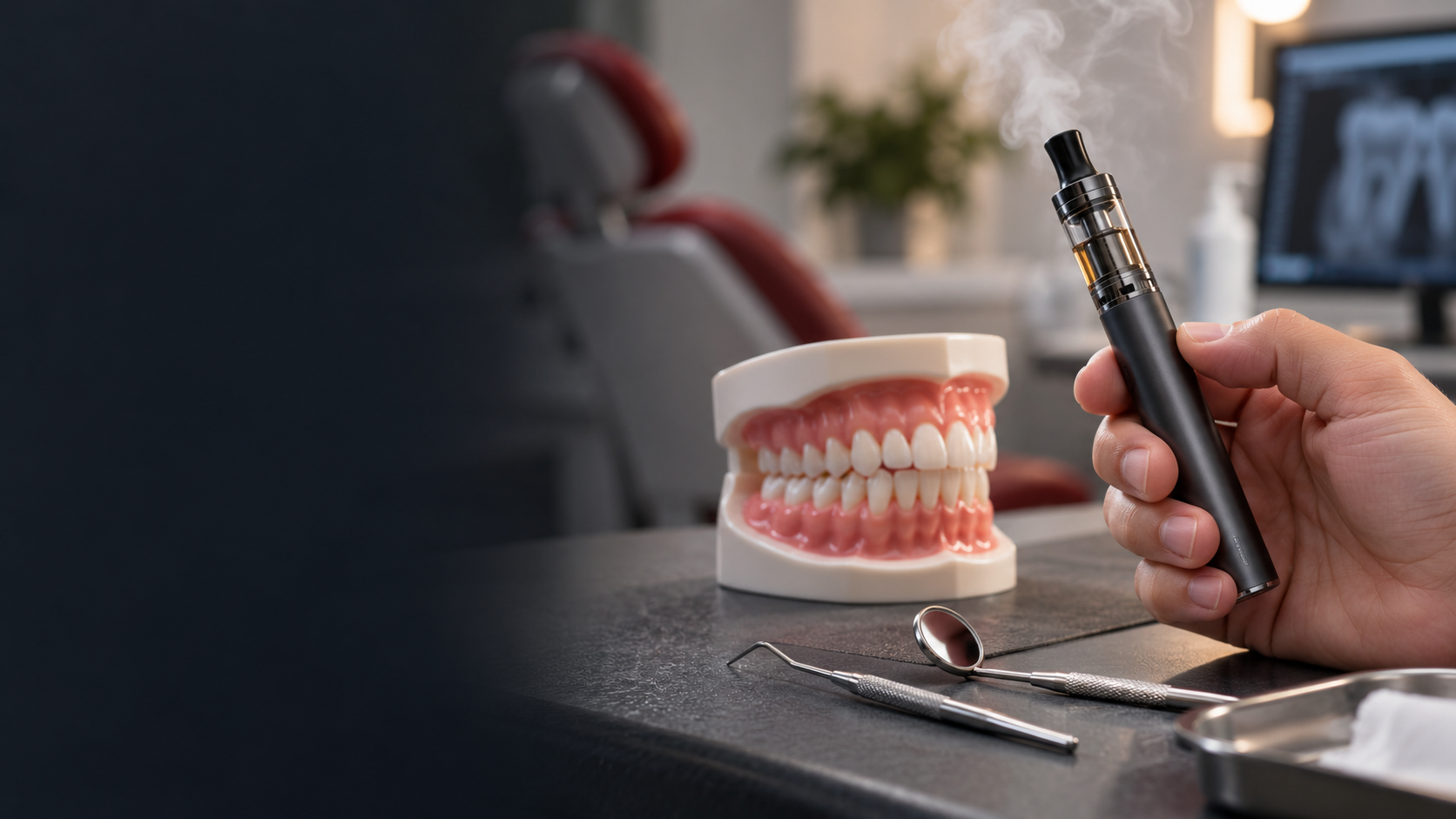
Vaping is often described as a safer alternative to smoking. E-cigarettes generally expose users to fewer harmful chemicals than cigarette smoke, but their aerosol is not harmless water vapour. Many products contain addictive nicotine, and the aerosol can contain other potentially harmful substances. If you vape, it is reasonable to ask what repeated exposure may mean for your teeth, gums and oral tissues.
Vaping is less harmful than smoking, but it’s still not safe. E-cigarettes heat nicotine (extracted from tobacco), flavorings and other chemicals to create an aerosol that you inhale.
What is Vaping?
Vaping involves inhaling an aerosol produced when an electronic cigarette heats a liquid. Depending on the product, that liquid may contain nicotine, flavourings and other chemicals. The aerosol can also contain tiny particles and metals. Product ingredients and exposure vary, so one person’s vaping experience cannot establish that a product is safe for everyone.

Vaping has become very common over the last few years. It’s now one of the most common ways to consume tobacco or nicotine. It’s also the quickest growing.
How Can Vaping Affect Your Mouth?
Researchers are studying links between vaping and tooth decay, gum health and changes in the mouth. Some studies have found an association between vaping and untreated cavities, but an association does not prove that vaping caused the cavities. The long-term dental effects are still being investigated. Tell your dentist if you vape so they can assess your individual risks and examine any symptoms.
Is Vaping Safer than Smoking?
For an adult who already smokes cigarettes, switching completely to e-cigarettes may reduce exposure to some harmful chemicals. That does not make vaping safe, and using both cigarettes and e-cigarettes does not offer the same potential benefit as switching completely. People who do not smoke should not start vaping; young people and pregnant people should avoid it.
Is Vaping Bad for your Health?
Vaping is not bad for your health. It’s been shown to have far fewer health effects than smoking cigarettes. There are several negative health effects associated with smoking cigarettes, including heart disease, lung disease, and certain types of cancer.
E-cigarettes don’t contain tobacco and aren’t associated with all of these same health risks. Instead, they contain nicotine (which is addictive, but most health experts agree isn’t harmful to the lungs), and flavouring. There are some negative health effects associated with vaping, but they are minimal compared to the negative health effects of smoking.
What are 5 risks of vaping?
- Coughing.
- Dry mouth and throat.
- Shortness of breath.
- Mouth and throat irritation.
- Headaches.
Other Health Issues Associated with Vaping
Although it’s safer than smoking, vaping can cause some temporary issues with your health. You might experience some short-term side effects after vaping, such as coughing, shortness of breath, and a dry throat. Vaping can also cause some long-term issues with your health, and it’s not considered safe for everyone.
For example, children under 18 should not be allowed to vape. It is not safe for pregnant women, either. It can also cause problems with your teeth. The e-liquids in vape pens and cartridges can cause staining, and they can break down the enamel on your teeth.
Is vaping safer than smoking cigarettes?
Are e-cigarettes less harmful than regular cigarettes? Yes—but that doesn’t mean e-cigarettes are safe. E-cigarette aerosol generally contains fewer toxic chemicals than the deadly mix of 7,000 chemicals in smoke from regular cigarettes. However, e-cigarette aerosol is not harmless.
When Should You See a Dentist?
Book a dental examination if you notice persistent mouth dryness, bleeding gums, tooth pain, new sensitivity or a sore that is not healing. Your dentist can check the cause, provide treatment where needed and help you find support to stop nicotine use.
Final Words
Vaping avoids burning tobacco, but it still exposes the mouth and body to an aerosol whose long-term effects are not fully understood. For dental health, the practical steps are to discuss vaping honestly with your dentist, maintain regular oral care and seek help if you want to stop using nicotine.
FAQs
Is nicotine-free vaping safe for teeth?
A nicotine-free label does not establish that inhaling the aerosol is harmless. The aerosol may contain other substances, and the long-term effects on oral health are still being studied.
Does vaping cause cavities?
Research has found an association between vaping and untreated cavities, but it has not established that vaping directly caused them. A dentist can assess your cavity risk and check for early decay.
Can vaping cause oral cancer?
Some e-cigarette aerosols can contain cancer-causing chemicals. Current evidence does not establish an individual vaping user’s oral cancer risk, and longer-term research is needed. Have any persistent mouth sore, red or white patch, or unexplained lump examined. CDC
Should I tell my dentist that I vape?
Yes. Tell your dentist what you use and how often. It helps them assess symptoms, discuss oral health risks and offer appropriate support without guesswork.