
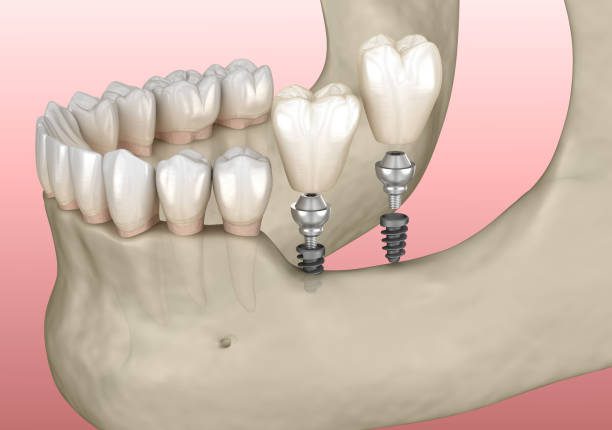
Dental implant surgery are a restorative procedure that has gained much popularity in recent years. Whether you have been considering to have your smile corrected with implants or not, you have probably heard about them. These artificial roots can give your gums the support they need for stronger teeth, which makes them an excellent option vis-à-vis dentures. If you’re looking for more info about flapless dental implants, this article will be able to walk you through.
Who Is This Article For?
This article is for patients considering dental implants who want to know whether the implant can be placed without raising a conventional gum flap. It may be particularly relevant to patients seeking minimally invasive implant surgery, immediate implants or computer-guided treatment. Flapless surgery is not automatically suitable because a patient prefers fewer cuts or faster recovery. The dentist must first evaluate the available bone, gum thickness, position of nearby nerves and sinuses, implant location and final prosthetic plan.
What Is Flapless Dental Implant Surgery?
During conventional implant surgery, an incision is made and the gum is carefully lifted so that the surgeon can directly examine the underlying bone. During flapless implant placement, the implant site is prepared through a small opening in the gum without raising a large mucoperiosteal flap. The opening may be created using a small tissue punch or by preparing the implant site directly through the gum. A digitally planned surgical guide may be used to control the implant’s position, depth and angulation. Flapless does not mean completely incision-free, painless or risk-free. It describes the way the gum tissue is managed during implant placement.
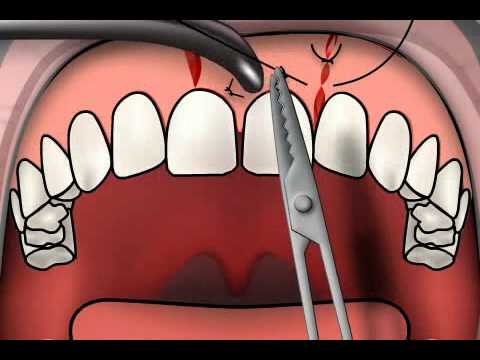
Who May Be Suitable for Flapless Implants?
Flapless placement may be considered when there is adequate bone width and height, healthy gum tissue, favourable anatomy and a clearly planned implant position. It may be suitable for a single missing tooth, selected immediately placed implants or multiple implants where CBCT planning and a stable surgical guide can be used. The surgeon must also ensure that adequate keratinised gum tissue will remain around the implant. ITI guidance recommends evaluating both the quality and quantity of keratinised tissue before selecting a flapless approach.
When Is Flapless Implant Surgery Not Recommended?
- A conventional flap may be safer when the available bone is narrow, irregular or difficult to assess. It may also be required when bone grafting, soft-tissue grafting, removal of infected tissue or direct visualisation of the implant site is necessary.
- Flapless placement may not be appropriate where there is severe bone loss, uncertain anatomy, active gum disease, a poorly healed extraction site or insufficient attached gum tissue.
- The decision to raise a flap is not a sign that the surgery is outdated. Direct visibility may allow the surgeon to identify bone defects and position the implant more safely in challenging situations.
What is a Flapless Implant procedure?
A flapless approach is a way to place implants in a patient’s mouth without opening gums. A flapless approach is suitable for patients who have healthy gums. It’s also best for patients who have sufficient bone volume and a healthy amount of soft tissue around the teeth. A flapless implant placement done in one of two ways.
- First, the dentist will place a dental implant on the side of each missing tooth. Then, he or she will attach a bridge to the dental implants.
- The second option is to first attach the dental implant to the side of the missing tooth and then attach the bridge to the dental implant.
Finding best Flapless Dental Implants provider
If you’re considering getting dental implants, you’ll first want to make sure that you’re getting them from a reputable provider. It can be difficult to know where to start when it comes to finding a dental implant provider. But there are a few things you can do to make it easier. For instance, you can start by asking your dentist if he or she has any suggestions. Another option is to ask friends and family members if they have any recommendations for good dental implant providers.
You can also use the internet to find the dental implant providers near you. There are a number of websites that act as directories for different dental implant providers. The internet can be a great resource for finding dental implant providers, but you will want to make sure that you do your research in order to be sure that you’re getting dental implants from a reputable source.
Flapless Dental Implant placement
A flapless approach is used most often when placing dental implants in the upper jaw. This makes it so that the dentist can place the dental implant right next to the gum line and avoid having to make cuts in the gums. A dental implant placed in a number of different places in the upper jaw. They can be placed next to the front tooth, the back tooth, or in the areas in between. A dental implant can also be placed on the side of a tooth that has been pulled out.
Why Flapless Dental Implants approach is reliable?
First, it’s important to note that implants placed with a flapless approach are a lot less invasive than those that are placed with a traditional approach. The cuts in the gums that are made during a traditional approach can be a risk for infection, and they can also lead to complications like bleeding and swelling. Since dental implants placed with a flapless approach don’t require any cuts in the gums. They have a lower risk of causing these issues. In addition to this, dental implants placed with a flapless approach also have a higher rate of success than dental implants placed with a traditional approach.
Immediate implants, those done right after a tooth is removed, are effectively the same as those done where there has been no tooth for long periods of time. In the case of the immediate implant, there is no need to flap the gum tissue. This is true provided that there is no open space at the gum line that would prevent the bone from attaching to the implant. And, there is no bone trauma due to the extraction. This requires an appropriate sized implant that assures that close proximity. By eliminating the flap, the immediate implant eliminates any flap issues.
Concluding Thoughts
The concept of replacing missing teeth with implanted materials dates back centuries, and several clinicians contributed to its development. However, Professor Per-Ingvar Brånemark is most closely associated with the invention and scientific establishment of the modern titanium dental implant. His discovery and development of osseointegration led to the first well-documented titanium implant treatment in 1965. This biological principle continues to form the foundation of modern implant dentistry.
Frequently Asked Questions
Who is known as the father of modern dental implants?
Professor Per-Ingvar Brånemark is widely recognised as the father of modern dental implantology because his research established titanium osseointegration and its clinical use in dentistry.
When was the first modern dental implant placed?
Brånemark placed titanium dental implants in a human patient in 1965. The implants supported a fixed lower-jaw prosthesis and remained functional for several decades.
Who was the first dental implant patient?
Gösta Larsson is recognised as the first patient treated with Brånemark’s modern osseointegrated titanium implant system. He received four lower-jaw implants in 1965.
What is osseointegration?
Osseointegration is the stable connection that develops between living bone and the surface of an implant. It allows the implant to act as an anchor for a crown, bridge or denture.
Did the Mayans use dental implants?
Archaeological evidence includes a Mayan jaw in which shell pieces had been inserted in place of missing lower front teeth. Bone formation around some pieces suggested that they had been placed during life.
Who placed the first metal dental implant?
Maggiolo described placing a gold artificial root into an extraction socket in 1809. It is considered one of the earliest documented metal implants used to replace a human tooth.
Was the modern dental implant invented accidentally?
The observation behind osseointegration occurred during bone-healing research rather than during an initial attempt to create a dental implant. Brånemark recognised that titanium’s attachment to bone could have clinical applications and developed the discovery through further research.
Are modern implants the same as Brånemark’s original implants?
Modern implant systems continue to use the principle of osseointegration, although their surfaces, shapes, connections, surgical techniques and prosthetic components have evolved.